


Over the last decade, marijuana was — and remains — a controversial topic among state legislators regarding how to regulate the drug, both for medicinal and recreational uses. Both sides of the marijuana argument use scientific studies to back their claims. For some, it can be used like a supplement and help with chronic pain, for others, it can be abused and disrupt cognitive development.
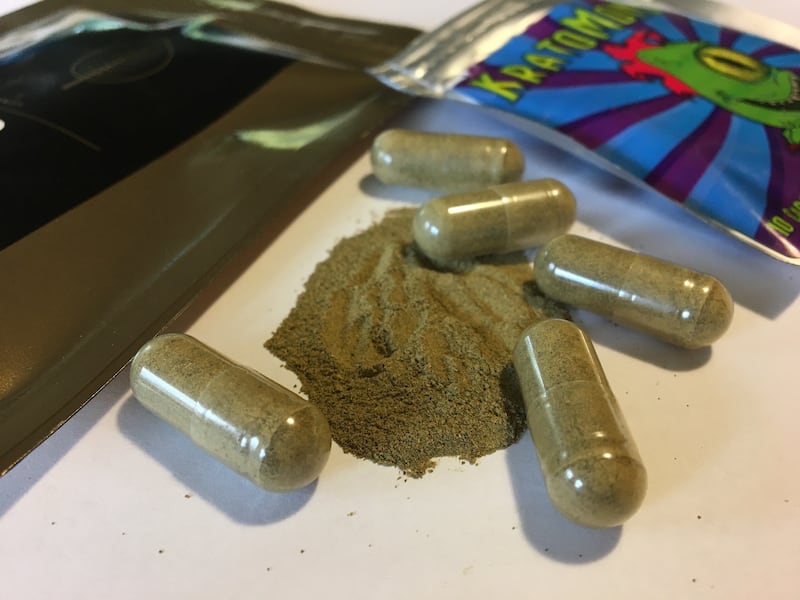
Kratom, a less-studied and less mainstream drug, is currently involved in a similar legislative debate, particularly in Utah. Nicknamed “gas station heroin,” there are currently two bills being debated in the 2026 legislative session, which began Tuesday. One bill seeks to ban it completely. The other is looking to regulate it.
Kratom derives from a tropical tree in Southeast Asia. Depending on dosage, it can have either sedative or stimulating effects. The kratom leaf contains two major psychoactive ingredients, mitragynine and 7-hydroxymitragynine, the latter better known as 7-OH.
Though 7-OH occurs naturally in the plant, some claim many products on the shelves that are labeled as kratom have chemically altered 7-OH or are extracted to be far stronger than what the plant produces on its own.
The Food and Drug Administration has not approved the drug for any type of medical use, and the Justice Department’s Drug Enforcement Agency has identified it as a “drug and chemical of concern.” Last summer, U.S. Secretary of Health and Human Services Robert F. Kennedy Jr. said the FDA was specifically targeting 7-OH, not the natural kratom leaf.
Earlier this week, the U.S. Navy and Marine Corps prohibited the use of kratom and the active compounds within it and “applies to products that are naturally derived, semi-synthetic or synthetic, regardless of the substance’s concentration, claimed or actual, and regardless of whether such product may lawfully be bought, sold, or used under civilian law.”
The kratom debate in Utah
At least seven other states have complete bans on kratom products. Sen. Mike McKell, R-Spanish Fork, chief sponsor of the bill banning kratom, says completely ridding the product from Utah’s shelves is the only solution.
“I think the industry is abused. ... These products are becoming far more dangerous,” McKell previously told the Deseret News. “My goal is to protect the public, not kratom, and I think it needs to be clear that there are hundreds of thousands of dollars flowing to the people pedaling kratom in this state and other states.”
Though the two senators have both vocalized they are working collaboratively, Sen. Evan Vickers, R-Cedar City, the sponsor of the other kratom bill, believes regulating the active compounds in kratom is a more productive way of protecting the public.
Vickers’ bill would label 7-OH as a Schedule I controlled substance, meaning it has no defined medical use and a high potential for abuse if it exceeds 0.4% of the total kratom alkaloid composition or a synthetic version.
“This bill is taking care of a very dangerous product that not only exists naturally in kratom, but is synthesized and added to some kratom products,” and if banned, “could potentially be synthesized and put on other products,” Vickers said during the bill discussion on Wednesday.
McKell argues that 7-OH isn’t the only alkaloid composition in kratom of concern, and therefore, kratom as a whole should be banned.

What do those in the kratom industry think?
Ryan Niddel, CEO of Diversified Botanics in Draper, which specializes in kratom manufacturing, sales and distribution, told the Deseret News that he not only supports Vickers’ bill but also favors making it even more stringent.
Since last year, Niddel has worked closely with the federal government and other states, including Florida and Texas, on kratom regulation and educating the public on the drug.
“Banning everything as the answer, or leaving everything open to every person, I think, is no different than the political spectrum; the best answers are somewhere in the middle, not at the two extreme ends,” he said.
He thinks kratom belongs behind the checkout counter and should only be purchasable for those 21 and over.
“The fear is, if this gets driven underground and becomes scheduled anywhere, well, now there’s no guardrails, and people will lace product with all types of things to sell underground,” he explained, “then there’s no way to control the quality that goes into human beings. It’s not like kratom will stop being sold. It will just be sold on a black market, and that’s not a good reason to keep the product in market, but I would hate for a kratom derivative to be laced with fentanyl to be sold on your local street corner.”
Though it isn’t classified as one, kratom has been shown in studies to “produce opioid- and stimulant-like effects,” per the National Institute on Drug Abuse. “People report using kratom to manage drug withdrawal symptoms and cravings (especially related to opioid use), pain, fatigue and mental health problems.” But studies have found that users can become addicted to it and experience withdrawals when trying to quit.
Niddel also explained that the drug works on the same digestive pathways as opioids. “Why that matters is as you consume kratom, anything else you have in your system that follows those same digestive enzyme pathways becomes more bioavailable, meaning you have more in your bloodstream.”
The Mayo Clinic has noted that a kratom drug overdose is possible, but it is rare. And the FDA has said that in these cases, “kratom was usually used in combination with other drugs, and the contribution of kratom in the deaths is unclear.”
“I don’t want everybody taking kratom, because I don’t think it’s great for everybody,” Niddel said. “I think individuals deserve the opportunity to become well informed on the potentially harmful effects of anything, and then make a decision for themselves on what they think is best.”
