
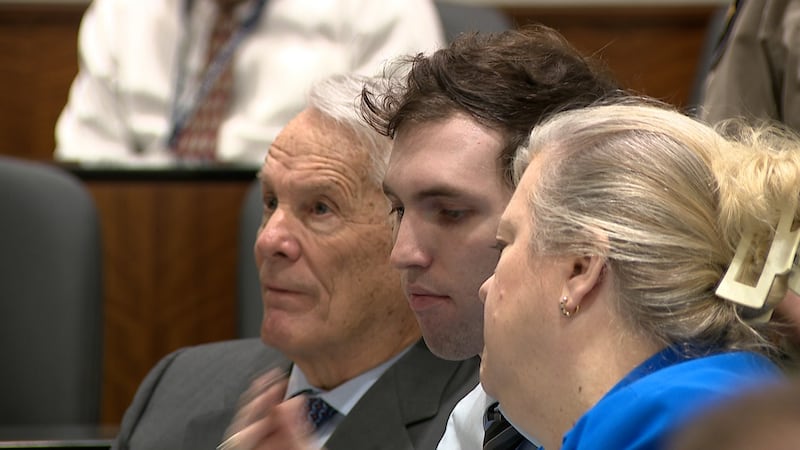
As Tyler Robinson and his defense team continue to file motions in his capital murder case and request that they be classified as “private” from the public, attorneys for the media say Robinson should not be able to make his legal proceedings secret.
Robinson is charged with assassinating political activist Charlie Kirk at Utah Valley University.
“No one trusts what happens in a secret criminal proceeding. Not those who support the prosecution, who wonder whether the case was properly presented; not those who support the defense, who wonder whether the defendant’s fair trial rights were respected; and not even dispassionate observers, who are deprived of their right to see how the judicial system works,” attorneys for multiple media organizations, including KSL and the Deseret News, argue in a memorandum filed Friday in 4th District Court.
“Along the way, the court’s credibility is irreparably damaged, perceived accountability for alleged crimes is undermined, and public confidence in the result is diminished.”
The media is responding to two motions recently filed by Robinson — one on Jan. 9; and one on Jan. 16 asking a judge to keep cameras out of the courtroom. Both motions came with requests to classify those motions as “private,” which Judge Tony Graf has granted. That means the public can’t see what legal arguments the defense is making to justify their requests.
On Jan. 9, Robinson filed a motion “with exhibits” and immediately requested that the motion be made private so the public cannot read it. Attorneys for the media filed a memorandum a week later opposing the motion to classify it as private.
“The motion itself provides almost no explanation for why the presumptively public filing should be classified as nonpublic, nor does it (or the order granting it) engage in any of the substantive analysis required (by law),” the memorandum states.
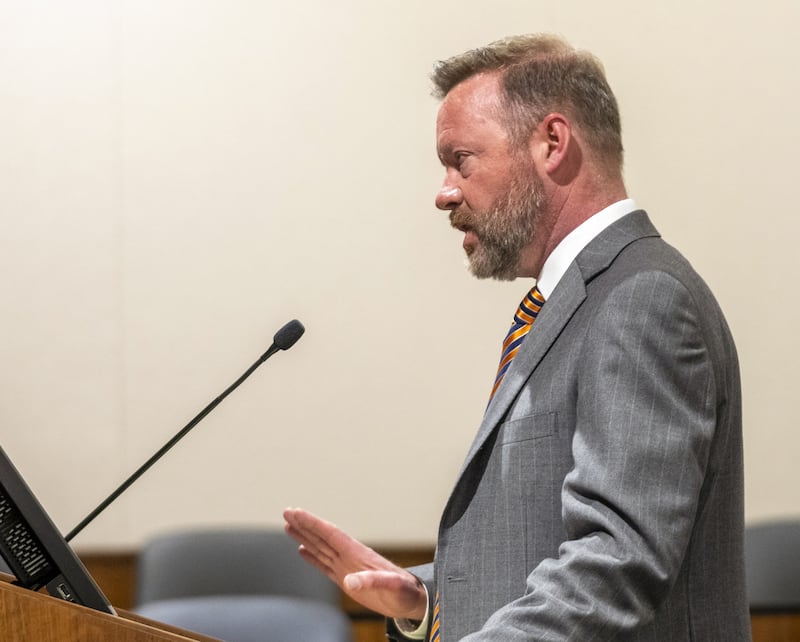
Robinson and his team also filed a “motion to exclude still photographers, TV cameras and microphones from the courtroom,” and requested that that motion also be sealed.
“This latest iteration, in what has become a serial drumbeat from the defense demanding a secret prosecution, is perhaps the most telling,” attorneys for the media organizations responded on Friday. “They want to deprive the public from observing these proceedings, but they will not publicly explain why — they filed their motion to exclude cameras from the courtroom under seal and will not provide that motion, even on an attorneys-eyes-only basis, to counsel for the news media so they may see the purported (and presumably slim) justifications for their extraordinary request.
“They would rather litigate in the dark, and have others do the same, on issues of constitutional magnitude that go to the core of the court’s fundamental promise of public justice.”
Attorneys for the media say they are, for now, opposing only the motion to classify as “private” the request to ban cameras from the courtroom and not the motion itself because they have not yet been allowed to even see what it is.
“This repeated insistence on a secret prosecution, with no mooring in the Constitution, needs to stop. Every week seems to bring a new urgent request for unjustified secrecy, and now the defense is not even trying to defend its demands publicly. They want even secrecy decisions to be made in secret,” the media filing states.
“Their constant incantation that this case is somehow unique and has drawn significant public attention cuts exactly the opposite way — that is precisely why it is so critically important that the public be allowed to observe these proceedings and see the court in action, ensuring (the) defendant’s rights are protected and the prosecution’s ability to present its case is preserved. Again, these are bedrock principles of our system of justice, enshrined for hundreds of years. They are not controversial.”
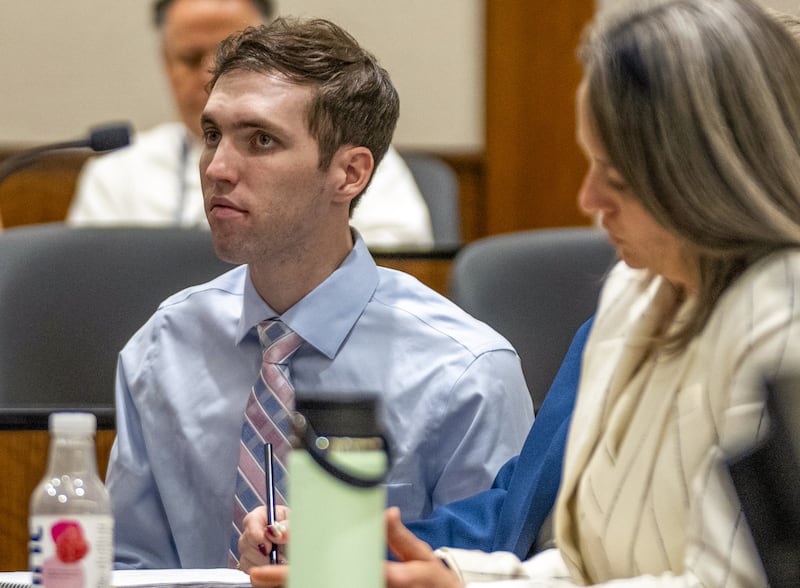
While Robinson and his team have not replied to the media’s opposition to classify the motion to keep cameras out of the courtroom as private, on Thursday, they did file a reply regarding the media opposing the Jan. 9 motion being sealed, arguing that the exhibits filed as part of that motion should remain private.
“However, should this court require a public filing, Mr. Robinson requests that this court permit Mr. Robinson to file a redacted pleading without the evidentiary report attached as an exhibit, and to allow Mr. Robinson to redact descriptions and quotes from the evidentiary exhibit within the motion,” the defense said.
In their reply, Robinson argues that a Dec. 29 order from Graf states that all exhibits are private “pending further order from the court.” The media countered that the defense cannot classify something as private simply because they assume it will not be admitted as evidence during a trial or pre-trial hearing.
“As the news media have already briefed at length, the constitutional standard for closure is extremely rigorous by design. It cannot be overcome with speculative assertions or generalized arguments that some piece of evidence might be excluded at trial. The public’s right of access is not limited to the trial. It extends to all phases of the proceedings, including motions to exclude evidence. Because it appears that defendant’s basis for requesting closure here rests only on the erroneous assumption that the public has no such right, his motion should be denied,” the media memorandum states.
In their reply, Robinson’s team says their request is based on concerns of prejudicing Robinson’s right to a fair trial and says disclosing potential evidence “runs a high risk of tainting the potential jury pool.” The defense further argues that the court should not assume that the public will eventually forget about evidence that is made public but later determined to be inadmissible at trial.
“We no longer live in times where cases like Mr. Robinson’s are subject to a 24-hour news cycle, with each article or post easily replaced in the minds of the public by a new story of the day. The appetite for this case is voracious and each new development, in or out of court proceedings, does not become an archived story, rather, it becomes a part of ongoing narratives that live and breathe on social media and the internet generally,” Robinson’s reply states. “The evidence at issue here will undoubtedly become part of any number of narratives and conspiracy theories pervading the public sphere and be repeated, ad nauseum, up to and even during Mr. Robinson’s trial, regardless of this court’s admissibility determinations.”
First Amendment attorneys have argued that there has never been a case in Utah in which a defendant was found to have received an unfair trial because of pretrial publicity, even though there have been many high-profile criminal cases in Utah before Robinson’s.
Robinson, 22, is charged with capital murder and faces a possible death sentence if convicted of shooting and killing Kirk on Sept. 10.
The next court hearing is scheduled for Feb. 3. At that time, Graf will continue a hearing that started on Jan. 16 regarding whether the Utah County Attorney’s Office should be disqualified from the case because one of its adult children, a UVU student, attended the rally when Kirk was killed.
The attorneys for the media represent KSL, Deseret News, KUTV, the Radio Television Digital News Association, the Utah Headliners Chapter of the Society of Professional Journalists, Salt Lake Tribune, Associated Press, St. George News, Fox13, Millard County Chronicle Progress, KOAL, KUER, Lehi Free Press, the Park Record, CBS Broadcasting, the New York Times Company, Fox News Media and Law & Crime Network.