

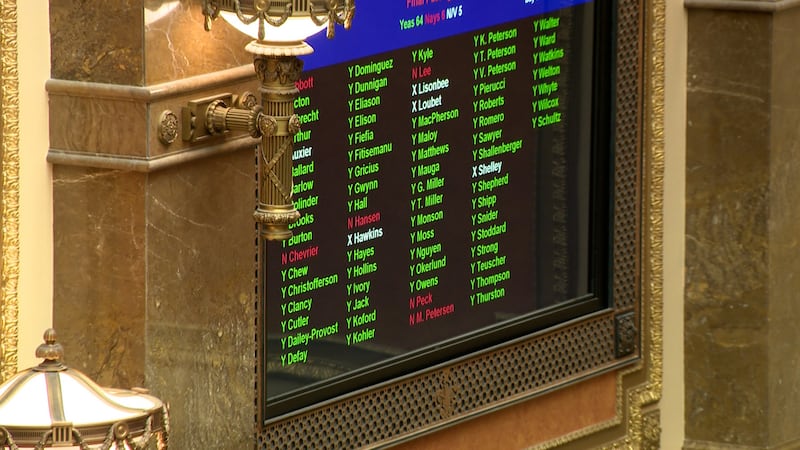
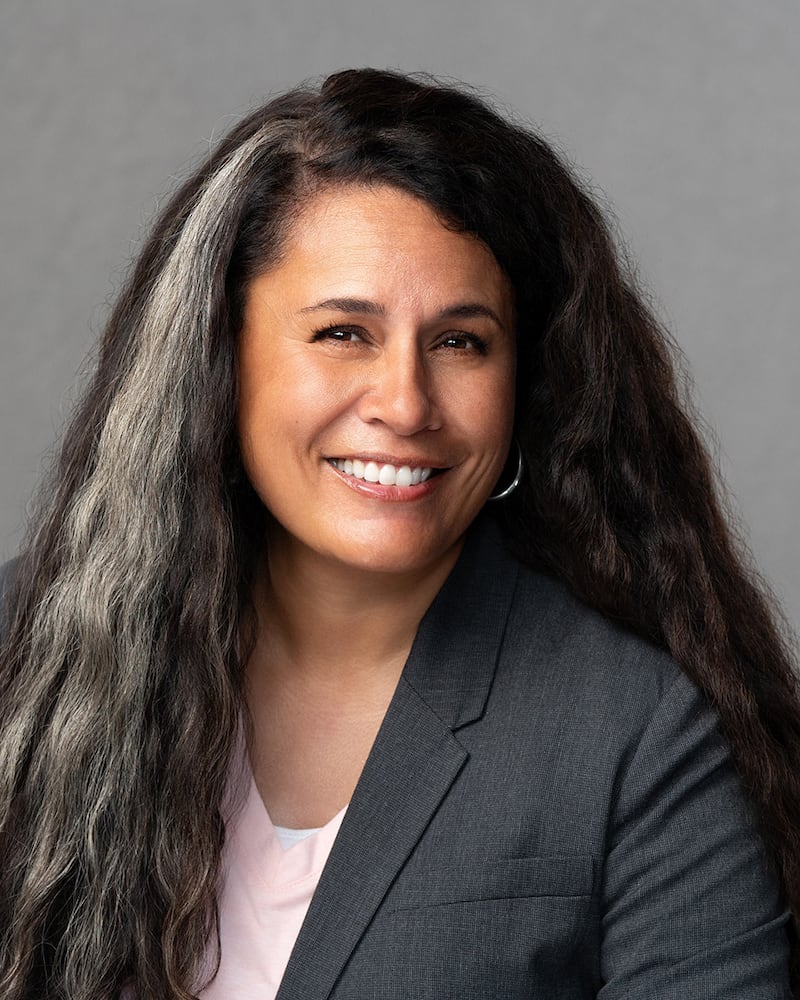
As bill after bill came up for debate during Utah’s legislative session, one lawmaker voted “no” more often than she voted “yes.”
It was the first session for Rep. Leah Hansen, R-Saratoga Springs, who took office last year after then-House Majority Leader Jefferson Moss resigned to take a new job with the state.
During her inaugural session, which concluded Friday, Hansen cast 446 no votes on the House floor, voting no close to 54% of the time.
In fact, she cast more “nay” votes than any lawmaker going back to 2007 — and by a wide margin, according to data compiled by Brigham Young University political science professor Adam Brown.
Hansen was sometimes the only lawmaker voting against a bill, like one that creates a new institute to study how Utah can better manage its forests and prevent wildfires. She also stood alone to oppose a resolution urging federal assistance to save the Great Salt Lake, and another one honoring Irish and Irish-American contributions to the founding of the United States.
The lawmaker with the next highest percentage of no votes during any session since 2007 was Sen. Nate Blouin, D-Millcreek, who voted no 22.7% of the time, also this year.
Hansen initially did not respond to a request to explain her voting philosophy, but told KSL after publication that she considered three questions when reading a bill: What is the principle? Is that principle within the proper role of government? And “will this bill continue to perpetuate liberty for generations to come?”
“I wouldn’t vote for a bill I hadn’t read,” Hansen added in a text to KSL Wednesday, adding that she also voted against proposals that would give “rulemaking authority” to state agencies. “I’m sure there were a lot of good bills that I could’ve voted yes on, but for all the reading I did, I still didn’t get to all the bills that came through, so I voted no, because I hadn’t read them.”
Lawmakers often oppose bills on ideological grounds or simply because they think the Legislature passes too many of them each session, according to Holly Richardson, a former state legislator and host of KSL’s “Inside Sources.”
“She could be leaning maybe more libertarian. It could be that she just thinks that the Legislature has too many bills,” Richardson said. “We had fewer passed this year, but we had a record number introduced. So it could just be that she’s like, ‘No, we don’t need another law for this.’”
Hansen wouldn’t be the only one to oppose the growing number of bills introduced recently. Gov. Spencer Cox has said lawmakers should consider whether bills “could be phone calls.” One representative even introduced a bill to limit the number of bills, but it didn’t go anywhere.
Hansen’s online legislative biography describes her as an “ordinary citizen,” which Richardson said could also play into her apparent contrarianism.
“I can’t speak to her motivation, but I’m thinking her being somebody who feels probably like a political outsider, that’s one of the things that she could do is say, ‘No, I’m not going to support all of these bills,” Richardson said.
It’s not uncommon for some Republicans — who hold a supermajority in the House and Senate — to be the most frequent no voters in a session, according to Brown’s data. But compared with sessions in the early 2010s, Democrats in recent years have made up a higher percentage of the top non-voters.
Richardson says that’s likely because of a rightward shift in the makeup of the Legislature. In the early and mid 2010s, she said, it was more likely to have a significant number of conservative or libertarian Republicans vote against bills that had more support with the center and left.
The lawmaker who voted no least often during the most recent legislative session was Senate Majority Leader Kirk Cullimore, R-Sandy, who cast just six “no” votes out of 1,080 total votes held, according to the BYU data.