

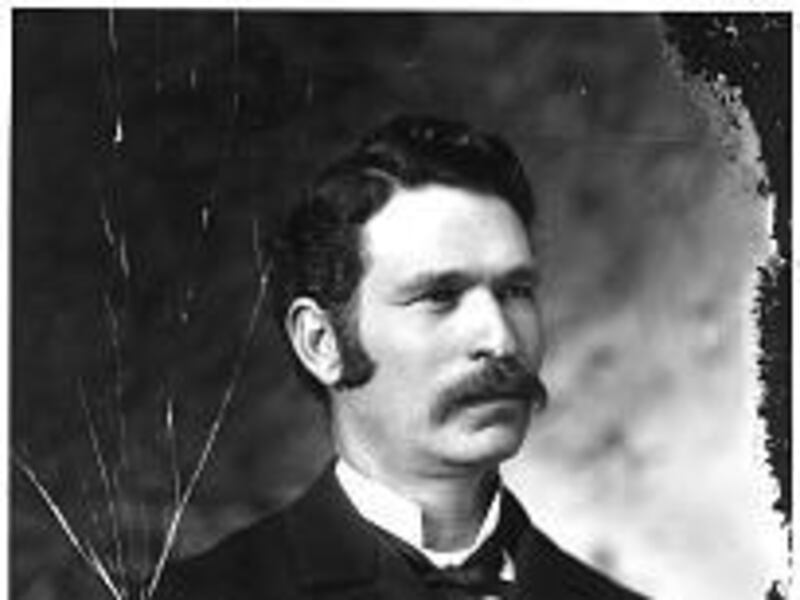
PROVO — When Benjamin Cluff heard a glowing report about the fledgling Brigham Young Academy in 1877, the 19-year-old town librarian set out almost immediately to walk the more than 60 miles from Coalville to Provo.
It was a remarkably humble beginning of an association with a school that wouldn't end until after Cluff had overseen its ascension to university status a quarter century later.
The long walk was shortened when Cluff stopped overnight at his uncle's ranch between Park City and Kamas. That uncle, Harvey Cluff, happened to be a prominent member of the academy's board of trustees, and he gave his nephew a ride to Provo and introduced him to the school's legendary founder, Karl G. Maeser.
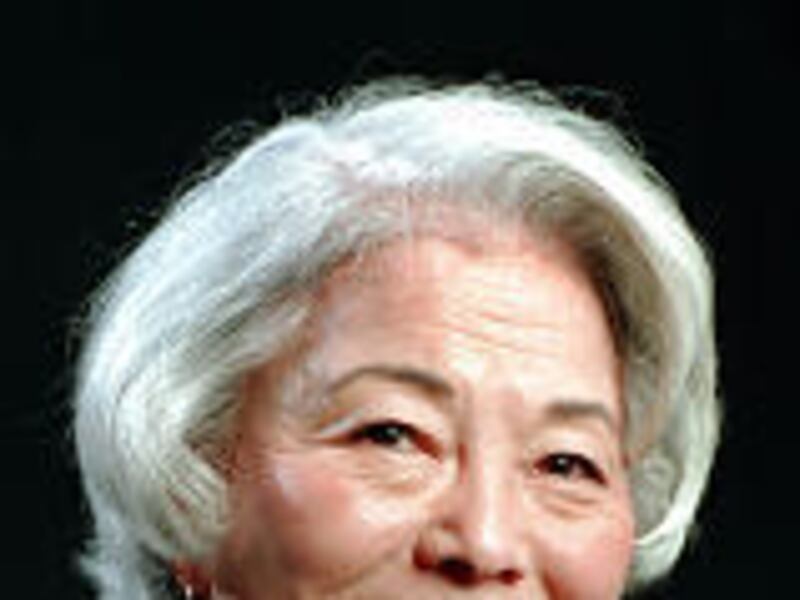
Maeser must have seen "a spiritual son" in Cluff that day, said Chieko N. Okazaki on Thursday, 100 years to the day the school held the first Founder's Day to celebrate the legalization of a new name, Brigham Young University.
Okazaki gave the inaugural address of the Benjamin Cluff Jr. Annual Lecture and called for donations to the Cluff family, which is raising money to commission a scholarly biography of the complex man who resigned from the BYU presidency within a month of the Founder's Day celebration and was estranged from the university for the remainder of his life.
Okazaki, a former member of the Relief Society General Presidency of The Church of Jesus Christ of Latter-day Saints, decried the university's treatment of Cluff, made after he led a church-approved expedition to South America in search of flora and fauna and proof of the veracity of the Book of Mormon.
A member of the 1900-02 "Zarahemla" expedition made accusations against Cluff that were proved false in a church court. The expedition was, and still is in histories, ridiculed by many as a failure, a designation Okazaki disputed. Cluff, exonerated but humiliated, resigned on Nov. 17, 1903, effective Dec. 23, 1903.
"I hope the biography will touch on the fact that the honest in heart are punished enough by the natural consequences of their mistakes," Okazaki said. "Teachers and administrators should understand this concept better than anyone else. What kind of education can occur when students are afraid to take a chance, ask a question or try a new procedure?
"And this university is, in President (Spencer W.) Kimball's memorable phrase, engaged in 'education for eternity,' " Okazaki continued. "It should model a learning environment that combines the maximum of challenge with the maximum of support."
She said the lesson is underlined by the fact that "we are at an institution that almost certainly wouldn't exist without (Cluff's) devotion, vision and sacrifice."
Cluff was a polygamist who took his third wife eight years after the LDS Church issued a Manifesto that it no longer would allow polygamy. He was the principal of Brigham Young Academy at the time and was still five years from convincing the board of trustees to make it a university.
Okazaki said Cluff was an indefatigable fund-raiser who was told by a church president that the church wouldn't fund the academy.
"If President Gordon B. Hinckley were to tell BYU President Cecil O. Samuelson that the church would no longer be responsible for BYU and the school would have to be funded on its own, what chance do you think President Samuelson would have of changing President Hinckley's mind?" Okazaki asked. "Yet that's exactly what Benjamin Cluff did."
She said Cluff expanded BYU's campus and curriculum, added baseball and football to the school's activities and brought prominent national speakers for guest lectures — which is the spirit of the Cluff Annual Lecture.
But Cluff also was the target of resistance from jealous administrators at other Utah academies, colleges and universities.
"I hope a scholarly biography will deal with this dynamic of innovation and resistance," Okazaki said.
A standing-room-only crowd of more than 300 people attended Okazaki's lecture in the Ezra Taft Benson Building. Okazaki said the man who slept under a stage during his first term as a BY Academy student was an example because of his strong desire for education, his stalwart spiritual life and his nobility during discouragement after he left BYU.
She also said his experience was a poor example of how leaders sometimes err in the way they treat mistakes.
"I don't know why the church felt the need to distance itself from this man in the last decades of his life," said Okazaki, who pointed out that Cluff became a successful California grocer.
"I don't think the last years of his life were wasted," she said. "But he could have blessed hundreds of others, and my heart aches not for him, but for them."
E-mail: twalch@desnews.com