

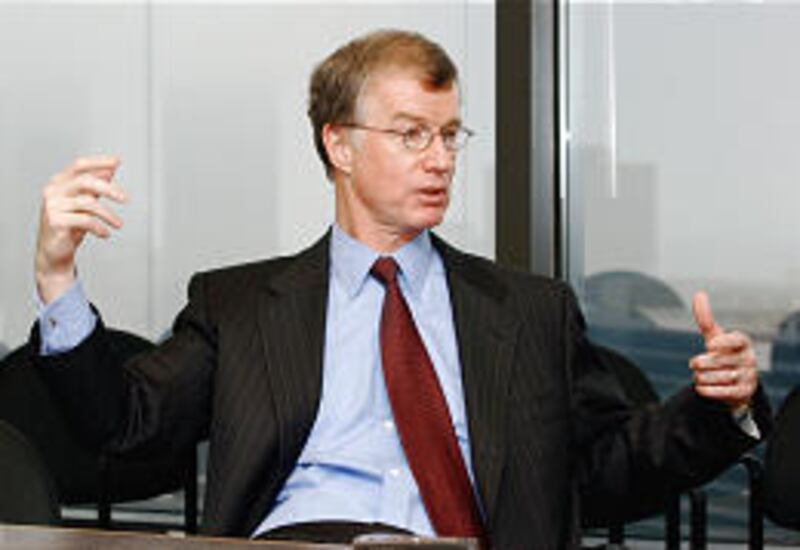
ATLANTA — Delta Air Lines chief executive Leo F. Mullin will sever ties with the struggling company and leave unfinished tasks in the hands of a board member and industry veteran: persuading pilots to accept steep pay cuts and restoring the nation's third-largest carrier to profitability.
Mullin said Monday his decision to resign, which caught Wall Street and employees off guard, was not influenced by the company's simmering controversy over executive pay.
"Obviously, the job is not done," Mullin said in an interview. "I wish we were in better financial shape. I wish the pilot contract was done. Having said that, I would say there has been a tremendous amount accomplished. There's never a perfect break point. This is the right break point."
After its worst downturn ever, the airline industry is in the early stages of what analysts expect to be a long recovery process. With passenger demand and ticket prices low, traditional hub-and-spoke carriers such as Delta need to dramatically reduce operating expenses in order to reverse years of massive losses. Delta operates a hub at Salt Lake City International Airport.
With that process incomplete at Delta, Mullin, 60, will step down as CEO on Jan. 1 and as chairman in late April.
He will be replaced as CEO by board member Gerald Grinstein, 71, who ran Western Air Lines from 1985 until 1987, when it was acquired by Delta, and recruited Mullin for the CEO job in 1997.
John F. Smith Jr., a former chairman and CEO of General Motors Corp., will take over as chairman.
Grinstein, who said he tried to dissuade Mullin from resigning, has a good track record in terms of getting wage concessions from employees and reducing operating costs.
"He saved Western Airlines," Blaylock & Partners airline analyst Ray Neidl said. "They would have gone bankrupt if not for him."
Investors seemed happy with Delta's choice for a successor.
Shares of Atlanta-based Delta rose 82 cents, or more than 7 percent, to close at $12.25 on the New York Stock Exchange.
Perhaps the most difficult task Mullin has faced in recent months has been persuading pilots to agree to deep wage cuts — concessions he has said the airline needs as part of its survival.
Delta, which lost $168 million in the third quarter, has said it wants to cut pilots' hourly wages by 22 percent, cancel pay raises due over the next year and reduce some benefits. The airline also wants to rescind a 4.5 percent raise the pilots received May 1 and a similar raise due next May.
Delta, which has laid off 16,000 workers since the 2001 terrorist attacks, has said it might have to lay off more workers if it doesn't get the concessions.
Delta's pilots union, which was scheduled to meet with company executives today, issued a statement saying it "looks forward to a productive working relationship with new CEO Gerald Grinstein."
But the company's relationship with employees has been strained in recent months because of revelations that the company spent millions of dollars to protect the pensions of a select group of executives even as it sought concessions from rank-and-file employees.
"You're kind of not in the best light for negotiating (for pilot concessions) when you go through something like that," Neidl said.
After the uproar, Delta canceled the final payment to participants of its supplemental executive retirement plan and discontinued the program, which would have been fully funded at $65 million by next year. Mullin has said the payments were needed to retain key managers in the wake of the 2001 terrorist attacks.
Earlier this year, Delta launched a low-fare subsidiary, Song, in an effort to stay competitive with smaller low-cost carriers such as JetBlue and AirTran, which have been growing rapidly at the expense of their larger rivals.
Although the company does not break out details of Song's financial performance, executives have said they are pleased with the initiative so far. Analysts, meanwhile, have been skeptical of this "airline-within-an-airline" strategy.
Mullin's total retirement benefits are valued at $16 million, Delta said Monday. That includes credit for 22 years of service, which reflects pension benefits Mullin relinquished when he left his previous employer, Unicom Corp., where he served as vice chairman.
"I persuaded him to come here but couldn't persuade him not to go," Grinstein said Monday.
Mullin is not the first CEO of a major airline to step down this year amid controversy.
In April, American Airlines CEO Donald Carty resigned amid tough wage concession negotiations and employee ire over retention bonuses paid to top executives. American, now run by Gerard Arpey, ultimately won wage concessions.