


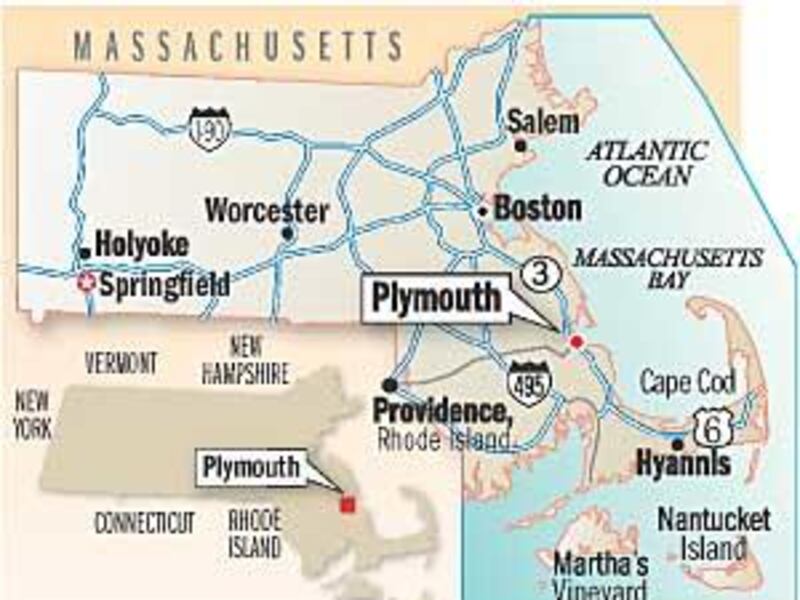
PLYMOUTH, Mass. — Everyone knows the story of the Pilgrims — the little band of people seeking religious freedom who ended up on the Massachusetts shore (they were headed for Virginia) in 1620. And how the gratitude of those who survived the first, harsh year (only half) led to a feast that we honor as the root of our modern-day Thanksgiving.
That story comes alive in today's Plymouth.
But one of the first things you learn here is that there are Pilgrims — and there are Pilgrims. There are the historic folks who arrived on the Mayflower and did their best to scratch out a living in a foreign land, sometimes in accord and sometimes in conflict with their new Wampanoag neighbors.
And there are the romanticized Pilgrims, the heroic Founding Fathers who embody the values and traditions we have come to hold dear.
You find them both here — as you should, because you wouldn't really want one without the other. That delightful mix of history and legend makes Plymouth so enjoyable.
Consider, for example, the Rock.
Legend has it that the first folks to alight from the Mayflower rowed ashore and stepped down onto a solid chunk of granite. You can see Plymouth Rock now, under a granite canopy at the waterfront. Is this, in fact, the very rock those first feet stepped on?
In 1741, 95-year-old Thomas Faunce said it was; and he said he heard stories in his youth about that very rock — and it has been celebrated as such ever since.
It has moved around a bit, though. In 1775, it was dug up and hauled to the Town Square — but it broke in two as the team of oxen tried to pull it out. The biggest part remained in the center of town until 1834, then was moved to Pilgrim's Hall. The other section stayed at the waterfront, where in 1849 the first canopy was erected over it.
In 1880, the two pieces were reunited at the waterfront and cemented together. The present canopy was erected in 1920, to mark 300 years since the landing.
So, original or not, Plymouth Rock has a storied history. We liked the approach that Plymouth historian Rose T. Briggs takes: "It is the fact that they landed — and remained — that matters, not where they landed. Yet it is not a bad thing for a nation to be founded on a rock."
Anchored at the waterfront is a ship called Mayflower II. Although not an exact copy, it is a full-scale replica of the type of ship that brought the Pilgrims in 1620, crafted using the same skills, materials and processes as those earlier ships employed.
You can walk on board and go below deck where the 102 Pilgrims would have had to stay most of the time during the 66-day voyage. Costumed interpreters will tell you what that journey was like. You might find them arguing over points of scripture; that apparently was a common pastime on board. You might also be, as we were, struck by how small it seems. Wasn't it bigger than this in the pictures we drew back in elementary school?
Plenty of other things might attract your attention in downtown Plymouth. At Pilgrim's Hall, built in 1824 and known as the country's oldest continually operating public museum, you can see some of the actual artifacts and objects — swords, chests, chairs, paintings — that belonged to the original Pilgrims.
There are statues, too. A couple honor the intrepid Pilgrim mothers whose "courage, fortitude and devotion brought a new nation into being." Another, done by Utah's own Cyrus Dallin, pays tribute to Gov. William Bradford. And there's the Dallin sculpture of Massasoit — we know this one well; its twin stands in front of the Utah State Capitol.
Legend has it that the members of the band who died that first winter were buried in secret, with graves planted over, so that the numbers would be hidden from their native neighbors. Some of those bones were later recovered and 300 years later were interred in a granite sarcophagus. As you read the 50 or so names, you might ponder how short the dream was for these poor souls.
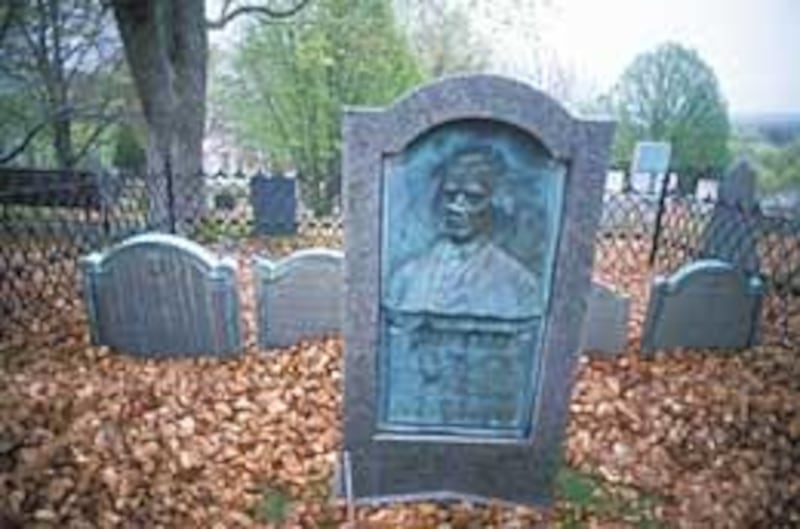
You can also walk through the Old Burying Ground and see the graves of those who lived longer — maybe long enough to know they had started something, if not long enough to know exactly what.
There's more than Pilgrims to Plymouth, of course. Any place that has been around as long as this one will have its share of historic buildings: old churches, old courthouses, grist mills, homes and more. And any place situated on the shore will offer water-related activities. In the summer, harbor cruises are popular, and at certain times whale watching and deep-sea fishing cruises are available.
But the Pilgrims are certainly the focal point here, and for more of that story, a visit to Plimoth Plantation, on the outskirts of town, is a must.
The location is different, but the rest is as authentic as historical research and willing interpreters can make it. (You can thank William Bradford for the spelling, he often referred to the colony this way.)
It is set in 1627 — a date chosen because it was a year pretty well documented. And it was just before some of the settlers began to move into outlying areas.
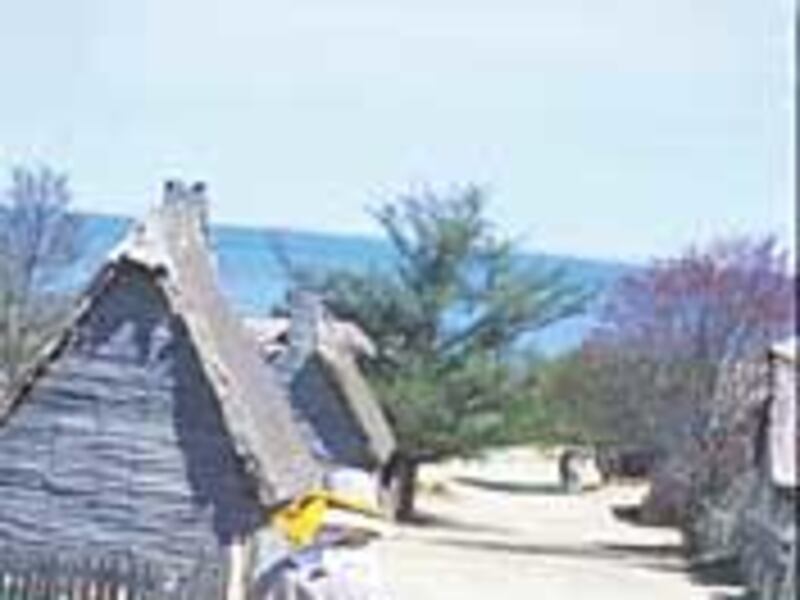
The seven years since the landing have given the people time to build a fairly prosperous settlement. Wooden houses line the streets. Gardens are planted behind them in raised beds. Fires are tended inside dark, dim interiors. Simple tables, homespun beds, a few scattered chairs provide the furnishings.
Maybe you will meet Gov. Bradford out for a stroll through the town. Maybe Miles Standish will be chopping wood in back of his house. Maybe you will see women carrying water in wooden buckets or hitching up skirts to sit down and milk a cow. Maybe the chickens will scatter as you walk by.
The settlement is presided over by the stockade/meeting house. Up to this time, the stockade has been a precautionary measure, but stories of conflicts with native tribes have filtered up from Virginia. As a meeting house, however, it has been well-used. Faith is an indelible part of life here.
Maybe you will come across some of the town's gentlemen discussing politics. They might tell you about the Mayflower Compact they all signed. It was to protect themselves until they could get a patent for the land (after all, they were supposed to be in Virginia) and in it they agreed to abide by majority will. Democracy? What is this thing called democracy, they might ask. There were no plans to create new forms of government here.
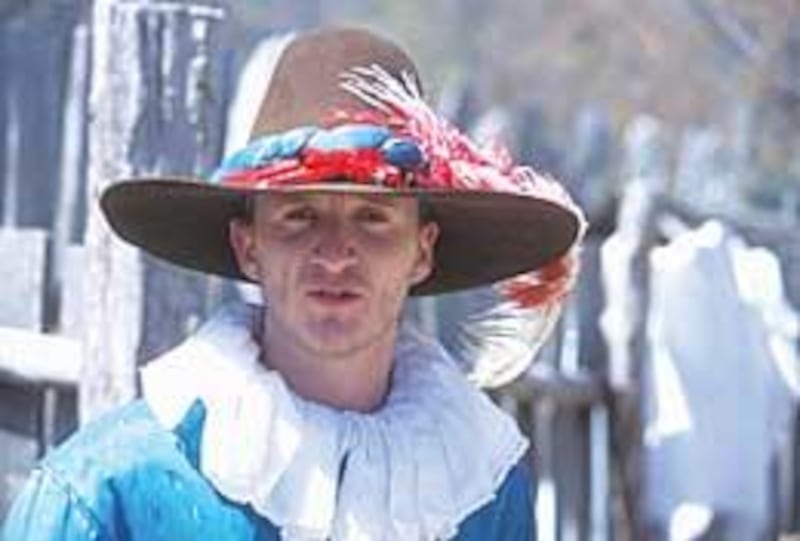
Things you will not see at Plimoth Plantation are buckled hats and ruffled collars. These cherished icons from elementary school seem to have been a later addition.
Near the plantation, a small Wampanoag village has been established, so you can see what 17th-century life was like for these people, as well. And there's a visitors center with a film and exhibits and displays that help put Plimoth and the Pilgrims into the proper perspective.
The people you meet at Plimoth are plain, hard-working, ordinary, everyday people. You wonder how they can be the same ones who are honored on the other side of town at the National Monument to the Forefathers, an imposing and impressive 81-foot memorial, done in ornate, classical style. Built in 1889, it is dedicated "to the four virtues that brought the Pilgrims to the New World: Morality, Law, Education and Liberty."
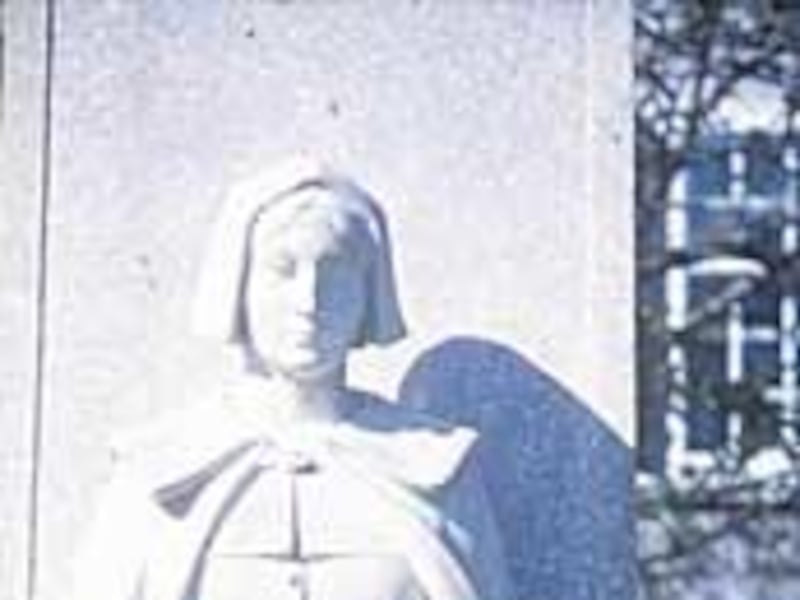
The largest freestanding granite statue in the world, the figure of Faith that tops the monument is 216 times bigger than life and said to be the model for the Statue of Liberty.
So, you might wonder, how did the Pilgrims get from that Plimoth to this one?
For that answer, you might want to talk to Jim Baker, who is now the curator at the John Alden House in nearby Duxbury. The former head of research at Plimoth Plantation, Baker is now curator of the place where John Alden (he of Priscilla and Miles Standish fame) moved after he left the plantation.
Nobody paid any attention to the settlers of Plymouth until the time of the American Revolution, Baker will tell you.
Up until then, "there had never been a revolution for a new nation. It was unheard of. So to give legitimacy to their cause, the Colonists needed a foundation. The Pilgrims were one of the main symbols they came upon."
After all, this was a group that had come to the New World on its own, without help from the king. It had come to get away from the society it knew. And it was a group of families, rather than adventurers. They became "The Forefathers" of America.
They weren't known as Pilgrims until 1798, says Baker. In Bradford's diary he talks of being "strangers and pilgrims, not of this earth." But it was not until some Bostonians created a Sons of the Pilgrims society that the term was widely used.
In 1858, Henry Wadsworth Longfellow published "The Courtship of Miles Standish," and another piece was added. "This was the beginning of the personalization of the history, rather than just the aggregate virtues. People began looking at the Pilgrims sentimentally," says Baker.
The third part of the transformation came through the story of Thanksgiving. "References to a feast of Thanksgiving did not exist before 1841; no one paid attention to 1621 before that. You won't find a single picture of the First Thanksgiving from Victorian times."
But in 1841 a book called "Chronicles of the Pilgrim Fathers" was published, and a footnote referred to that first Thanksgiving. The notion was picked up and embellished, particularly as the country got embroiled in a divisive Civil War.
"The stereotypes and symbols take on a life of their own," says Baker. "They are so important today that you can't separate the Pilgrims from Thanksgiving."
But, he says, as a symbolic ancestor for all of America, the Pilgrims are not such a bad choice. "They are a valid and useful symbol. They weren't perfect. But they probably were more virtuous than most." If we can learn from them, if we can be more grateful because of them, if we can try to emulate their virtues in any way, we can be better for it. "Sometimes the uses of history are as important as the history itself," he says.
It's a nice thought to take away from a visit to the Pilgrims — and the Pilgrims — of Plymouth.
E-MAIL: carma@desnews.com