

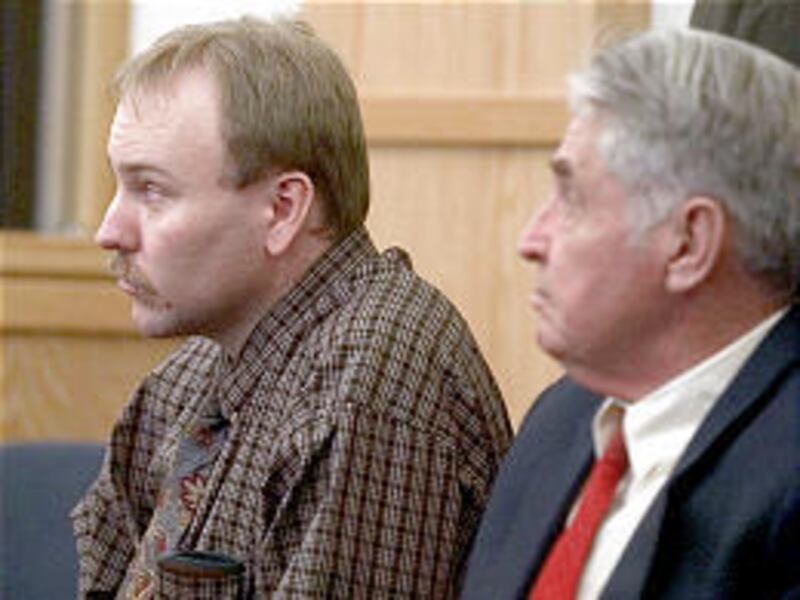
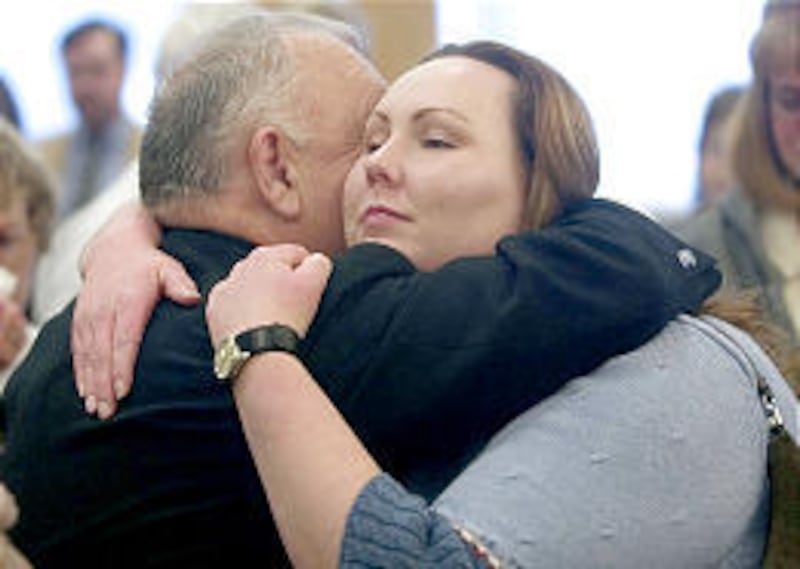
LOGAN — Friends and family of Trisha Ann Autry sat silently Wednesday evening, showing virtually no reaction as a judge pronounced guilty verdicts against the man on trial in the kidnapping, killing and dismembering of the Hyrum teenager.
Across the aisle, Cody Lynn Nielsen's parents and two sisters sat with heads lowered and silent tears running down their cheeks. After just four hours of deliberation Wednesday, the six-man, six-woman jury found Nielsen, 31, guilty of capital murder, aggravated kidnapping, kidnapping and two counts of desecration of a human body.
"Justice was done," special prosecutor Scott Wyatt announced after the verdict was rendered. "This is just a tremendous, tremendous relief."
Defense attorney Shannon Demler expressed disappointment with the verdict but said it was not entirely unexpected.
"We were aware what the evidence was and what problems we had with the case," he said.
Defense attorneys had prepared Nielsen for the possibility of the guilty verdicts, and Demler said he thought Nielsen handled the announcement with dignity.
Jurors will return to court today for a preliminary matter and then will be back next week to begin the sentencing phase of the trial. At that time the jury will decide whether Nielsen should be put to death or be sentenced to life in prison with or without the possibility of parole.
Demler said his focus at next week's proceedings will be to show jurors what kind of person Nielsen is beyond the negative information they have already received. Nielsen will likely take the stand, something he did not do in the trial's initial phase.
"If someone's going to ask (the jury) to save his life, I think he should be the best person to do that," Demler said.
Autry's older brother said Wednesday that his family has not taken a position on what punishment Nielsen should receive.
"For the most part, our family is just concerned with him being on the streets again," 30-year-old Aram Autry said.
Earlier Wednesday, Wyatt had urged the jury to find Nielsen guilty on all counts. Nielsen, he said during closing arguments, committed "the most evil acts that any person can do."
During the four-day trial, prosecutors put forth evidence that Nielsen stalked Autry in the months leading up to her June 24, 2000, disappearance. Several witnesses testified that Autry had reported she was afraid of Nielsen and that he often followed the 15-year-old home from school.
"Trisha was afraid of this guy, and she should be," Wyatt said. "She should be because within two months she was found dead in the bottom of a hole."
Investigators unearthed Autry's remains in May 2001 in two deep pits at a Millville coyote research facility, where Nielsen worked at the time of the slaying. They also discovered several items of clothing and Autry's lower jawbone, largely intact and scraped clean of all tissue.
The methodical cleaning of the bones and systematic dismemberment of Autry's body should not be forgotten, Wyatt said.
"That speaks volumes and volumes," he said. "How does a man get so far past feeling, so far removed from human respect or decency? So far gone that he can sit up there with a human body and mechanically scrape the flesh off the bone?"
Two of Nielsen's co-workers testified last week that they saw Nielsen on at least two occasions use a backhoe to dig deep holes and later ignite a large fire on a remote section of the wildlife facility.
In his closing argument, Demler urged jurors to look beyond the grisly details of the case and examine the holes in the state's presentation of the case.
"Mr. Wyatt likes to get up here and say all these horrible and gruesome things," Demler said. "Where's the evidence?"
Prosecutors failed to prevent any evidence whatsoever linking Nielsen to Autry's death, Demler said, such as DNA or fingerprint evidence that Autry was ever in Nielsen's truck or home. Additionally, he said, key questions such as when, where and how Autry died remain unanswered.
"What the state wants you to do is speculate," Demler said. "Speculation is doubt, speculation is lack of evidence. "If the state can't answer these questions for you, then you must find the defendant not guilty."
Nielsen had previously pleaded guilty to capital murder in an attempt to avoid the death penalty. He later withdrew the guilty plea and asked that the case move forward to trial.
Although he now faces a death sentence, Demler said Nielsen hasn't expressed any regret about his decision to face a jury.
E-mail: awelling@desnews.com