

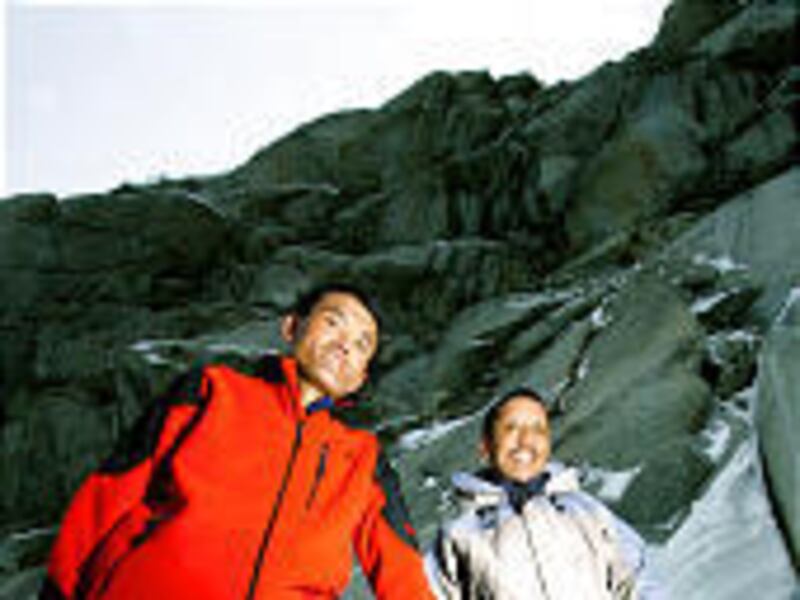
SANDY — Apa Sherpa holds the world record for the most ascents of Mount Everest at 13.
Lhakpa Gelu Sherpa, with 10 summits, owns the world record for the fastest ascent — 10 hours, 56 minutes — of the world's tallest peak, at 29,035 feet (about 5.4 miles above sea level).
Few people ever try to summit Everest, and even fewer make it. Many have died trying. When Sherpas reach the peak, it's usually with a paying customer.
"When they summit, I'm also very happy," Lhakpa said Tuesday through translator Tashi Tsering Sherpa.
Those considered to be of the Sherpa people use the same last name, though they are not necessarily directly related. It's unknown exactly how many Sherpas exist. Tashi's guess is "several thousand."
Climbing is Apa's and Lhakpa's job, one that takes them to the top of the world and around the other side.
Both flew into Salt Lake City this week from Nepal to endorse Sherpa Adventure Gear, makers of "high-end" outdoor active wear.
The Seattle-based company got its start last year, which marked the 50th anniversary of the first-ever ascent of Everest, made by Sir Edmund Hillary and Tenzing Norgay Sherpa.
Tashi, the company's founder, will translate for Apa and Lhakpa as they make appearances at the Outdoor Retailer show, which starts Friday and is open only to retailers.
"The Sherpas are truly the unsung heroes of Everest," said Jerry Mika, a sales representative for Sherpa Adventure Gear.
Sherpas frequently risk their lives for little pay or recognition to help adventure hounds paying up to $60,000 each to reach the summit. Sherpas climb because it's work that brings in a small portion of that money for their families.
One goal of Sherpa Adventure Gear is to funnel enough proceeds from the sale of its clothing to ensure that the four Sherpas, including Lhakpa and Apa, who endorse their products don't have to climb anymore — though both say they are not even thinking about retiring. The company also has set up a trust fund to benefit needy children in Nepal.
"The money will go directly to the villages," Tashi said. "My parents have always taught me to give back something. At this point in my life, I've got all I need."
Though Sherpas don't get nearly the recognition that paying customers give themselves after they summit, people like Apa and Lhakpa are well-respected in the climbing community.
"This is what has brought me fame," said Apa. How many more Everest summits does he have in him? "I really haven't decided yet."
As for those who forget that it was Sherpas who got them to the peak, Lhakpa's response is, "I'm used to it."
These days, even handicapped people are trying to summit, which means Sherpas shoulder a heavier burden, making more back-and-forth trips to haul gear. They even help some customers go to the bathroom, something that doesn't get recorded in history books.
Referring to Apa, Mika said, "You wouldn't pick him out of a crowd of a million people and think, 'This is the world record holder.' "
To put their feats into perspective, consider that Utah's tallest mountain, Kings Peak, is a mere bump at 13,528 feet.
Many trekkers take two days to summit Kings. Sherpas live year-round at an altitude over 14,000 feet.
Climbing to the top of Everest takes the most skilled alpinists more than two months. It normally takes five Sherpas eight trips to get just one paying customer to the peak. Since Hillary reached the peak, at least 5,000 people have attempted to summit and about 1,600 have made it, with fatalities approaching 200.
Most of the time that it takes to summit is eaten up by the process of acclimation, the time it takes for the body to adjust to high altitudes.
Sherpas, members of a Tibetan people who live on the slopes of the Himalaya Mountains in Nepal, thrive at such heights.
Dr. Kenneth Kamler cited several reasons in his 2003 book, "Surviving the Extremes."
In layman's terms, Sherpas have an increased rate of breathing at rest (they idle faster), their hearts rely more on burning glucose (sugar) than fat and their bodies produce special enzymes in the blood that speed up the capture and release of oxygen.
Sherpa bodies also produce more nitric oxide, which aids in opening up constricted blood vessels in the lungs. This is why Sherpas are considered to be immune to the potentially deadly pulmonary edema, when the lungs fill with fluid.
Apa and Lhakpa's bodies also produce less lactic acid, which the average person equates with pain in their muscles after a hard workout.
They say they keep in shape because they live a life without cars or motorcycles. They walk everywhere they need to go.
The problem with most people who want to climb Everest, Sherpas say, is that the training they have done in their own country does not compare to the real thing. Apa and Lhakpa have seen people die on the mountain, some because they were careless, others because of bad luck.
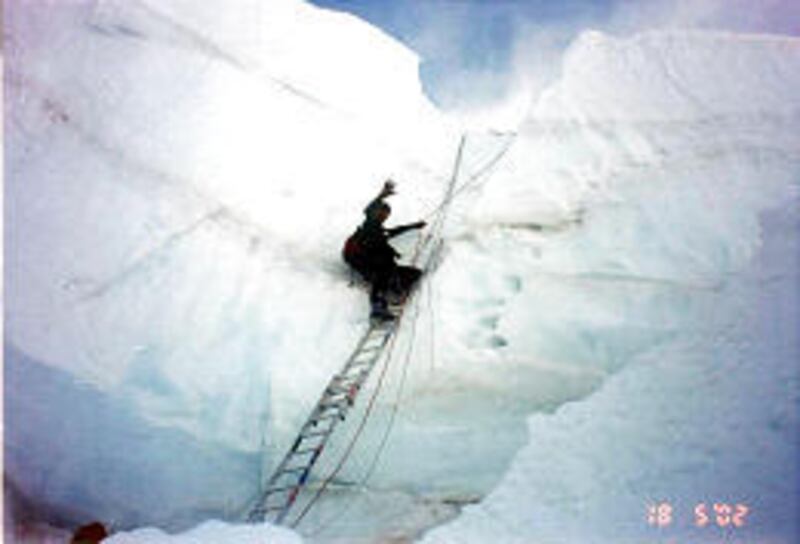
One of Lhakpa's friends, Babu Chiri Sherpa, fell to his death in a crevasse while out taking pictures.
"I was totally shocked and really very sad," Lhakpa said. "It was just pure bad luck."
E-mail: sspeckman@desnews.com