

It will take hundreds of millions of dollars and could lead to reductions in capital projects, but the Federal Aviation Administration says it has a plan to meet the nation's looming air traffic controller crisis.
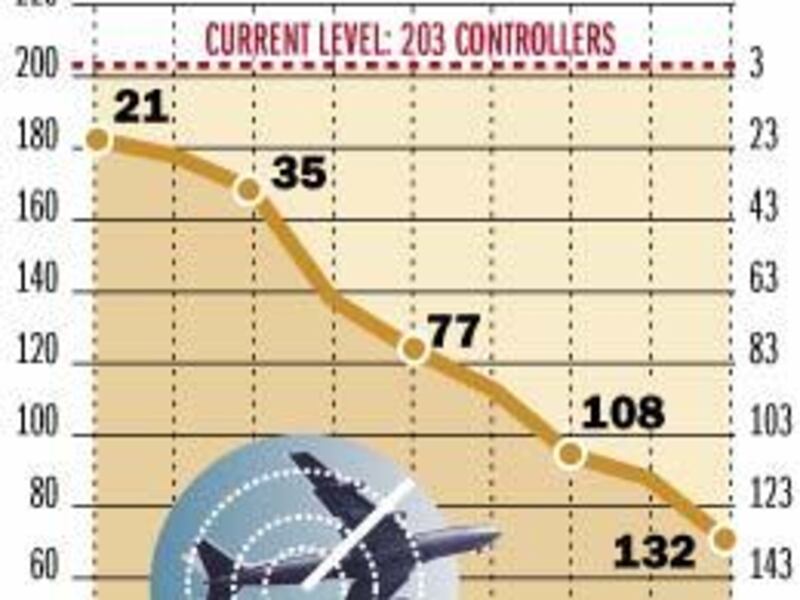
The problem is that many controllers will be leaving the field in coming years. The exodus will occur in cities across the nation, including Salt Lake City, where some 65 percent of the air traffic controllers at Salt Lake City International Airport will be eligible for retirement by 2012.
Nationally, the figures are just as grim.
In the next decade, 73 percent of the nation's air traffic controllers will become eligible for retirement. Many of them will be forced to retire by age 56, since by law controllers can't work past that age.
With the pending work-force crisis, the FAA presented its plan to Congress on Tuesday as well as separate presentations in 28 other cities across the nation, including Salt Lake City.
The plan allows for "exceptional" controllers to work until age 61. It also calls for the hiring of 12,500 new air traffic controllers by 2014.
Currently, the FAA has 14,816 controllers working nationwide, but about 11,000 of them are expected to retire by 2014. In Salt Lake City, 132 of the roughly 200 controllers working at the Salt Lake Center will be eligible for retirement by 2012.
Nationally, FAA administrator Marion Blakey said 435 controllers will be added next year, 1,249 the following year and varying amounts in subsequent years through 2014. When hiring is completed, the FAA will have 16,500 controllers, about 1,500 more than now.
John Carr, president of the air traffic controllers' union, said the hiring timetable is too long. He said he expects the FAA will have to slow airport infrastructure improvements and postpone purchases of new technology to help pay for the new hires. He said an established air traffic controller earns about $160,000 in salary and benefits.
The cost of hiring and training the new workers will run into the hundreds of millions of dollars. Despite the federal government's fiscal woes, Blakey said, "We do expect that kind of funding will be there from Congress."
Besides Carr, there were other critics. Rep. Peter DeFazio, D-Ore., said the plan lacked its most important part — funding.
In Utah, FAA traffic hub manager Clark Desing called the plan "a wise investment of taxpayers' money" but said he didn't have an exact figure on how much the plan would cost.
Salt Lake City Department of Airports executive director Tim Campbell said he and other airport managers nationally have a keen interest in making sure the plan is implemented and paid for.
"We want to make sure that the plan is sound and that it is fully funded," he said. "I feel pretty comfortable that it will be fully funded."
The crisis can be traced to 1981 when President Ronald Reagan, amid a labor strike by the controllers' union, forced out thousands of controllers, compelling the government to hire thousands of new controllers in the following years.
Now, most of those controllers are reaching retirement age, an early benchmark in the air traffic control industry.
Contributing: Associated Press.; E-mail: bsnyder@desnews.com