

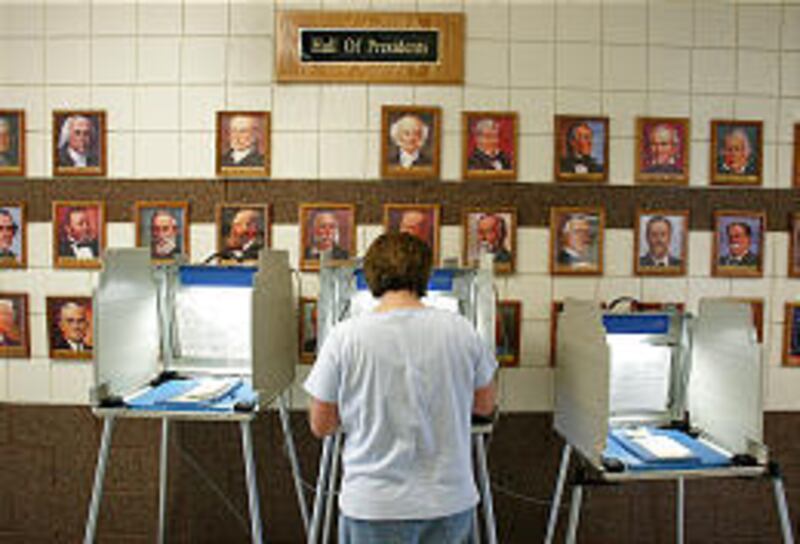
Utah may not be a state that commands a lot of significance politically. And, true, the race for the Democratic presidential nomination has been effectively whittled to two viable candidates — and even then, only one appears to be truly viable.
But on Tuesday, Utahns will get their chance to have a say in the matter. In a democracy, that is really all anyone can ask.
Unfortunately, Utah's Democratic primary is only a semi-open affair this year, following on the heels of the state Republican Party's decision to close its primaries. Anyone who will be at least 18 years old by the Nov. 2 general election is eligible to cast a ballot at his or her local library between noon and 8 p.m. But they will be required to sign a statement declaring themselves to be participating as Democrats and agreeing not to vote in any other party's primary for the same election.
Many Utahns prefer to consider themselves independent, rather than to publicly declare themselves with one party or the other. In a year in which George W. Bush will win the GOP nomination with little opposition, it makes little sense to keep many Utahns from having a say in the democratic nomination process.
The Democrats seem to have adopted the logic of those who support the GOP's closed primary, which in this case would be that Republicans could storm the ballot box and "rig" the outcome in their own party's favor. We have trouble understanding how that could happen on Tuesday, or how this primary could be skewed to best help President Bush in the fall.
At this point, however, it is fairly certain that Utah's primary won't register very strongly on the national political landscape. The nation's primary process is a mess that seems immune to any solution. Elections are state matters, and it is entirely appropriate that they remain so. But that means a national selection process such as this will always be carried forth without regard to the people who live in vast areas of the country. Instead, Iowa and New Hampshire get a disproportionate amount of influence.
Former Utah Gov. Mike Leavitt once made a valiant try to combine several Western states into one simultaneous primary, something that would have given the region some clout and forced candidates to pay attention to some local issues. But that effort fell apart.
Still, the democratic process allows Utahns to register their preferences. John Kerry may be the clear front-runner, but the ballot will contain several names. Utah's Democrats should take advantage of this opportunity.