

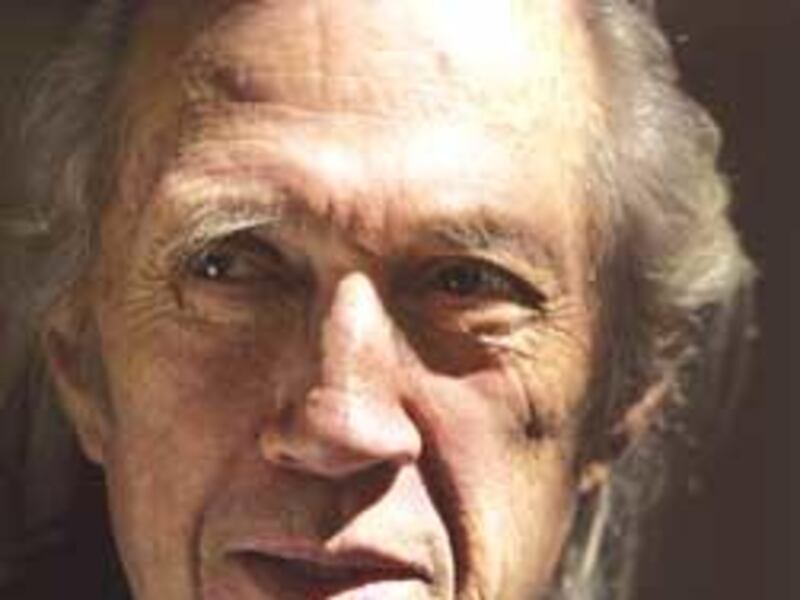

Though his entertainment career spans nearly a half-century, David Carradine really came to fame because of his role as the indisputably good-guy character Kwai Chang Caine in the 1970s television series "Kung Fu." (The show's first season has just been released on DVD.)
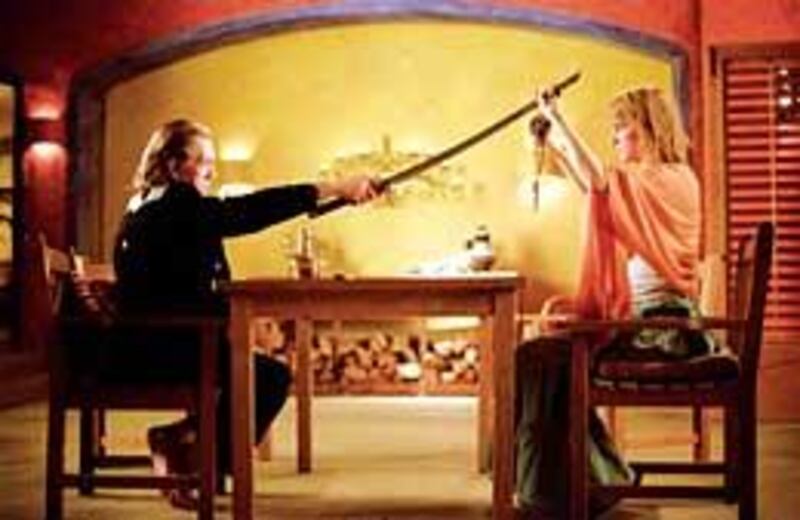
Some 30 years later, Carradine has returned as one of the baddest bad guys in movie history, the menacing and nasty title character in Quentin Tarantino's "Kill Bill," actually a pair of action/revenge thrillers.
But don't mention the bad guy thing to Carradine.
"I'd beg to differ there," he said, without the slightest irony. "Really, can any character really be called good or bad in a Quentin Tarantino film? You can call him the antagonist. But villain? Bad guy? I'd have to disagree with either of those descriptions."
Still, there's no denying that his character, known simply as Bill, has done some mighty villainous things. As the head of the Deadly Viper Assassination Squad, he's served as mentor and lover to the most promising of the group, whose code-name is Black Mamba (Uma Thurman), but who is known in the films as simply "The Bride."
But when she leaves the business to get married, Bill and the rest of his squad shoot up the wedding and leave the The Bride for dead — which sends her on a quest for bloody revenge.
"Hey, she made him mad," the 67-year-old actor said during a telephone interview from Hollywood. "And to be fair, she's done some horrible things herself. I guess if you want to call her the good guy you can, though,"
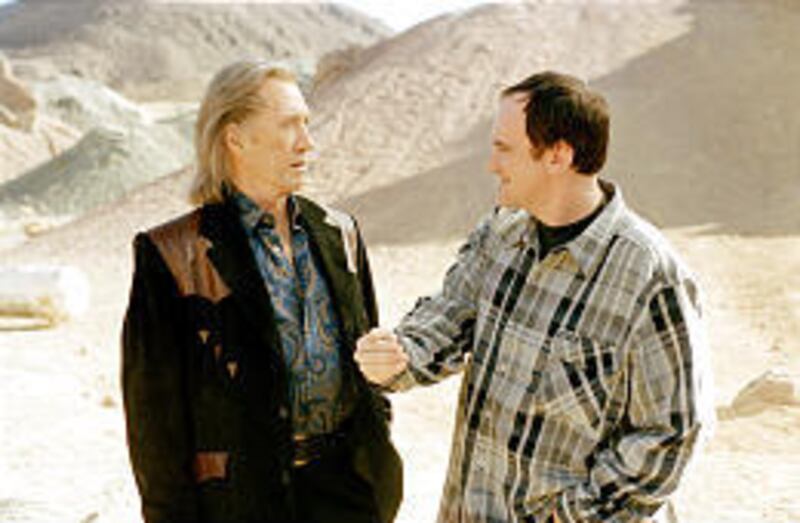
If Carradine seems a little defensive about his character, it's understandable. He says that playing the part and working with director Tarantino marks a highlight in his lengthy career. "You only get the chance to work with someone as brilliant and creative as Quentin once in your lifetime. And that's if you're extremely lucky. And needless to say, I've been extremely lucky. Quentin is nothing less than a visionary."
Actually, Carradine wasn't Tarantino's first choice. Warren Beatty was initially cast as Bill, though he eventually dropped out. "I'd heard that, but I also know that Quentin told me he wrote the part with me in mind all along. So you'd probably have to ask him what happened there. Maybe he thought I wouldn't do it. I'm just glad that things worked out in my favor."
Carradine said he's also happy that Tarantino and Miramax Films chief Harvey Weinstein decided to release "Kill Bill" in two installments, rather than as one big film, as had originally been planned. "I don't think it would have worked as a three-hour film. You would have had to cut out all the little superfluous character scenes, and those are the things that really make a Quentin Tarantino movie."
Still, at least one scene did wind up on the cutting room floor — a poker game that turns into samurai-sword fight involving Carradine, Michael Jai White and several henchmen. "There's a reason to look forward to the DVD," Carradine said with a sigh.
For an actor approaching 70, Carradine is in tremendous shape. Some of that is attributable to his dietary practices and Tai Chi regimen, though, like the rest of Tarantino's cast, Carradine also went through months of martial-arts and swordfighting workouts and instruction to prepare for these films. "That's yet another of the perks from continuing to work in this industry. They pay you to workout, stay in shape and be healthy," he said with a laugh.
Carradine has appeared in nearly 150 film and television projects over the course of his career. But he said that's only about half of what his father managed to accomplish, the revered character actor John Carradine. "That was an amazing feat, all that he did in his career. I'm not sure anyone will ever equal it.
"I'd like to think that my father passed on that great work ethic to me. But I also have to give some credit to my mother, who raised all of us boys while my father was away making all those movies."
E-mail: jeff@desnews.com