

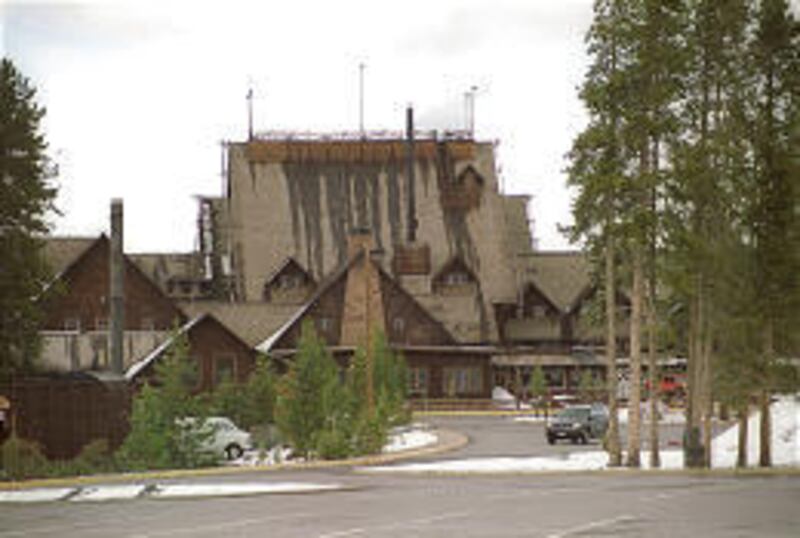
YELLOWSTONE NATIONAL PARK, Wyo. — That Old Faithful Inn still stands at all amid the park's scarred, steaming landscape is amazing to Lee Whittlesey. The park historian and former ranger can vividly recall the wildfire that threatened to consume the inn, along with the buildings and forest near it, on Sept. 7, 1988.
"I watched with trepidation," he recalls of that dramatic day, when, ultimately, firefighters saved the inn.
It has survived fire, earthquake, the sands of time. And 100 years after Old Faithful Inn first opened, it remains an icon in the national park system and as much an awe-inducing spectacle as the namesake geyser that erupts reliably just outside its windows.
Beginning this fall, work is set to begin on a three-year, multimillion-dollar project that an architect said will likely be the inn's most significant face-lift to date.
Among the plans: stabilizing the structure in the event of another earthquake, such as the one that rocked the inn in 1959 and caused damage; fixing the leaky roof and laying new shingles; and renovating older rooms to bring back such turn-of-the-last century charms as wash basins, said architect Jim McDonald, who is involved with the project.
Probably the biggest challenge, McDonald said, is to do what's necessary in a way that doesn't compromise the inn's overall look or character.
It's that "old time feeling," a sense you're stepping back in time to an era in which men and women dressed for dinner and visiting Yellowstone was an expedition, that helps make the inn so special — and captivating, said Karen Reinhart, a former park ranger who recently co-wrote with Jeff Henry the book "Old Faithful Inn: Crown Jewel of National Park Lodges."
"It breathes history," she said from her home near Emigrant, Mont. "It is a fascinating place and has a fascinating story."
Details on the inn's roots are, she found, rather sketchy, from the number of men involved in the construction from 1903-04 to the amount of materials used, including timber and stone from the park.
"When it was built, it was the most important thing, I would think, going on at Yellowstone," Henry said. "It seems to me that someone would've kept a roster or a journal. And why we can't find that — whether the information was never collected or lost — I don't know."
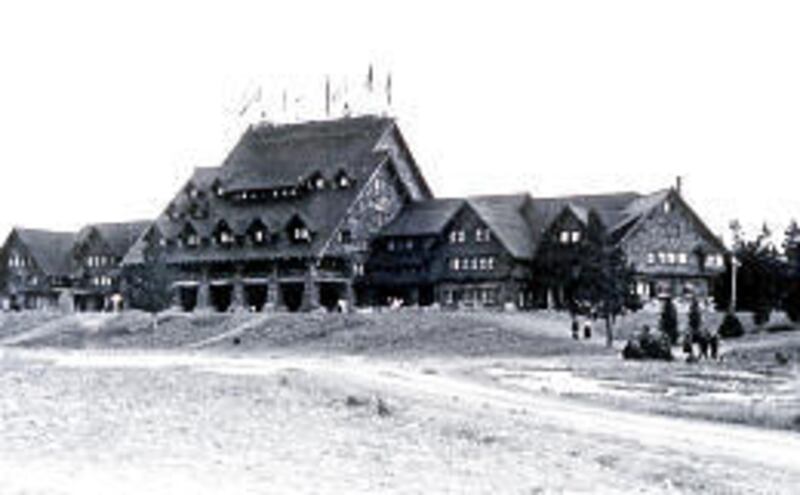
What is clear is that the inn — for all of its intentional, rustic charm — was actually quite modern at the time. First opened in June 1904 and originally offering about 140 rooms for the wealthy and social elite who stayed, the inn had conveniences such as electricity, heat, plumbing and fine dining, Reinhart and others say.
The atmosphere, though, was definitely rustic and the building designed by architect Robert Reamer stood as an example of what was later referred to as "parkitecture" — modern buildings constructed in such a way that they seemed to grow from, or be connected to, the land, said the National Park Service's Andy Beck, project architect for inn restoration work between 1980-83.
The Park Service has referred to the inn as one of a few "historic log hotels" left in the United States, though Beck refers to it simply as rustic, saying most of the building — officials note that two wings were added onto the "old house" in 1913 and 1927 and have a more modern feel — is woodframe.
Regardless, Beck said, "The Old Faithful Inn, by the sheer scale of it, set a standard, and people looked to it."
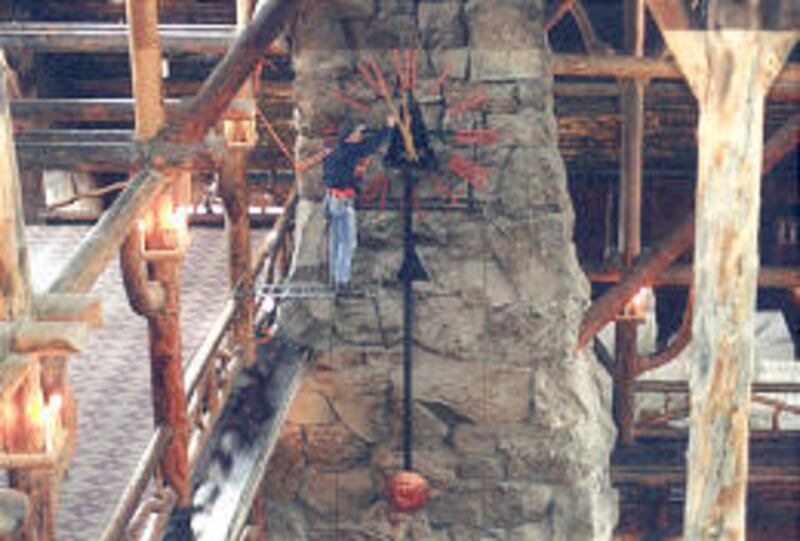
Ruth Quinn knows that many still do. A tour guide, she is among those who can tell visitors by their open mouths or the way they may twirl in the center of the lobby, which has been pegged by Beck at 76.5 feet high, eyes skyward to follow stairs leading up; to spy the "tree house" perched high; and to check the large clock on a looming, stone fireplace.
"It wows people. It's got character and history behind it, and that's what attracts people to it," said Rick Hoeninghausen, director of sales and marketing for Xanterra Parks & Resorts at Yellowstone, which operates the inn.
Those who have come have ranged from the famous — six U.S. presidents have visited, the most recent being Bill Clinton — to the ordinary, Xanterra said, adding that some guests staying among the inn's 325 rooms for the centennial season booked nearly 20 years ago.
Had the inn been lost to the Yellowstone fires of 1988, which arguably posed one of the most serious threats to the site, "it would've been a tremendous blow," said Henry, a photographer and former park ranger who was at Old Faithful on Sept. 7 when firefighters saved the structure. "To Yellowstone fans around the world, it is the most important building in the park."
Phil Perkins, Yellowstone's fire management officer, said saving the inn was a top priority, but a goal no one was certain could be achieved.
There was skill involved, but also a healthy dose of luck: there were roads, a meadow and a large parking lot nearby. A slight wind shift, however, and the ending could have been much different, some say. The fire ended up consuming trees and some buildings not far from the inn. Looking over accounts of that day, Perkins said he's surprised more didn't burn.
Whittlesey, the park historian, remembers watching workers beat out spot fires on the roof of the inn, and a sense of relief seeing water course over the building, noting that a sprinkler system also had been installed just a year earlier.
"It's the nicest sight I'd ever seen because, otherwise, I'm sure we'd have lost it," he said.