



Finding the perfect plant for a specific place is not always easy. Gardeners must consider size, shape, growing conditions and more.
But if you are looking for a little flexibility in your planting beds, then search out flexible plants. Literally.
Long before Tarzan swung through the jungle on hanging vines, they helped gardeners solve landscape problems.
One reason vines fill a special landscape niche is that they assume many different growth habits. Some creep across the soil as groundcovers while others cling to fences or trellises; some cover arbors or trail over walls.
For more specific needs, look to annual vines. These grow — some quite rapidly — from seeds or small transplants each season. Some have showy flowers while others make their show from large or colorful leaves.
For convenience, I am grouping vines by their botanical relationships. Keep in mind that some vines that are perennials in warmer climates only grow as annuals here.
For show, it is hard to top the Ipomeas. This genus has at least six species of plants — such as true morning glory or sweet potato vines — that feature large, attractive flowers. None of these have spreading root systems, so they are never invasive, like the field bindweed we erroneously call morning glory.
Ipomoea alba is also known as moonflower vine. This perennial plant grows as an annual in Utah. It grows as long as 20 feet in a season and provides some of the quickest annual shade. The heart-shaped leaves grow up to 8 inches long, providing luxuriant foliage.
Among the most interesting aspects are the 6-inch flowers. They get the name moonflowers because they open after sundown. They also stay open on dark, cloudy days. Use them in gardens that have outdoor lighting for the most interest.
Ipomoea nil is annual morning glory. This summer annual includes the common morning glories and several named varieties, including the popular Scarlet O'Hara. The flowers are showy but not as large as some other species. Morning glory vines get their name because the flowers open each morning and close at night, never to reopen. Some produce thousands of flowers each season.
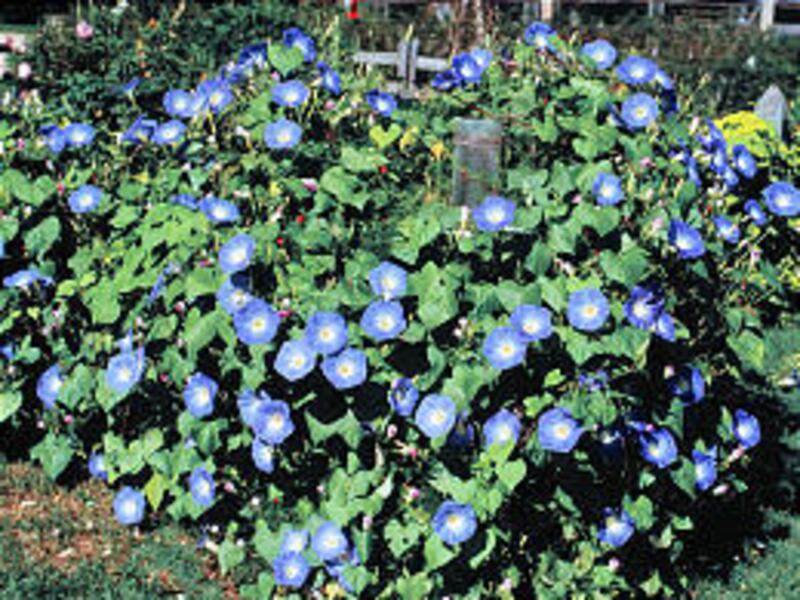
Ipomoea tricolor is also called morning glory. The showy, funnel-shaped flowers are lavender, pink, red, white, bicolored or striped. Heavenly Blue is a popular type that grows almost 15 feet long in one summer.
All morning glory plants are easier to plant by seed than to transplant. The seeds often have hard coats and sprout more easily if you notch the seeds with a small file. All need adequate water and full sun and a place to climb.
Spanish Flag — or Mina lobata (Ipomoea lobata) — is another favorite. The flowers form on forked spikes and range from light cream at the base to red as the spikes unfurl. They like moist, fertile soil and grow several feet long in full sun to part shade. Ipomoea quamoclit, also known as Cypress vine or Cardinal Climber, has unique fine threadlike leaves and scarlet tube-like flowers that flare at the mouth into five pointed stars.
The non-flowering Ipomoeas are some of the most popular on the market. Ipomoea batatas are sweet potatoes. While we usually do not grow these as crops in Utah, the ornamental forms are superb performers in containers and flower beds.
Look for three different types. The cultivar Blackie has dark foliage. Margarita is a bright chartreuse green/yellow and Tricolor is white, green and pink. These are vines that do well in hanging containers or as a ground cover. They can be grown in full sun and will reach 6 feet long.
Cobaea scanders — or cup and saucer vine — is an excellent plant that climbs with tendrils and has bell-shaped white, violet or purple flowers. After the flowers drop, the green bracts remain and a seedpod forms, providing additional interest. Provide a sunny growing area with light, rich soil.
Asarium, also known as climbing snapdragon or chickabidi, is a fast-growing annual vine that produces purple, trumpet-shaped flowers until the frost. Give them a sunny exposure, moist soil and a place to climb as they may grow to 12 feet.
Love-in-a-Puff or balloon vine is Cardiospermum halicacabum. The 1-inch fruits of this annual vine are white and puffy, but the flowers are not ornamental. The seed inside the fruit is marked with a heart-shaped spot. Give them full sun and well-drained soil.
Last but not least are the vining vegetables. Pole beans and scarlet runner beans feature white or red flowers, respectively. Hyacinth beans have bright purple flowers and showy purple leaves and pods.
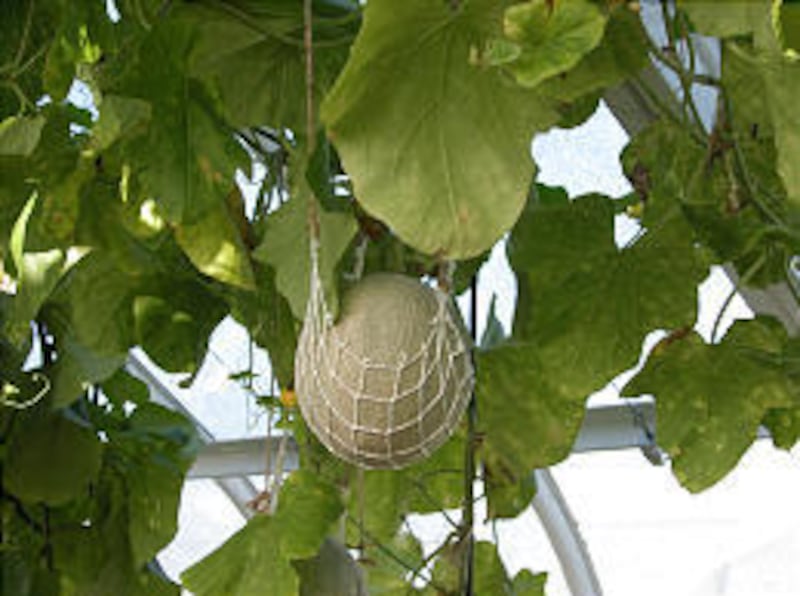
Cucurbits are cucumbers, melons, squashes, gourds and pumpkins. Not only do you get some massive vines, (giant pumpkins might grow 50-foot tendrils) you also get showy white or yellow flowers. The real bonus is the tasty fruit.
Peas, snow peas and snap peas are all useful vines and have white or purple flowers. Sweet peas (Lathyrus) are not edible, but they have showy flowers in different colors. All peas climb with tendrils and this is one annual vine you want to try next spring because they prefer cool weather.
Larry A. Sagers is the regional horticulturist, Utah State University Extension, at Thanksgiving Point.