

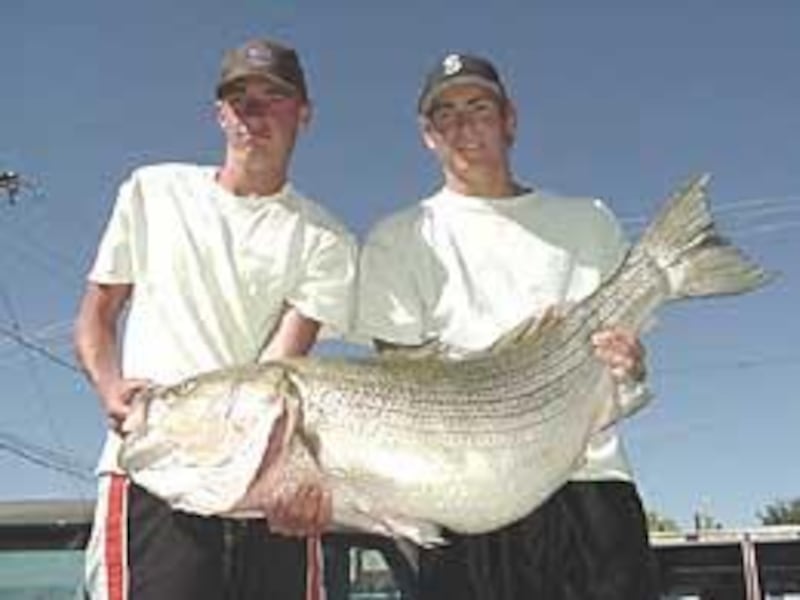


LAKE POWELL — What looked like a floating piece of foam bobbing about the surface last year may well have been a world record striped bass. No one will ever know for certain.
What is certain is that the fish was dead and that it was big. No, it was huge.
The fish measured 6 1/2 inches longer than the current freshwater record holder, and when a replica was commissioned, based on the measurements given, there was not a mount large enough to duplicate the fish.
The replica, currently on display in the Wahweap Lodge on the shores of Lake Powell, is therefore about 10 inches smaller than the real fish.
How do we know?
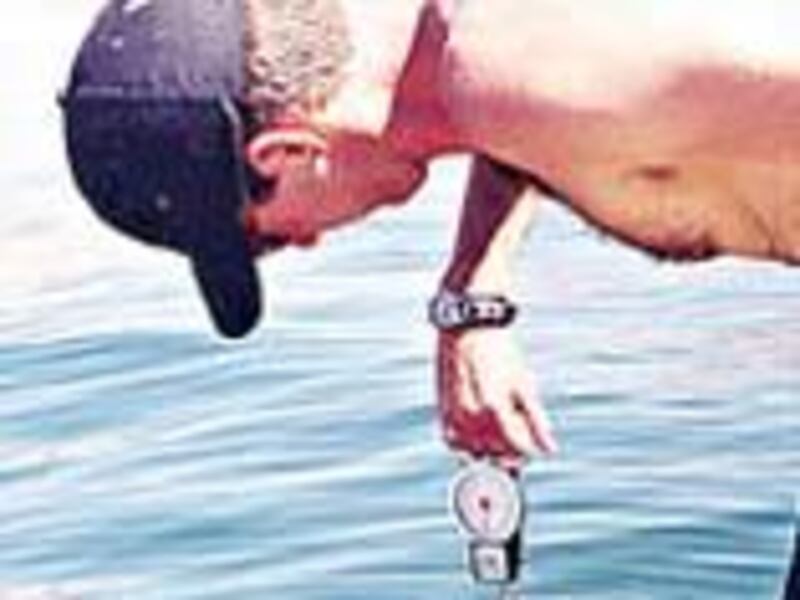
Maury Foye of Flagstaff, Ariz., found the fish floating on the surface of Lake Powell in July 2003. He measured the fish, attempted to weigh it, shot pictures as proof of his find and then released it back into its watery grave.
The fish was 62 1/2 inches long and measured 37 inches around the girth. Foye hooked the fish onto a 50-pound scale he had, and as he attempted to lift it from the water, the scale's needle zipped past the 50 mark and broke.
"From what we can determine," explained Wayne Gustaveson, chief fisheries biologist for the Utah Division of Wildlife Resources at the lake, "from the measurements we've submitted to the International Fresh Water Hall of Fame, the fish very possibly could have exceeded 70 pounds."
The current freshwater record for a striped bass is 67 pounds, 8 ounces. The saltwater record is 78 pounds.
The freshwater record fish was 56 inches long and measured 37 inches around the girth. The world record saltwater striped bass was only 58 inches long. The freshwater record was caught in California and the saltwater record came from the ocean.
The fish was actually one of four huge fish found floating on the surface of the lake last July. The smallest fish weighed 44 pounds.
The lake record, set back in 1991, was actually held by a black Labrador. The dog, seeing a large fish floundering on the surface, jumped into the water, grabbed the fish by the tail and pulled it to shore. The fish weighed 48 pounds, 2 ounces. A few months later a fisherman caught a striper that weighed 48 pounds, 11 ounces, which is the current state record.
Gustaveson said it's not uncommon to find large fish floating on the surface, either dead or near death, during the hottest months of summer.
"The fish actually died of natural causes," he explained. "but the circumstances are specific to large fish. As fish grow, they are forced to live in cooler water. The larger the fish, the colder the water needs to be. During the summer, when the surface temperatures rise, the larger fish must go deeper to find the colder water. But this separates them from their prey base.
"When they come to the surface to feed, lactic acid starts to build up. If the fish spends too much time chasing food or stays in the warmer water too long, they're not able to get back down and they die."
The main diet of striped bass is a shad, a small forage fish. The larger stripers will also feed on carp. Both species of prey fish tend to stay in the upper levels of the lake.
Currently, the surface temperature of the water in Lake Powell is around 73 degrees. It will get into the mid-80s by mid-July.
"It's very likely that we'll find more big fish on the surface in July. We know the big fish are here," he said.
It takes about 10 years for a striped bass to reach trophy size.
Gustaveson believes the huge fish grew from the crop of stripers hatched from the class years of 1991 or 1992. There were good shad numbers those years, which would have resulted in rapid growth.
The shad population also peaked in 1996, and there have been an exceptionally high number of shad in the lake for the past three years. Because of the strong forage base, Gustaveson said fishing this year has been "some of the best in more than two decades."
The best time to hook a trophy striper is during the spawn, which ended last month, or when the surface temperatures drop during the winter months of December and January.
"The fish that were found last year are proof that the big fish are here," he added, "and that there very likely could be a world record somewhere in this lake. "
Proof is in the newly mounted, albeit somewhat smaller striper, which will be on display at various locations around the lake.
E-mail: grass@desnews.com