

On Tuesday of this past week, one of the architects on the Capitol restoration project was in Oregon. He went to look at cherry trees. Back in Utah, another architect was assigned to research lawns. He was examining drought-resistant varieties.
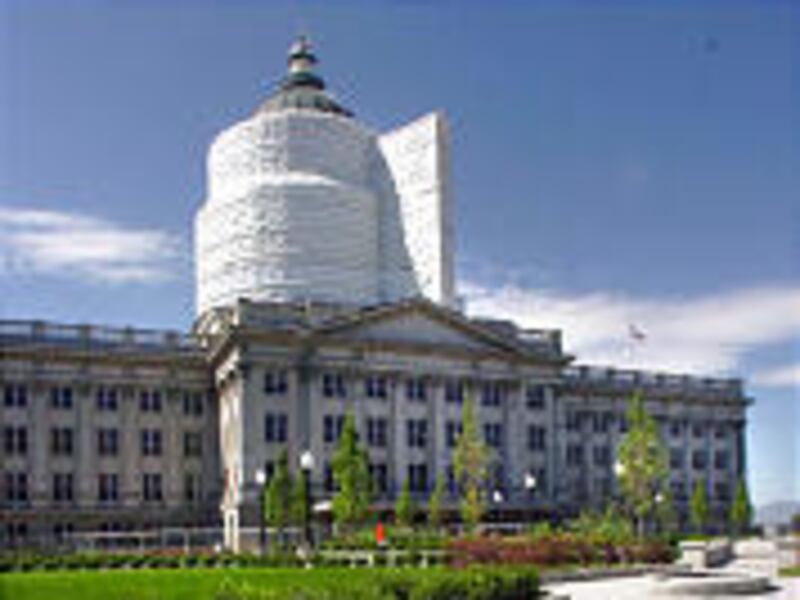
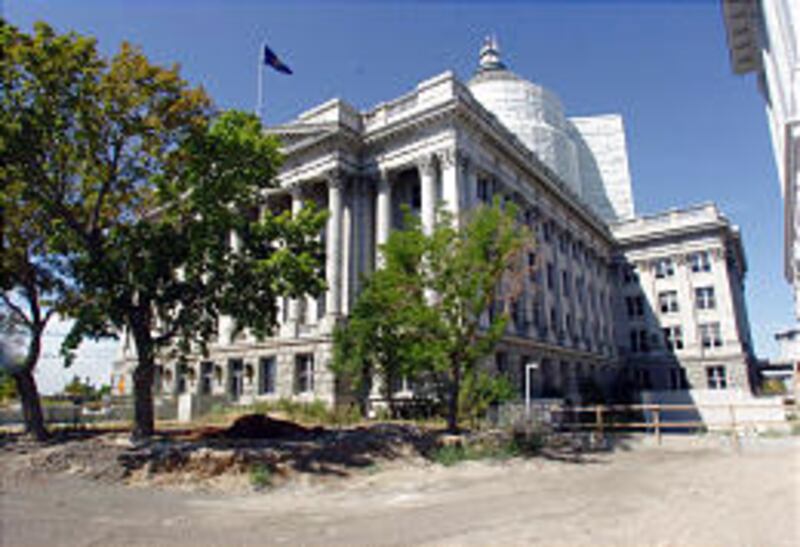
It may seem a little early to start worrying about landscaping. After all, the $200 million renovation of the Utah State Capitol is going to take four years. For four years there will be trucks and all sorts of equipment rumbling around Capitol Hill, and the grass will become mud and the trees closest to the Capitol on the south, east and west sides will probably have to be removed. The whole place will be a mess.
And yet, according to Cory Shupe, a planner with the firm MGB+A, landscape architects really don't have any time to waste. Not if they want to make the grounds look like they are supposed to look. Shortly after the renovation is finished the grounds must be stately and inspiring in some parts — and informal and inviting in other parts.
There's no time to waste. Not if the landscape architects want to realize, finally, the dream that was first drawn up nearly 100 years ago.
Frederick Law Olmsted was the father of landscape architecture in this country. He's the one who made up the term, "landscape architecture." He's the one who designed Central Park, back in the days of the Civil War.
Biographers Charles Beveridge and Paul Rocheleau give Olmsted full credit for inventing the urban parkway and for having amazing vision. But they also point out that Olmsted's nephew, John C., made his own amazing contributions and has been largely overlooked.
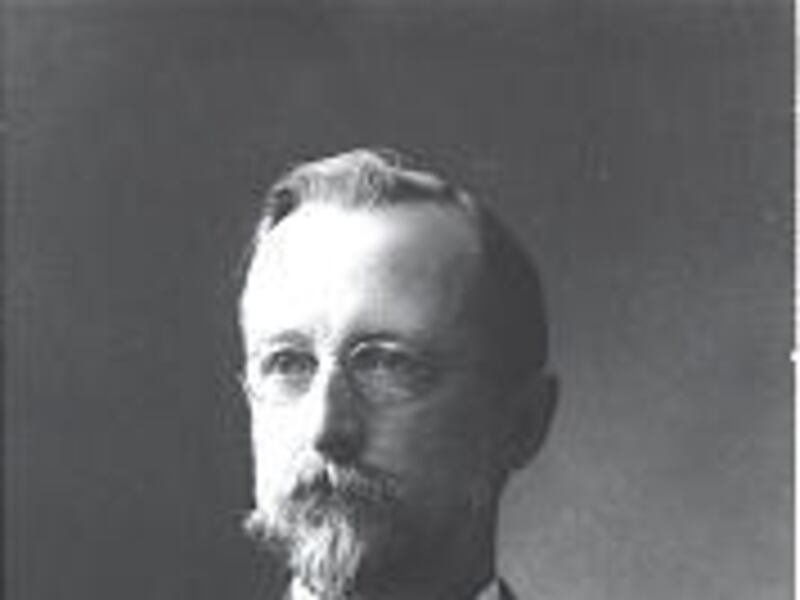
It was John C. Olmsted who first designed Utah's Capitol Hill.
Beveridge and Rocheleau explained that John became his uncle's protege at an early age. It seems that John's father, who was also named John, made a deathbed request of his brother. Please look after my wife Mary, he said. And Frederick Law Olmsted took the request seriously. A few years after his brother's death, he married his brother's widow.
Frederick Law Olmsted was a good stepfather/uncle to Mary's two children. He took John into his architectural firm and trained him. Meanwhile, Mary and Frederick had a son of their own, Frederick Law Olmsted Jr.
Frederick Sr. wanted his son to take over the firm but Frederick Jr. was only in his early 20s in 1895, when Frederick Sr. felt his health failing. John, on the other hand, had been with the firm for 20 years and his uncle's partner for 10 of those years. Historians speculate that it fell to John to finish Frederick Jr.'s training.
At any rate, the company became Olmsted Brothers in 1895, and although John died in 1920, Frederick Jr. lived until 1957. All in all, the three Olmsteds are responsible for more than 100 years of urban landscape design. They created and supervised more than 6,000 projects.
In addition to Central Park, Frederick Sr. designed the grounds for the U.S. Capitol, headed up the first Yosemite commission, lead the fight to protect Niagara Falls, started the first experiments in scientific forestry on the grounds of the Biltmore Estate and planned the Boston green space known as the Emerald Necklace.
According to Beveridge and Rocheleau, John helped on the Boston plan and also on the urban parkways of Rochester and Louisville. He planned the campuses of Smith, Mount Holyoke, the University of Chicago and the University of Washington. He designed parks all over the West, including Seattle's park system, with its beautiful views of Mount Rainier and Lake Washington and the ocean.
Frederick Jr. did the parks in the District of Columbia, including Rock Creek; planned the residential communities of Forest Hills in Queens and Palos Verdes near Los Angeles; and drew up city plans for Newport, R.I., Boulder, Colo., Pittsburgh, Pa. and more.
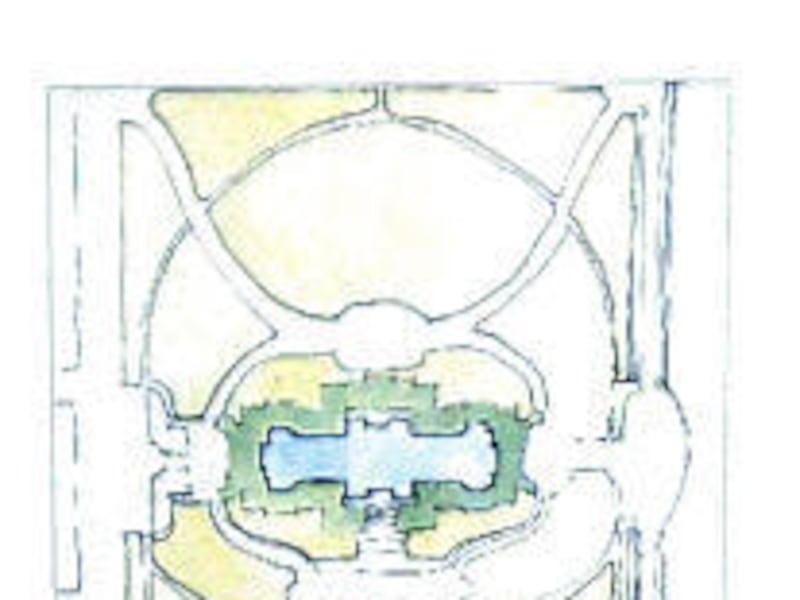
In 1911, John Olmsted stopped in Utah. He met with the men who were planning to build the state's Capitol. Olmsted drew a site plan, classical in nature, which included an oval pathway intersecting with other curved paths. His plan called for the state to buy up and remove all the houses on Capitol Hill.
But, of course, the houses to the west of the Capitol are still there, notes Martha Bradley. Bradley is an architectural historian who helped prepare the Capitol's historic structure report for the current renovation. Bradley said at the time Olmsted was hired, some of Utah's most influential citizens were living on Capitol Hill. They probably didn't want to move. They probably liked the view.
In the end, they hired local architect Richard Kletting to design the Capitol and its grounds.
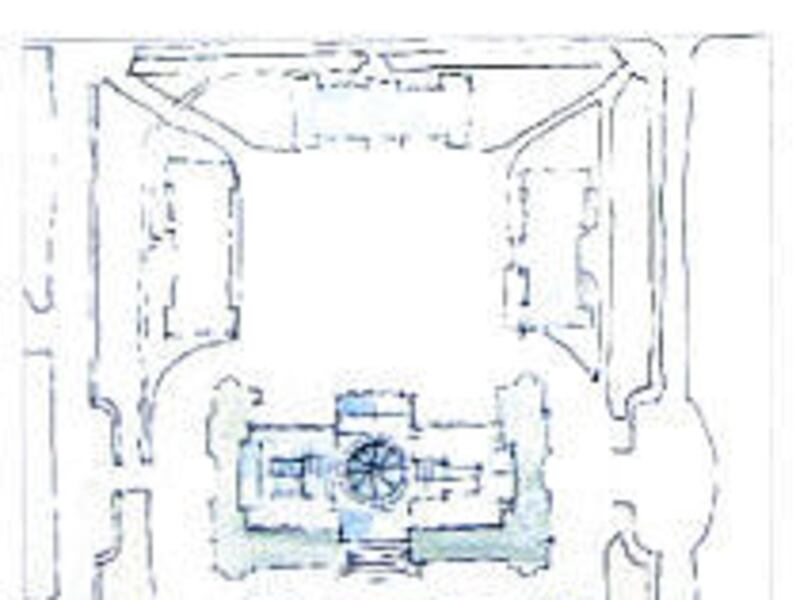
Bradley wrote, "For some reason — perhaps his inconvenient distance from Salt Lake City, or the desire to use local designers — Olmsted was not engaged to finish a landscaping plan. Instead, eventually architect Richard K.A. Kletting was asked to prepare landscape designs. It was an awkward situation, for as late as December 1914, Olmsted wanted to complete his work with a planting plan and collect the balance of his fee. Kletting was not only aware of Olmsted's work, his own 1912 site plan was influenced by Olmsted's, but locates the building in a more southern spot. The completed site was different from either designers' plan."
One difference was apparent as soon as the Capitol was completed, in 1916: Kletting planned for statuary on the outside of the Capitol, but the building came in over budget, so the statues never were commissioned. And another little problem that planners couldn't have foreseen: Over the years a lot of Capitol Hill got paved for parking lots.
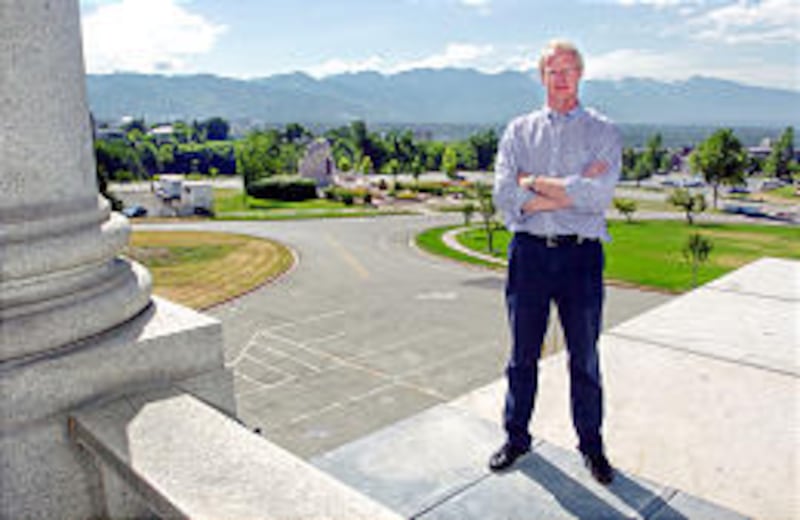
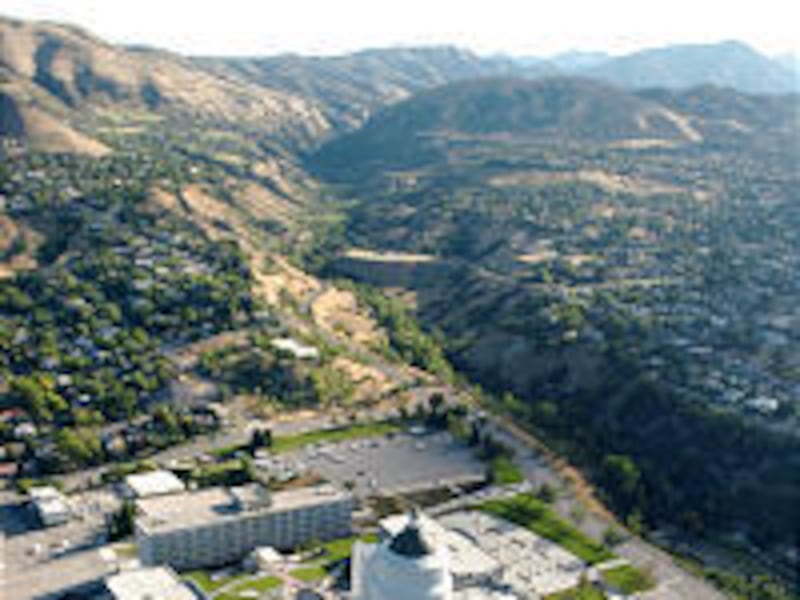
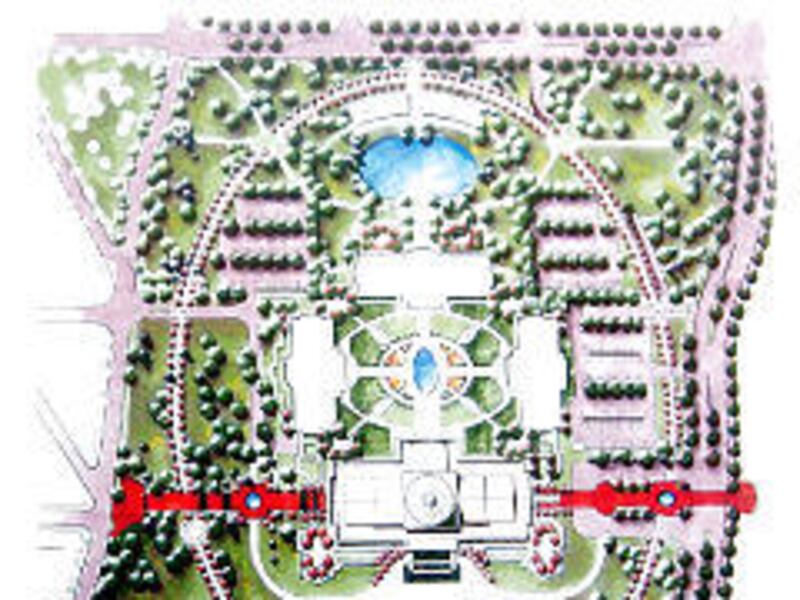
The new design will see parking go underground. Pedestrian walkways will be reinstated. On the east side of the grounds, a viewing balcony will extend out over Memory Grove, linking that green space with the green space around the Capitol.
Allen Roberts, with the local architecture firm of Cooper/Roberts, also worked on the historic structures report, under the supervision of the Capitol Restoration Board. In 1999, before landscape architects started to draw the current site plan, Roberts and his assistants scoured the state archives and came up with 248 pages of Kletting's original drawings, including his site plan. Then Roberts got hold of the Olmsted Foundation and got copies of John Olmsted's first design of the Utah State Capitol grounds.
Roberts said Olmsted's design may have influenced Kletting but that Kletting was a great architect in his own right. Kletting had been born in Germany and had also studied and been influenced by the classical parks of Europe.
Comparing Kletting's design to Olmsted's shows that Kletting's design is for a narrower site. Some elements, such as curved walkways, can be found in both men's work. Roberts reviewed the drawings before telling the Deseret Morning News that it was Kletting, not Olmsted, who envisioned three buildings to the north of the Capitol, forming a square with a plaza in the center.
That plaza has recently been completed. With the addition of the new House and Senate office buildings to the already existing state office building, the plaza is framed on all four sides, pretty much as Kletting imagined it.
The first two plans were the work of two individuals, but the most recent plan is definitely a group effort. A local architect, Paul Brown, had a lot to do with the final design, but the way Roberts describes the process, "We met every week with Dave Hart (Capitol architect) and the Capitol Preservation Board and Jacobsen Construction, so you had a whole bunch of people all kind of developing this together." Roberts said the final result is much closer to Kletting's plan than to Olmsted's.
When Bradley is asked about the importance of Olmsted's first drawing, she said it brought national prestige and attention to the project and made Utah part of the national movement of park planning that was going on at the time. "The reason we remember Olmsted is that he saw the bigger picture," she said. "The way the Capitol relates to Salt Lake City is all about site."
The Capitol is perfectly positioned at the top of State Street, she noted. But Olmsted was the first to say the Capitol should not be surrounded by buildings. If it had been, Bradley said, its importance as a symbol would have been diffused.
Now it falls to a new group of architects to see the new plan gets built. Sean Onyon, with the Capitol Renovation Group, will oversee the efforts of numerous architects, including the landscaping efforts of the MGB+A architects.
An oval walkway surrounding the Capitol was originally Olmsted's idea, said Onyon. With Kletting, "it took on a little bit of a different configuration." And in this century's design, the oval is resurrected.
This week architect Jay Bollwinkel went to Oregon to look at some Yoshino cherry trees. It's important to buy 300 cherry trees right now, explained Onyon. The trees need to be shaped for a few years before they are planted along the oval path on Capitol Hill. There they will shade a walkway. In the spring their blossoms will offer a subtle reminder of the nation's Capitol. On winter nights, their branches will twinkle with lights.
The trees will be a buffer as well. They will delineate the formal Capitol grounds from the informal outer lawns, the places that seem to invite family picnics.
The trees will offer a security buffer as well. The new site plan takes into account the need to keep cars from getting too close to the Capitol. With rows of trees and walls and curbs, modern-day landscape architects have planned for the protection of the state's most important public building. These were details Kletting and Olmsted never had to worry about.
If you go. . .
What: Capitol Discovery Day: learn more about the Capitol restoration plan, including plans for the grounds (this is your last chance to be inside the Capitol for four years).
Where: 300 N. State
When: Saturday, noon-4 p.m.
How much: free
Phone: 533-0858
Web:www.utahheritagefoundation.org or www.utahstatecapitol.utah.gov
E-mail: susan@desnews.com