

PROVO — Much has been said in Utah about the movie-editing business in recent years. Get ready, the dialogue is going national this spring.
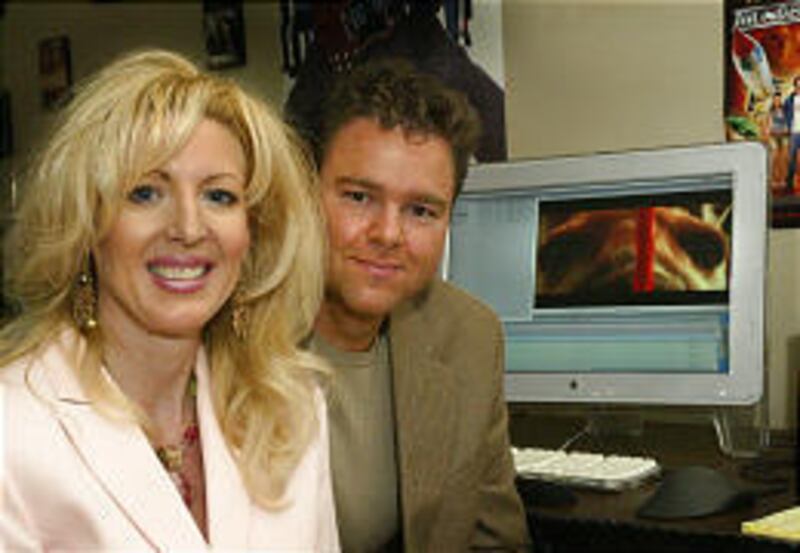
An ABC film crew working for the American Movie Channel (AMC) was in Provo to interview Family Flix co-owners Richard and Sandy Teraci for an upcoming documentary to air this spring on AMC.
In addition to Family Flix, the documentary makers have interviewed representatives from other film editing companies, like Clean Flicks and Clean Films, and will next focus their attention on the Hollywood studios' side of the story.
Hollywood executives and directors have objected to the editing and have threatened legal action. They also have asked Congress to intervene and seem to be waiting to see how that turns out before determining whether a pending lawsuit filed against several movie-editing companies, including Family Flix, will be pursued.
The Teracis said Family Flix and its competitors actually add to already-fat Hollywood coffers.
ABC also interviewed researcher and author Mark Kastleman, author of the book, "The Drug of the New Millennium," which looks at the effects of media content on the human brain and how it can influence behavior.
"Every image we see and every word we hear is stored in what is called a mental model," Kastleman said. "These models are capable of bringing to the forefront of our memory any of these bits of information that we've either seen or heard."
Small children, whose minds are immature and incapable of discerning appropriate from inappropriate content, are especially susceptible to media content, Kastleman said.
The Teracis started Family Flix in Arizona in 2000 but sold its two stores there and moved the business to Provo last summer. They believe families should know before a movie starts what might be objectionable and that they have a right to have that material edited.
They devised their own movie rating system to supplement the Motion Picture Association of America's four ratings — G, PG, PG-13 and R. The Teracis' ratings are based on categories of violence, sensuality, language/crude humor, intensity, revealing dress and alcohol/drugs. Each edited film is given an overall rating based on the content of these categories and the ratings are available at www.familyflix.com.
Eventually, the Teracis hope to use their rating system on other forms of media such as books and music, as well.
The company distributes its edited films through LDS Overstock, which has stores in Utah, California and Hawaii, and the Teracis believe Family Flix is poised for considerable growth through that partnership as the retailer hopes to expand to more than 50 stores by the end of 2006.
Another key to the company's growth is several investors who share the goal of providing family-friendly movie content.
Sandy Teraci, who traded in her career in interior design to market family-friendly movies, told ABC during her interview Friday that Family Flix has customers throughout North America, Australia and Europe.
"I'm on a mission," she said. "I really think there is a need for the type of service we provide."
Her husband handles the technical side of the business and said Family Flix is more thorough in its standards of film editing than its competitors.
"There are some things the other companies let slip through that we simply will not," he said.
To use the company's services, Family Flix requires a customer to either purchase a copy of the movie from a regular retailer or give Family Flix permission to purchase one for them.
Once the original copy of the movie is received by Family Flix, an edited version of the film is returned to the consumer along with the original, which is rendered unplayable.
E-mail: kmartinez@desnews.com