

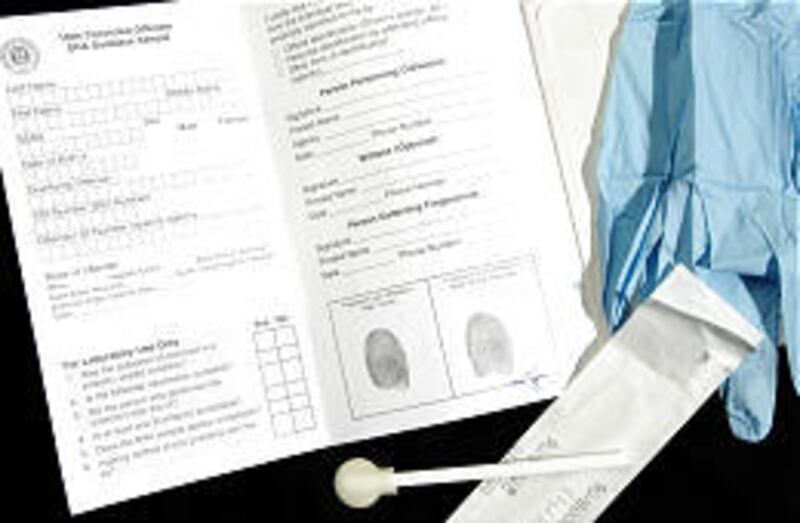
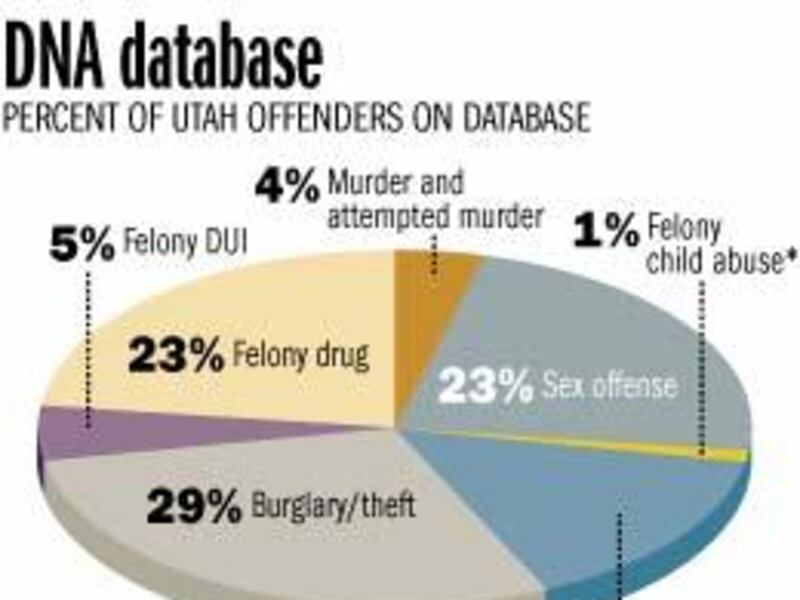
Under Utah law, every person convicted of a felony and those convicted of some class A misdemeanors are required to give a DNA sample to the state. In 2003, lawmakers passed a bill also requiring convicted persons to pay for sample collection at a cost of $75.
As crime lab director Gabriel Bier explains, a swab of saliva taken from inside each cheek is smeared onto a paper strip, sealed and then sent to the state crime lab for testing.
Each sample is being logged into a database known as CODIS — the Combined DNA Index System — which can be searched for a match during a criminal investigation. Fingerprints of the offenders' thumbs are also collected.
The CODIS database is used by Utah police and police departments across the country, Bier said.
The purpose of the database is twofold, according to Bier. First, DNA can link serial offenders across jurisdictional boundaries, both within Utah and across the country. Secondly, it helps police solve cases that might otherwise go unsolved.
There are an estimated 20,000 unsolved, or so-called "cold" cases, currently in the United States.
But building a database is no easy task. The process is time consuming, labor intensive and expensive. A counter top at the Taylorsville lab overflows with boxes stuffed with samples, sent to the lab from the state prison and every county jail in the state.
Every sample that comes to the lab is assigned a bar code number and, for quality-control purposes, is processed by one technician and then scrutinized by another.
Each person's genetic code, or DNA, is unique. DNA can be found in a variety of bodily fluids or tissues, including blood, saliva, semen and hair.
When evaluating evidence, technicians usually start by identifying and matching the obvious sources or contributors of a DNA sample, then move on to the unknown, Bier said.
Thirteen genetic markers are compared in making an evaluation, and a match is made when technicians find the same genetic material collected at a crime scene with those in a DNA sample from an offender.
Again, the work is time-consuming, and the process must be exact in order to prevent mistakes or misinterpretations of data, Bier said.
As of December 2004, Utah had more than 23,860 convicted offenders in its CODIS database. Of those, fewer than 50 percent, or a little more than 7,000, have been processed and reviewed.
But Bier proudly notes the program is showing results.
To date, the database has had a direct impact on 23 unsolved cases. Ten times, offenders have been linked to evidence collected at crime scenes. Five times, forensic evidence has been matched between two cases.
Two samples from offenders incarcerated in Utah were matched to crimes in other states. And seven offenders logged into another state's database have been linked to unsolved crimes here in Utah, he said.
Despite the challenges of logging and evaluating data, Bier is confident that over time, police will be able to close the book on cold cases.
"We will solve every one of them," he said.
E-mail: jdobner@desnews.com