

Utah's construction boom isn't confined to new houses or office buildings.
As a growing population increases the demand for health care, more hospitals, surgical centers and technical complexes mean more revenues for local builders.
"We won't see a decrease in health care construction until 2015," said Mike McDonough, construction manager for Sandy-based Layton Construction Co. "Facilities are at capacity, people are (living) longer, inpatient beds are being created, outpatient services are being expanded. Nationally, the aging population has put a pretty big hit on health-care construction." For some companies, the surge in new medical facilities has been monumental. For example, Salt Lake-based Okland Construction Co. in 1999 took in just $7 million in health-care-related projects. In 2002, revenues more than doubled to $18.5 million. By 2004, they had jumped to $97 million.
But by the end of 2006, Okland anticipates its revenues from health-care projects will reach $313 million, much of that coming from its building of the massive Intermountain Medical Center in Murray. About 35 percent to 40 percent of Okland's current work is health-care related, compared to about 5 percent a decade ago.
"We've done a lot of health care, but this is the largest health-care project we've done," said Randy Okland, president and chief executive of Okland Construction. "It's also the largest single building contract that we've had."
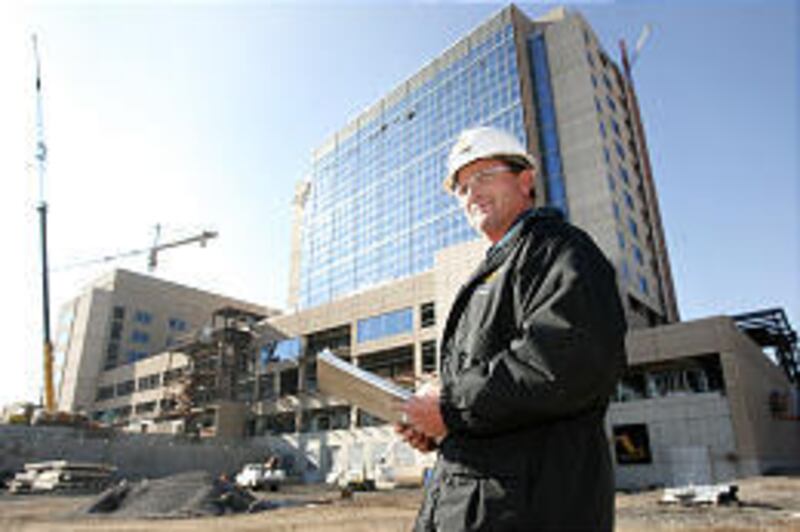
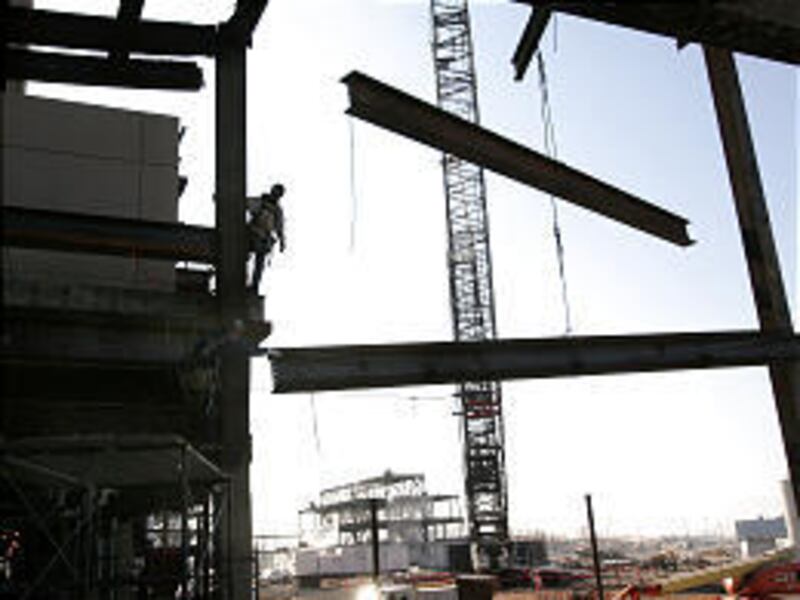
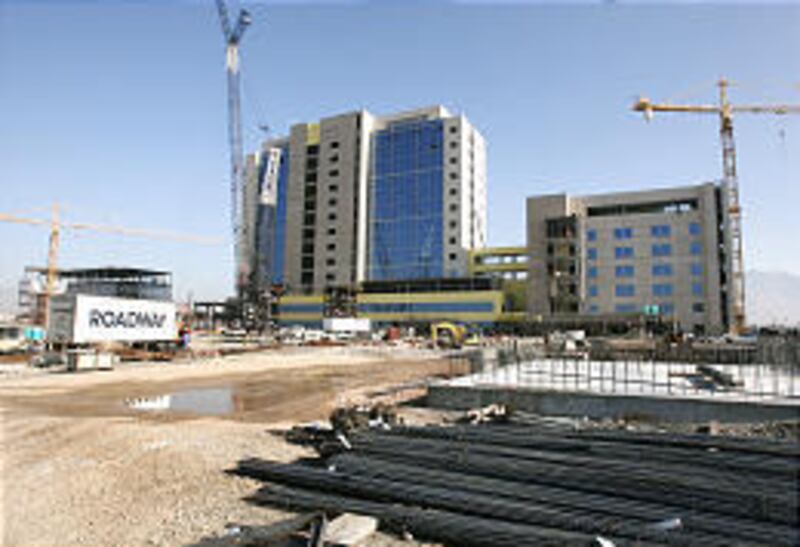
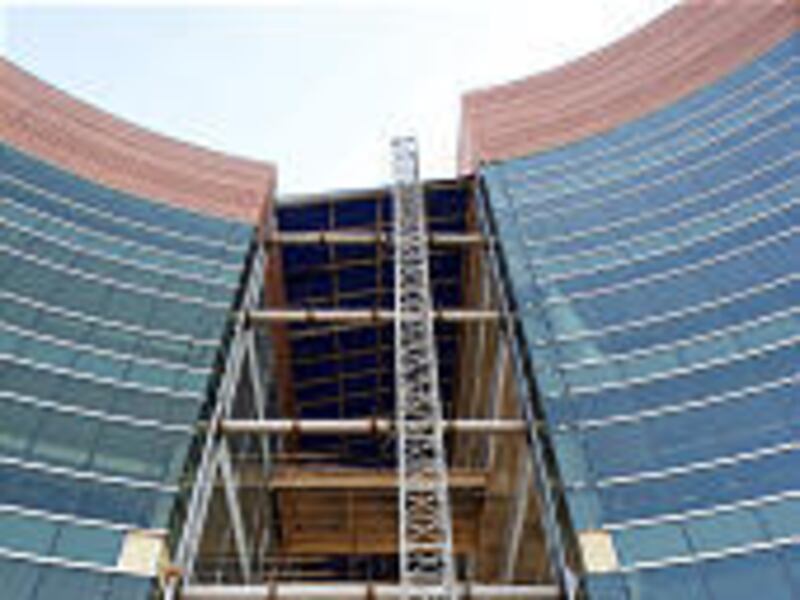
The $387 million Intermountain Medical Center, which spans five specialty hospitals and spreads across roughly 100 acres, represents the climax of Utah's health-care construction boom.
"It's the largest construction project currently under way in the state of Utah," said Jess Gomez, a spokesman for Intermountain Health Care. "This is the footprint for the next 100 years."
Fred Strasser, project director for Okland Construction, is overseeing the work at Intermountain Medical Center. He said vacant floors were planned in each of the five main buildings to handle future expansion.
"We're already starting to see some of those floors now being designed by the owner," Strasser said. "They are starting to look at some of the empty spaces to build out."
Gomez attributes the rise in Utah's health-care building to three factors: overall population growth of the state, relocation of health-care facilities and older buildings needing replacement.
"The population growth is occurring in central and southwest Salt Lake Valley," Gomez said. "You're seeing health-care facilities being located in places that are convenient and accessible to those growing communities. We believe Intermountain Medical Center, which will replace LDS Hospital as a trauma one center, will significantly decrease the times that it takes to get trauma patients from the scene of an accident to the hospital."
Okland points to a health-care construction boom that occurred in Utah during the 1970s and early 1980s. Now, 25 years later, those medical buildings need major renovation or replacement to keep up with the rapid advancements in technology and modernization.
"In the last four or five years there has been a real boom in health care," Okland said. "One of the projects that we built was the Dixie Regional Medical Center in St. George. The day that opened it was up to capacity. We were almost ready to expand it, and that's because of the number of people retiring and moving to areas like St. George."
Like Okland Construction, other Utah firms also are seeing a rise in health-care revenues.
In 1998, Layton Construction took in $3.2 million in health-care construction revenues. Those revenues jumped to nearly $22 million in 2001. By 2004, health-care revenues for the company exceeded $84 million. In 2005, Layton will exceed $100 million in health-care revenues.
"I do nothing but health care," said McDonough, who oversees a health-care team for Layton. "I have project managers and superintendents who focus their careers solely on health-care construction."
There is nothing more complex than building health-care facilities, according to McDonough, who said such projects entail complex emergency distribution systems, stringent earthquake building codes and myriad safety regulations governing infection controls.
"Renovating a functioning health-care facility is a lot like remodeling your kitchen at Thanksgiving time," said David Layton, president of Layton Construction. "Dinner must go on though the tools are in the way. In the real world of health care, renovations are inevitable during all seasons. Shutting down an operating health-care facility is out of the question."
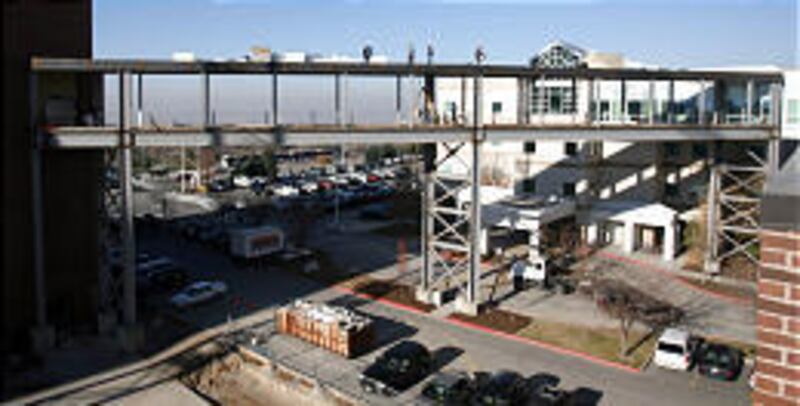
Recently, Layton Construction has done major work to the Salt Lake Regional Medical Center in downtown Salt Lake City. The company also added a 20,000-square-foot emergency room to Pioneer Valley Hospital in West Valley City, which has one of the busiest emergency rooms in the state. Layton is currently working on a $42 million new facility for the Moran Eye Center at the University of Utah's medical campus.
In addition, McDonough said a fair share of Layton's health-care projects are located out of state, particularly in Arizona, Nevada and Colorado. Layton has recently built new hospitals in Durango, Colo.; Las Vegas; and Phoenix.
About 20 percent of Layton's health-care work involves installing the latest technology into facilities, like imaging technologies used for cancer patients, which require significant electrical requirements and a one-inch layer of lead installed in the walls, floors and ceilings.
E-mail: danderton@desnews.com