


NEWPORT, R.I. — This city has been a "getaway" for more than 350 years.
This spit of land stretching into Narragansett Bay on one side and Rhode Island Sound on the other first attracted settlers in the mid-1600s, when a group of dissidents wanted to escape religious oppression of areas surrounding Boston. They came, they liked and they established a settlement in 1639.
The location proved ideal for commerce and trade (not to mention pirates and privateering), and the town flourished, growing by the 1700s into one of America's largest ports.
The world of commerce eventually passed on by. Geographical constraints — the city is on the actual island of Rhode Island — meant it never could grow into a metropolis. But around the turn of the 20th century, the relative isolation and classic beauty of the area attracted the attention of the country's wealthy set, who came there to play.
My sister and I joined the crowd of those coming to find the special aura of Newport. But maybe because we were having a sisters' getaway of our own, we had fun discovering various aspects of the town through the eyes of some of its women.
Doris Duke's Newport: Luxurious
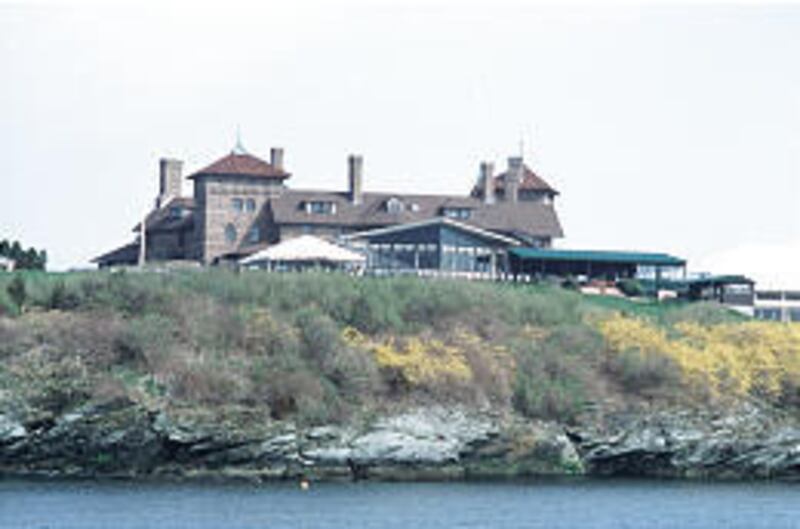
Born in 1912, Doris Duke was 12 when her parents, who had made their fortune in tobacco and electronics, purchased Rough Point, a Gothic-style, 105-room mansion built in 1899 and overlooking the cliffs and the sea — and she was 13 when she inherited it.
Doris grew up with a passion for the finer things in life and in later years spent a great deal of time and money touring Europe and Asia to collect artwork, tapestries, furniture, ceramics and other exotic furnishings for the mansion.
From May through November, it is possible to see the house just as Doris left it when she died in 1993 (by then the richest woman in America).
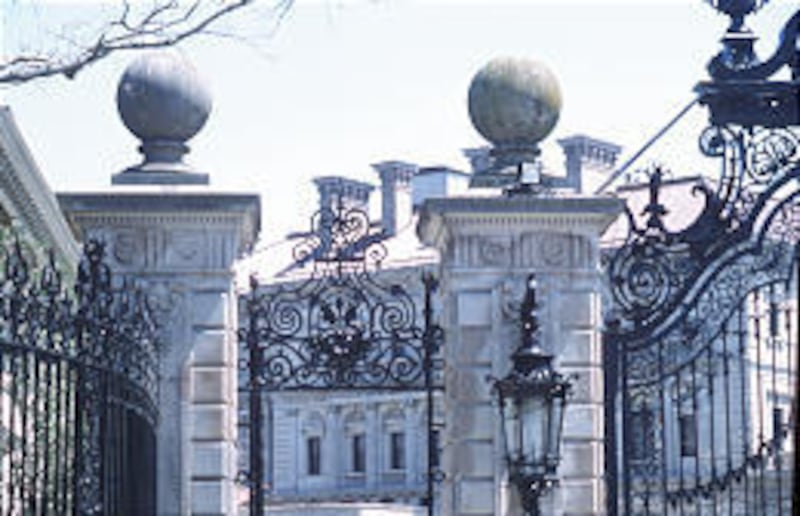
Rough Point is not the only mansion in Newport, of course. All along Bellevue Avenue, visitors get a textbook view of America's Gilded Age — a time when lavish opulence was splashed across the American landscape.
In the late 19th and early 20th centuries, America's "royalty" — families who had made their fortunes in the industrialization of the country — discovered Newport. They built elegant summer homes on sweeping estates in the style of Italian counts and French princes and English lords. They took great pleasure in trying to outdo each other in displays of wealth and extravagance, were pampered by dozens of servants and threw parties that made society headlines.
That gilded time is long gone. But the houses remain, now turned into museums that provide a fascinating look at it.
Most famous among them is The Breakers, built for Cornelius Vanderbilt. The exterior resembles a North Italian palace. Inside, more than 70 rooms are arranged on four floors around a huge central hall. The showpiece of the house is the Grand Salon, which was completely built in France and then dismantled and shipped to Newport where it was installed by French cabinetmakers.
Since it was opened to visitors in 1948 (and purchased by the Preservation Society in 1972 to ensure it remained open), The Breakers has become the state's No. 1 tourist attraction.
Almost as impressive is Belcourt Castle, built in the style of Frances's King Louis XIII in 1894, and containing the French Gothic Ballroom, with arching stained glass windows and a castle-like fireplace, that many people rate among the most beautiful rooms in America.
And there's Beechwood, built in 1855 and purchased and remodeled by the Astors in 1890 — thus kicking off the migration of wealthy summer-home seekers to Newport. Caroline Astor was famous for her parties for those of wealth and distinction, later known as the "Four Hundred."
Vernon Court, built in the style of a 17th-century French chateau with the interior patterned after Versailles and gardens like those of England's Hampton Court, now houses the National Museum of American Illustration. Chateau-Sur-Mer is considered one of the finest examples of Victorian architecture; Marble House, built for William Vanderbuilt, is known for its elegant white-marble pillars and the Chinese pavilion in the back yard.
The Elms, built in 1901 for Edward J. Berwind, is famous for its sunken gardens as well as its magnificent marble staircase. Rosecliff, built in 1902 for Mrs. Hermann Oelrichs, contains the largest ballroom in all of Newport — the Court of Love, copying Marie Antoinette's at Versailles. (Rosecliff was the backdrop for the movie "The Great Gatsby" in 1973.)
The houses are open for tours, but another good way to see them (especially if you don't have time to visit them all) is along the Cliff Walk. This National Historic Walking Trail winds along the cliffs, with ocean views on one side and the gardens and backsides of mansions on the other. The entire loop is about four miles; you can do as much or as little as you like.
You can also get good views from a hourlong cruise in Narragansett Bay, which not only shows off the town and its treasures but also gives you a taste of the yachting life of the Gilded Age.
Abigail Stoneman's Newport: Historic, innovative
It's doubtful that Abigail Stoneman knew much about luxury. But she did know about work. In the pre-Revolutionary War years, when women had few opportunities as entrepreneurs, Stoneman became Newport's first businesswoman. She is described as a young and attractive widow, who in the 1760s opened two lodging inns, a tearoom, a coffeehouse, two shops and a social event venue.
An ad in the Newport Mercury on Jan. 22, 1769, announced: "Abigail Stoneman begs Leave to inform the Gentlemen and Ladies, that she has again opened the HOUSE in Middle-Town for their Entertainment the ensuing Season. . . . And as she flatters herself she has hitherto behaved to their Satisfaction, taken the Liberty to entreat the further continuance of their favours, which shall always be gratefully acknowledged."
A few reminders of Abigail's Colonial Newport remain. The Wanton-Lyman-Hazard house, built about 1675, is the oldest house in town and considered one of the best Jacobean-style houses in New England. Equally lauded is the Hunter House, built around 1748 by the deputy governor of Rhode Island.
The Colony House, built in 1739, is where the Revolution actually started. Here, the residents of Rhode Island declared independence from Britain on May 4, 1776 — two months before the rest of the country. George Washington met here in March 1781 to plan the Battle of Yorktown that ended the war.
No Colonial New England town was complete without a church, and the Trinity Church, built around 1726, filled that need in Newport. It is famous for its one-of-a-kind "triple-decked wineglass" pulpit. (John and Jackie Kennedy were married here.) And on the other side, there's the White Horse Tavern, the oldest (built in 1673) tavern building in continuous use in the United States.
A bed-and-breakfast is now named in Abigail Stoneman's honor in Newport. Housed in a Victorian-style home, it is known for its "amenity menu." Guests can choose from a selection of 22 imported soaps, 25 different bottled waters, 25 kinds of herbal and other teas, and 18 different pillows. (As we didn't stay there, we can't really say whether the Tri-Down Feather Pillow offers a better night's sleep than the silk-filled pillow or the Mediflow Water Pillow).
Abigail may have been quite surprised by all that but maybe not by some of the other firsts that followed her. We learned, for example, that Newport was the site of the: first traffic ordinance (1687); oldest synagogue in the country (1759); first ferry service (1657); oldest newspaper in continuous operation (1758) and the first woman newspaper editor; first gas illuminated streetlights (1803); oldest U.S. Naval War College; first woman telephone operator; first public roller skating rink; first arrest for a traffic violation (the driver was charged with driving 15 mph); first auto race (1895); first female lighthouse keeper; oldest typewriter in America — and a whole lot more.
May Sutton Bundy's Newport: Sporty
Before Venus and Serena Williams, there were the Sutton sisters — May, Violet, Florence and Ethel, who dominated the tennis scene in the early 1900s.
Although born in England, May grew up in California. She became the first American to win Wimbledon. A "husky 5-foot, 4 1/2-inch, 140 pound right-hander with a powerful topspin," May shocked the English crowds by rolling up her sleeves above her elbows and wearing a skirt that showed her ankles.
We learned about May and other early tennis stars at the International Tennis Hall of Fame, which is housed in the Newport Casino (a social and recreational club built in 1880; not a gambling site). The Hall opened in 1954; May was the first woman inductee, enshrined in the class of 1956.
In 1881, the Casino hosted the first U.S. National Lawn Tennis Championships, which were held in Newport until 1915, when they moved to Forest Hills, N.Y., and became known as the U.S. Open.
The Hall of Fame not only houses a gallery of tennis greats, it also has a museum containing the world's largest collection of tennis memorabilia. And there are tennis courts; it's the only place in the country you can walk in and play on grass (for a fee, of course).
Tennis is not the only sport in town. Newport hosted the first Open Golf Tournament in 1895, and golf still flourishes. It hosted the first International Polo match in 1886, a tradition that continues every Saturday throughout the summer at Glen Farm.
Many people also consider it the sailing capital of the world, with regattas, races and sailing festivals aplenty. The famed America's Cup called Newport home for more than 50 years (until Australians won the title in 1983).
There's more to Newport: music festivals, seafood restaurants, cobblestone streets, art and yachting museums, boutique shops, the scenic Ocean Drive, just to name a few. We loved the insights our trio of women gave us and would love to come back and discover more. No wonder Newport is and always has been such a popular getaway.
E-mail: carma@desnews.com