

Scrooge was generous in granting Bob Cratchit Christmas Day off. In 1843, most workers were denied the holiday.
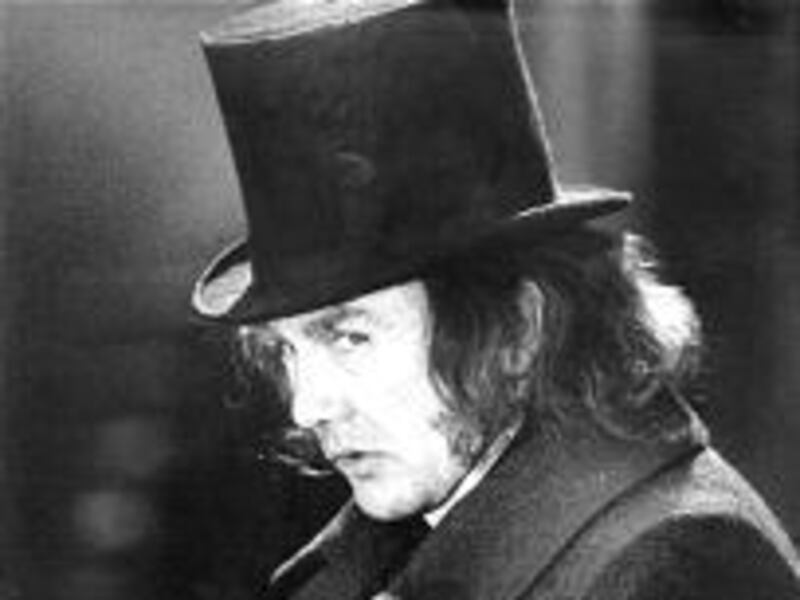
More than a hundred actors have portrayed Ebeneezer Scrooge in movies made for theaters and television. Among the most successful::
— Reginald Owen, 1938
— Alistair Sim, 1951
— Mister Magoo, 1962
— Albert Finney, 1970
— Scrooge McDuck, 1983
— George C. Scott, 1984
— Bill Murray, 1988
— Michael Caine, 1992
— Patrick Stewart, 1999
— Kelsey Grammer, 2004
In his handwritten preface to the first edition, Charles Dickens wrote:
"I have endeavoured in this Ghostly little book, to raise the Ghost of an idea, which shall not put my readers out of humour with themselves, with each other, with the season, or with me. May it haunt houses pleasantly, and no one wish to lay it. — Their faithful Friend and Servant, C.D., Christmas, 1843"
Scrooge paid his clerk, Bob Cratchit, a weekly salary of 15 shillings. In those days, a Christmas feast of roast goose (7 shillings), pudding (5 shillings) and onions, sage and oranges (3 shillings) would have cost just that much.
What was Tiny Tim's ailment? Modern doctors have speculated that, based on the symptoms Dickens describes, he had a kidney disease that made his blood too acidic. That was a condition that could be fatal, if left untreated due to poverty, but that was treatable with proper medical care of the day.
"A Christmas Carol" was released on Dec. 19; by Christmas it had sold 6,000 copies. Within months, as many as eight stage adaptations were in the works.
Following the success of "A Christmas Carol," Dickens wrote four more annual Christmas stories: "The Chimes" (1844), "The Cricket on the Hearth" (1845), "The Battle of Life" (1846) and "The Haunted Man and the Ghost's Bargain" (1848)
Sources: Richard Wilkins; "A Christmas Carol"; The Dickens Project at University of California; New York Public Library; David Perdue's Charles Dickens Page, www.fidnet.com/~dap1955/dickens.carol.html.