

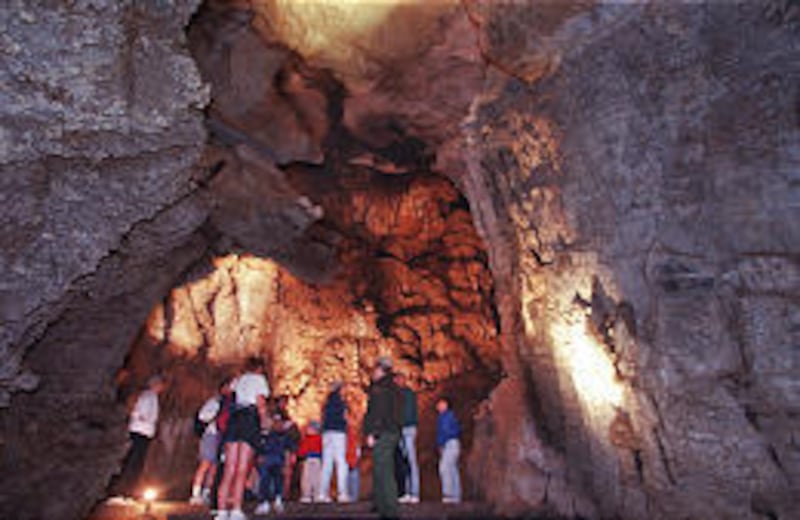

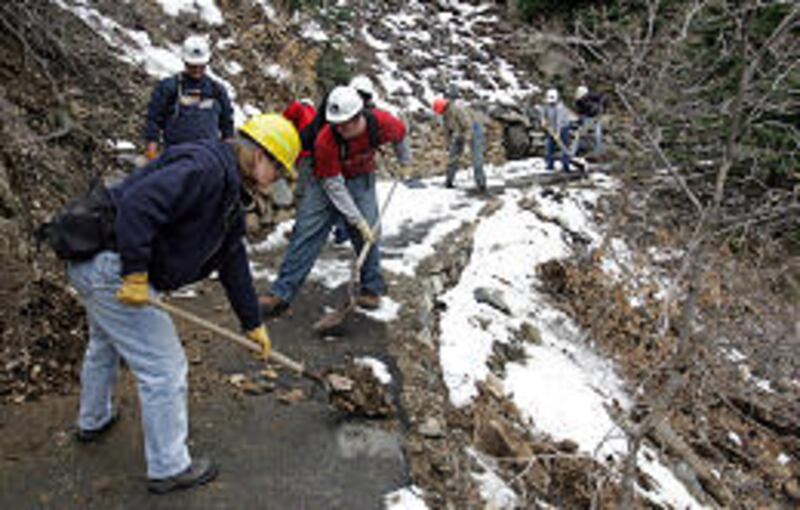

AMERICAN FORK CANYON — When volunteers finish shoveling snow off the trail so Timpanogos Cave's tour season can open on schedule this weekend, it will mark the 82nd year for cave tours through the popular site.
If the season is like last year, the cave will have 77,000 visitors from all over the world.
This year will also mark the 37th year at the cave for Jay Allen of American Fork, a ranger who has led 12,500 cave tours and logged more than 25,000 miles hiking the steep canyon trail to and from the cave.
Most summer mornings, Allen puts on his boots and hikes the mile and a half of steep mountain trail to work, a hearty jaunt that gets the blood pumping and leg muscles complaining. The 58-year-old high school science teacher first hiked the trail when he was 6.
"As long as I can remember, I wanted to be a cave ranger," Allen said.
"My dad and mom used to live there by the cave, back when the Timpanogos Outdoor Committee ran it. My aunt ran the concession stand, and I went up there with my cousin many times. Arlo Shelley — who at 76 is now the oldest cave guide we have — had forgotten his lunch, so my aunt sent us up with it."
Allen's other memories include finding a 3-year-old girl who had been left behind in the caves. Fascinated with the formations, she'd somehow slipped away from her family and hidden in the dark for several hours before he discovered her.
Another time, the rangers had shut down the caves but returned for a forgotten item to find a young couple standing in the dark by the formation known as the heart of Timpanogos. They planned to wait for the next group, not understanding the next tour wouldn't be until the following morning. They would have had a long, cold wait in absolute darkness, as the caves get no outside light.
"People don't realize when we turn the lights out, that is total darkness. They think their eyes will adjust. They never will," Allen said.
Allen has lots of stories about the caves along with a bag of corny jokes. For instance, when someone points to a tunnel or shaft and asks, "Where does that go?" Allen likes to say, "It doesn't go anywhere. It stays here all the time."
"We try to make it fun as well as educational," Allen said. "We try to teach concepts such as the need to preserve things like the caves. There's no script. We actually develop what we say to fit the tour group so it's different every time you go through."
Allen has taken visitors from almost every country in the world through the caves. He's taught them all respect for the cave's fragility.
"Nothing can be touched inside the cave. We used to allow people to (touch the formations called) the salt and pepper shakers, but we've stopped doing that. We've also stopped ringing the chimes in the Chimes Chamber. We just have to be so careful we don't ruin anything."
Over the years, Allen has become so protective he can anticipate trouble before it materializes.
"We just have to have a very, very low impact," he said.
Emily Maughn, 26, is also one of the full-time guides who gets paid to do something she loves.
She says her job fits right in with her degree in wildlife biology, her love of nature and her interest in people.
"One of the benefits comes when you do make the connection with people and they make the connection with the environment. You can tell when that happens," Maughn said.
E-mail: haddoc@desnews.com