

Western Europe in the late 11th century was a landscape of small warring states. Even the position of pope was besieged by rival claimants. In the Middle East, the Seljuk Turks had overrun Palestine and were threatening the Christian Byzantine Empire.
An Arab Muslim regime that had tolerated Christian pilgrims was replaced by the more belligerent Seljuk Turks. In 1095, Byzantine Emperor Alexius Comnenus sent a plea to Pope Urban II for help against the Turkish onslaught. Urban saw this as an fortuitous opportunity. A war against the Muslim East would unite the warring Christian factions of the West, solidify his papal position and establish a permanent Christian presence in the Holy Land.
On Nov. 27, 1095, Urban assembled a gathering of ecclesiastics and knights to denounce the infighting of the West and launch a campaign upon the infidels that would avenge and redeem the Holy Land. His speech was answered with shouts of "Dues lo volt" — "God wills it." This marked the beginning of eight major Crusades that lasted from 1096 to 1270.
The goals of the Crusades would never be realized, but the problems of religious and cultural intolerance remain with us today.
The word Crusade, which comes from the Latin word for "cross," didn't come into use until the 13th century. Before then the endeavors were referred to as "the Expedition of God," "the business of Christ" or "the pilgrimage."
A short history
First Crusade (1096-99)
Led by Godfrey of Bouillon, Raymond of Toulouse, Robert of Flanders and Bohemond of Taranto, this would be the most successful of all the Crusades. A force of five armies, mostly French, succeeded in capturing Antioch in 1098 and Jerusalem in 1099. The leaders divided the conquered lands and set up what would be known as the Latin States.
Peasants' Crusade: Peter the Hermit and a knight known as Walter the Penniless mobilized an army of mostly commoners. This unruly group traversed Europe demanding free food and shelter as they made their way to Constantinople. Many were killed along the way by angry Europeans. The remainder lost their lives at the hands of the Turks.
Second Crusade (1147-49)
Christian control weakened when Edessa, one of the Latin States, was retaken by the Turks. When Louis VII of France and Conrad III of Germany failed to cooperate, military disasters ensued.
Third Crusade (1189-92)
Saladin united the Muslims and easily defeated the Christian forces at the Battle of the Horns of Hattin. He went on to retake Jerusalem. Only three coastal cities remained in Christian hands: Tyre, Tripoli and Antioch. European leaders Richard I (the Lionheart) of England and Philip II of France also had problems cooperating and managed to achieve only minimal military success. Richard did manage to secure a treaty with Saladin for pilgrims to visit Jerusalem. Frederick I of Germany drowned on his way to the Holy Land.
Other Crusades
Five more expeditions were launched over the next 78 years with varying success.
Children's Crusade (1212): Thousands of French and German children between the ages of 10 and 18 embarked on a campaign to recover Jerusalem. They believed God would part the waters of the Mediterranean Sea and deliver them to the Holy City. Many died of exposure or starvation. Those who survived the trek were either drowned or sold into slavery. Few returned home.
Jerusalem was held again by Christian forces for a brief time (1229-44).
Factoids
Jews were often the target of Crusaders because of the belief they were enemies of Christ.
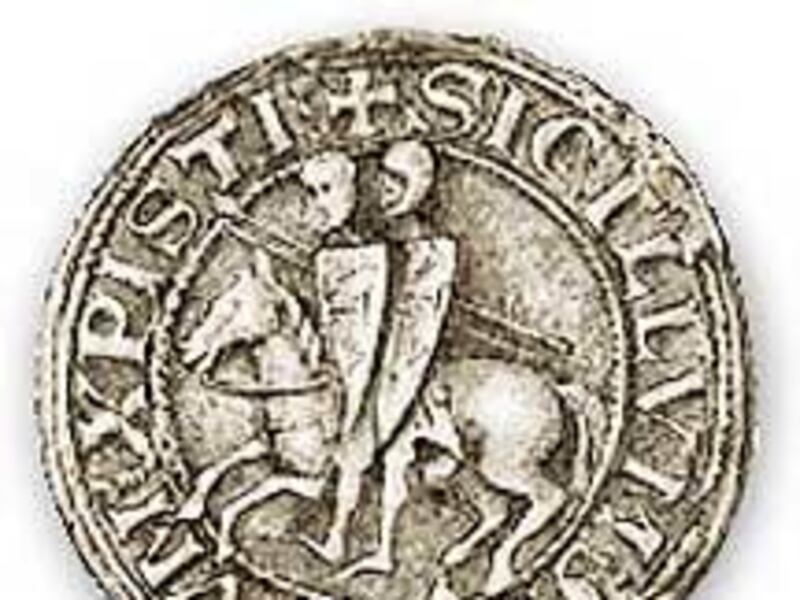
Military orders of monks, such as the Templars and Hospitallers, were established to protect Christian pilgrims. Inductees were required to take vows of poverty, chastity and obedience.
The siege of Acre was broken when Richard the Lionheart ordered 100 beehives catapulted into the city.
The conquest of Jerusalem (1099) was marked with looting and a killing frenzy. It was noted that the horses were wading in blood up to their knees.
Casualties
Total deaths during the Crusades (1096-1270) are estimated at about 1.5 million. Many of the deaths are attributed to starvation and disease.
Pilgrim deaths due to disease . . . .50,000
Fall of Antioch (1098) . .100,000 Muslims
Fall of Jerusalem (1099) .70,000 Muslims
Children's Crusade (1212) . . . . . . . .50,000
The Crossbow
Crossbows were considered so dangerous that in 1139 the Catholic Church tried to ban their use, except against Muslims.
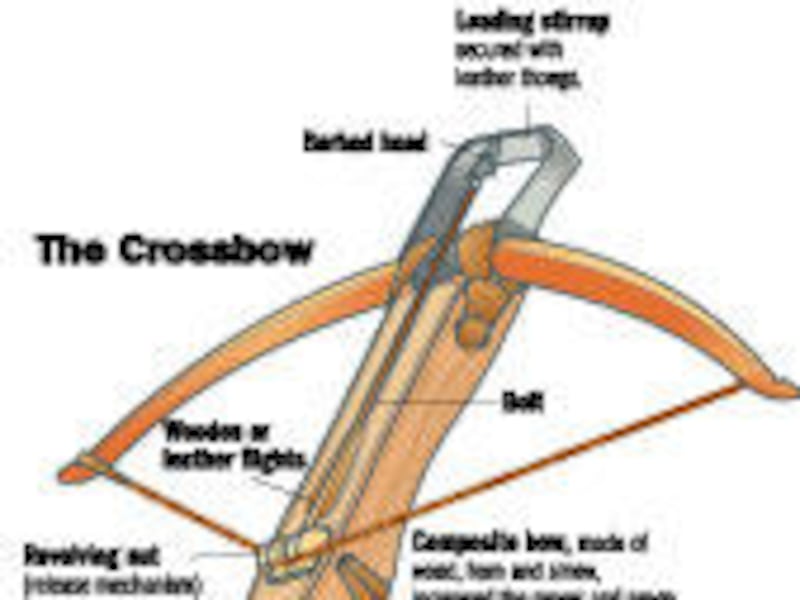
The crossbow was one of the most lethal weapons used in the Crusades. Proficiency in its use could be achieved in a short period of time, unlike conventional archery, which took years to master.
Loading
Loading stirrup secured with leather thongs.
A cord with an iron hook fastened to a leather belt was used to draw the bowstring.
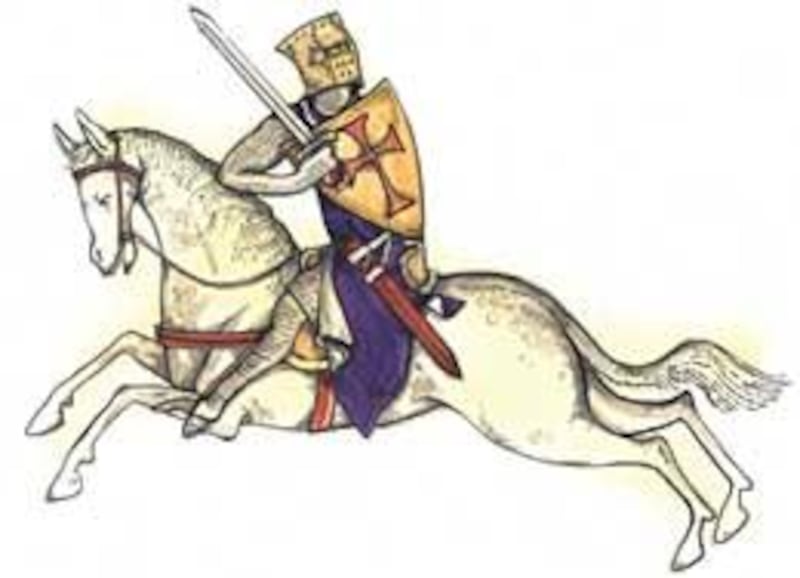
Christian knight
Seven-eighths of the Christian army was made up of infantry
armed with spears, axes and crossbows.
Iron helmet, or helm, was carried on the knight's saddle when not in use.
European chain mail rings were flattened and joined with a rivet. A mail tunic could be made up of as many as 30,000 rings.
Horses
A knight required three horses: a pack horse, a horse used as transportation and a horse saved for battle.*
* The phrase "to mount one's high horse" is derived from mounting the battle horse.
The service of a Crusader was usually limited to a period of 2-3 years.
A full suit of mail offered protection against most weapons. Mail required padded undergarments to be comfortable and effective. Full armor weighed between 45 and 55 pounds.
Rewards
A Crusader was probably motivated by a number of things: The addition of new land holdings and booty. The remission of his sins. Escaping the judgment and jurisdiction of secular courts.
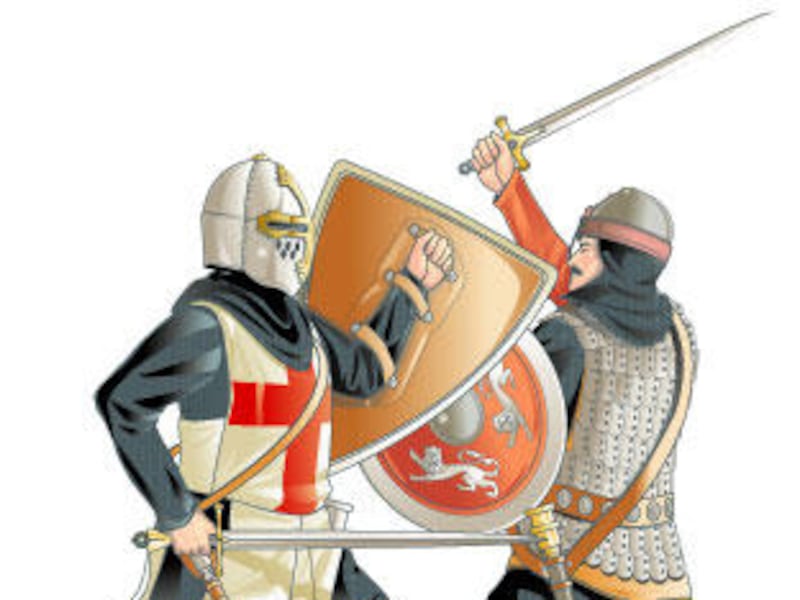
Dagger was the weapon of last resort. It could be thrust into the slits of a visor or through a chink of mail.
The armored knights of the Crusades were outfitted with the high-tech equipment of their time. A charge by mounted knights was virtually unstoppable.
Double-edged sword, when used properly, could burst apart chain mail or cut bone. Primarily a slashing weapon. Weight: 2.5 pounds. Fuller, or the groove that ran down the middle of the blade, lightened the weapon.
Triangular shield constructed of wood and leather with metal decoration and reinforcement.
Islamic soldier
The core of the Islamic military was made up of slaves. Islamic broadsword The signature curved, single-edged saber did not appear until the mid-13th century.
The Islamic military was known for its light cavalry.
Although soldiers were not as well protected as their Christian adversaries, they were much more mobile.
Ethics
Muslim soldiers were held to strict rules of warfare:
Rape was prohibited.
Killing women, children and noncombatants was forbidden.
The destruction of crops, trees (especially fruit-bearing) and animals was tolerated only for food.
Lamellar, or scale cuirass, was constructed by overlapping plates of hardened leather or metal and stitching them to a cloth or leather backing.
Saladin
(1138-93) Born in Kurdish Iraq, he is remembered as a masterful military leader and a ruler endowed with honor,culture and generosity.