



They don't build barns like they used to.
Modern barns are models of efficiency and technology. They score high in utilitarian function and design. They have their place, of course.
But old barns have character. They speak a silent, but no less eloquent, language of an earlier time, of an agrarian age of self-reliance and industry. They provide a window into the labor-intensive work of animal husbandry, crop production and family survival of decades past.
"I love old barns," said Elaine Thatcher, program director at the Mountain West Center for Regional Studies at the University of Utah and a driving force behind a new Bear River Heritage Area publication, "Historic Barns of Northern Utah: A Self-Guided Driving Tour."
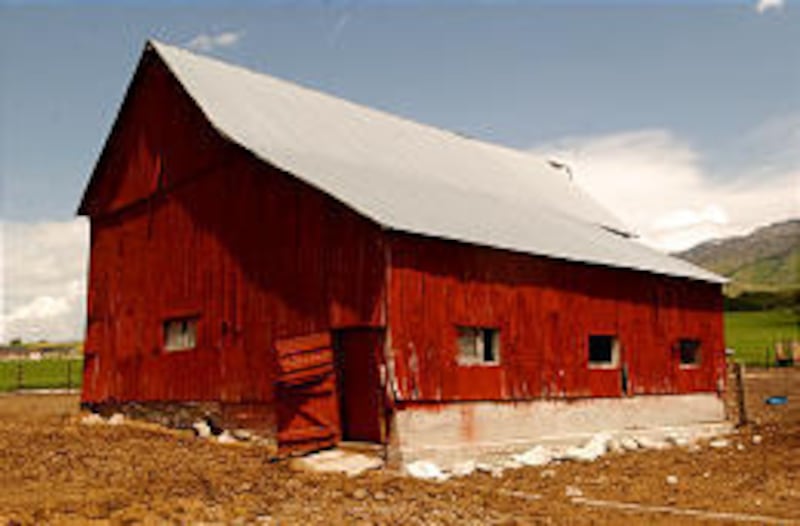
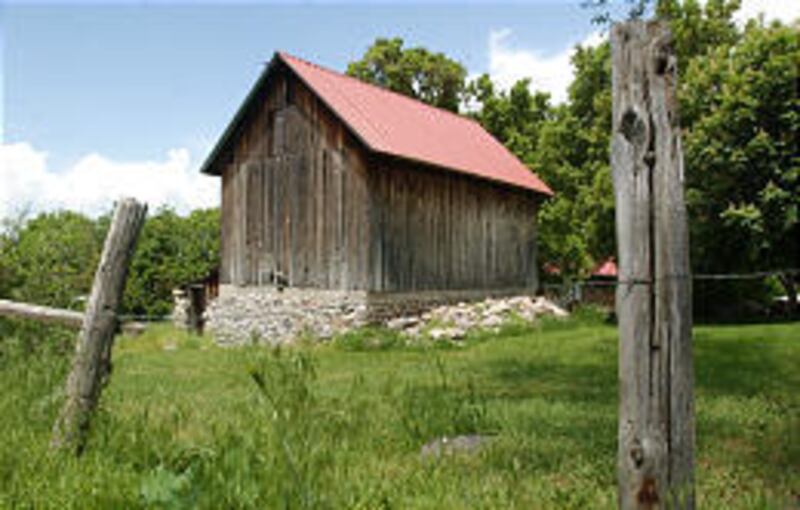
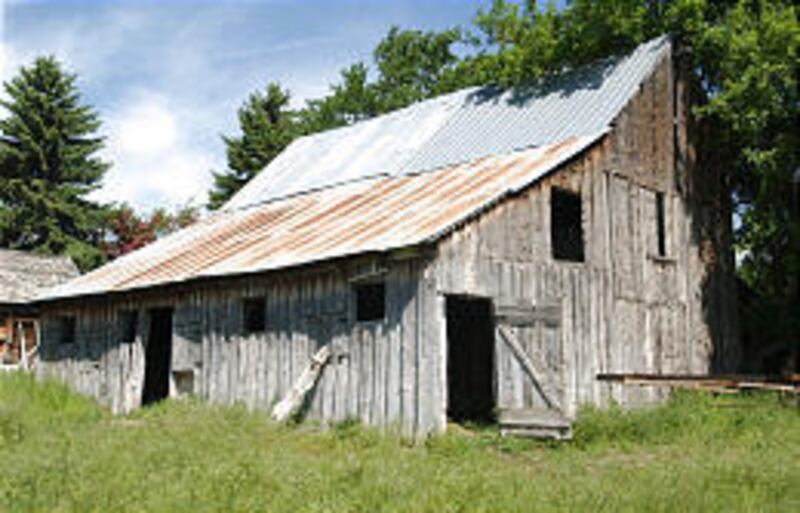
Wooden barns are one of the defining characteristics of northern Utah landscape, Thatcher said. "Barns are such a key part of the land ethos, the agricultural heritage." And yet, they are slowly fading away, victims of time as well as circumstance.
Another thing she has realized about old barns is that "people value them. A lot of people say they love them. But they don't know much about the history or the architecture."
So, the purpose of the driving tour is not only to point out significant and aesthetically pleasing barns, but also to detail some of the background and history for each of the buildings.
The spiral-bound booklet that accompanies the tour includes driving instructions and stories for 11 structures in Box Elder County, 42 in Cache County and three in Rich County.
It is not meant to be a complete listing of all the barns in the region, but to represent various styles and highlight barns that are easily viewable from the roadside. Some of the barns are still in use. Most are on private property. That's why this is meant to be a driving tour, explained Thatcher. Anyone who wants to stop and visit the barns would need to get permission from the owners.
Most of the research for the project was done by Lisa Duskin-Goede (who answered an ad for an intern position and ended up using the material for her master's thesis). Duskin-Goede interviewed barn owners and other family members to get as much information about each barn as she could. It was an interesting process, she said. One thing she noticed was that "it raised their awareness of what they have. They liked the fact that other people were paying attention and appreciating their barn. In the end, that might help save some of these old barns. It might help motivate them to hang onto and keep up repairs on the barn."
In addition to the book, the Bear River Heritage Area has been a partner in a barn stabilization effort, which has utilized a grant from the Division of State History to allow a team of Utah Conservation Corps workers to shore up some sagging barns. "The work repairs roofs and reinforces wall, beams and foundations," said Cindy Hall, economic development director for the Bear River Association of Governments, which manages the heritage area. "It's not a complete restoration. But it will keep those barns standing for a few more years." So far, seven barns have been repaired under the program, and work is in progress on seven more.
"Barns are physical reminders of the region's heritage," said Hall. Saving them and documenting their stories will help "bring to life the history of agriculture in the area."
Most of the barns on the tour were built in the late 19th and early 20th century. The oldest barn in the book is the Hampton Ford Stage Barn, which was built in Collinston in 1866 and was used as a way station for early stage coaches. It's very historical, said Thatcher, but not as typical.
For the most part, barn construction parallels social and economic development of the area. Although settlers moved into northern Utah between 1850 and 1870, most of these early homesteaders could not afford large barns. Most of the earliest outbuildings were smaller structures, such as calving sheds, granaries and stables that could protect important animals, food and equipment. Hay was simply piled into stacks using large wooden derricks and left in the open.
"There's some speculation that around the turn of the century, there were some wet summers, and the farmers lost a lot of hay," said Thatcher. "At the same time, prosperity in the valley was at a level where many families now could afford to build a large barn. A lot of barns were built between 1890 and 1930 or so."
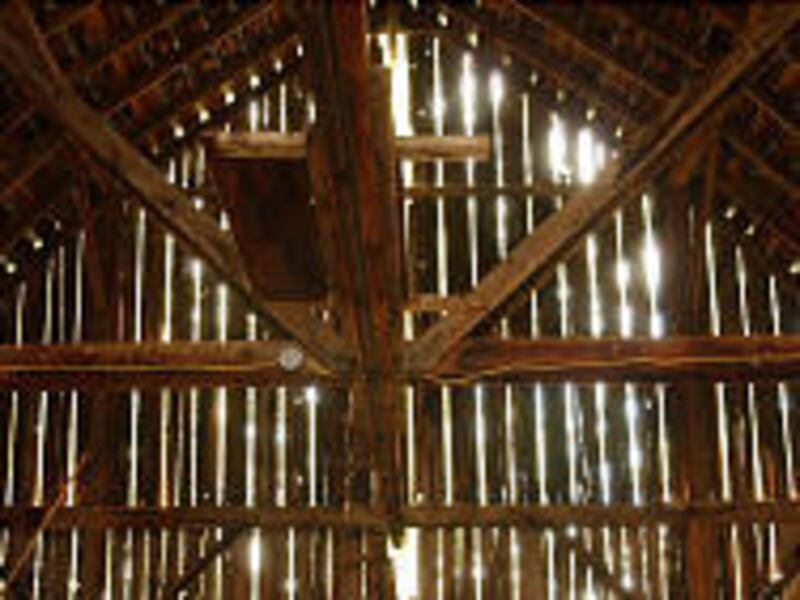
It's not always easy to tell exactly when a barn was built, said Duskin-Goede. Unless you have family records, "you have to look for clues in the style of architecture and in construction techniques." Methods such as tongue-and-groove and mortise-and-tenon provide clues, as do wooden pegs, square-head nails, and cuts and markings on the lumber.
When it came to building barns, Utah farmers and ranchers were influenced by styles of barns built in areas these settlers came from. The English barn is an example of that, said Thatcher. This barn is a rectangular building with a gable roof and large doors in the middle of the two long sides.
But the most common barn type in northern Utah, she said, is what is known as the Classic Intermountain barn. This barn has three sections — a large central bay with gable roof, which was used for hay storage; and two lean-to wings on the sides, one that housed cows and one that was used for horses.
Early in the 20th century, agriculture saw a shift from small, subsistence operations to larger, specialized ones, and barns also reflected that change. The most common example of that, said Thatcher, was the dairy barn. Designs for these barns often came from magazines, agricultural organizations or extension agents, so they were not as subject to local influences.
Generally, they were two-story barns, with gambrel roofs that opened up the top loft for more hay storage. On the main floor, which was usually concrete so it could be hosed down periodically, stanchions held cows in place for milking.
Whenever they were built, barns generally incorporated the latest technological innovations, such as a Jackson Fork, which operated along a metal track by a series of pulleys to lift and stack hay in the loft. Some also had tracks on the ceiling of the main floor for a "honey bucket," a large, long metal container that waste was shoveled into for removal to the outside.
It was a practical age, and everything had a specific use and purpose, said Thatcher. But one reason she loves the barns so much is that occasionally you come upon some little surprises.
In the Rinderknecht barn in Providence, for example, the beams above the manger are curved. "Why? We haven't seen that anywhere else." The concrete stairs that lead to the loft also have a curved line on the bottom step. "You just have to think that whoever built this barn had some aesthetic sense," she said.
And that's also what Duskin-Goede loves about the barns. "Every barn is different. Every barn bears a signature of who built it or used it. Every barn has a story."
Copies of the barn guide are available at tourism offices in Box Elder, Cache and Rich counties, as well as at the Bear River Association of Governments, 170 S. Main, Logan. The cost is $5. Barn owners interested in the stabilization program should contact BRAG at 435-752-7242.
E-mail: carma@desnews.com