


COTTONWOOD HEIGHTS — The tire marks have faded to the point that the average onlooker couldn't distinguish them from others on the road. But to three families here, the marks stand out clear as day.
Same for the chips in the concrete curb.
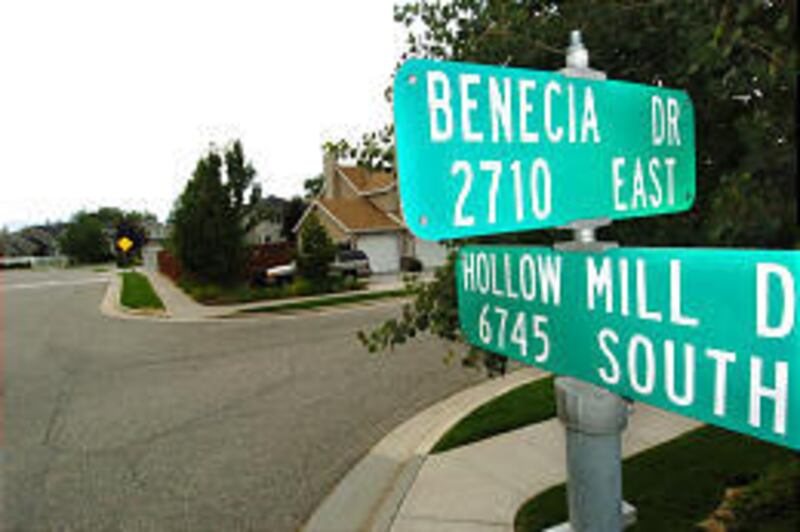
The marks have remained since Aug. 10, 1995, when a 16-year-old unlicensed boy driving drunk sped through the residential neighborhood along Hollow Mill Drive, missed a turn, jumped the curb, ran down three of his Brighton High School classmates who were walking along the sidewalk and crashed through a fence.
Left in the car's path of destruction were Jennifer Neddo, 16, and Elizabeth Phillips, 15, who were killed instantly, and 16-year-old Jamie Cogswell, who was left with permanent injuries.
The tragic accident shook the normally quiet neighborhood and received high media attention.
Ten years later, the Deseret Morning Newsreturned to the neighborhood and talked to the families of the victims and to the lone survivor, and spoke by phone to the mother of Laramie Huntzinger, the driver who caused the accident. The families of the girls live just a few streets away from each other and from the accident site. They still regularly drive or jog past that area during their normal daily travels, noting that it only makes it worse to avoid it.
Jamie Cogswell
Don Cogswell sees the chips in the curb where Hollow Mill Road and Benecia Drive meet, and he and his family, "know what caused it."
Cogswell, who lives the closest of the three families to the accident scene, said he can still see the path of the car that severely injured his daughter and killed two of her friends.
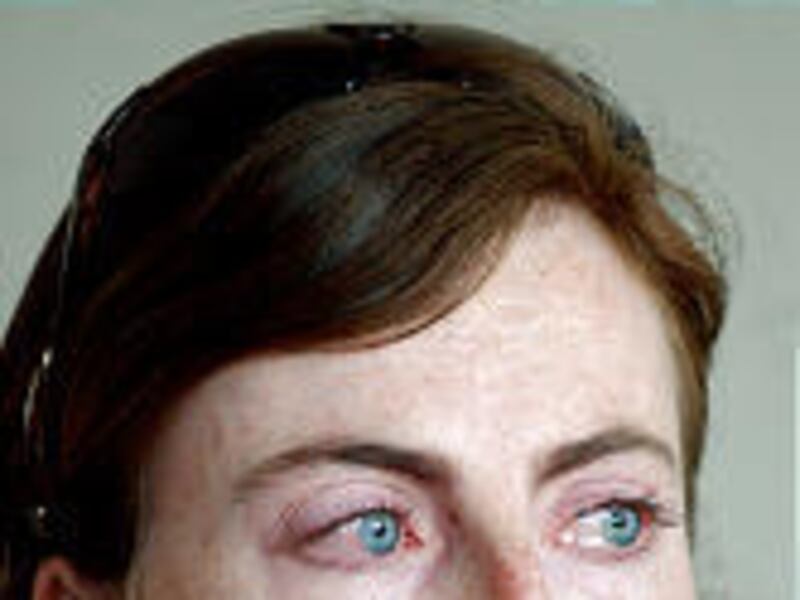
Looking at Jamie Cogswell today however, it's impossible to see any obvious physical scars. Now 26, Cogswell is upbeat as she talks about how her life is going well. She smiles frequently, and any permanent physical damages she suffered are not noticeable to someone who didn't already know about them.
For the better part of three years following the accident, however, Cogswell was in and out of doctors' offices and surgeries. Today, she has an artificial joint in her jaw and had a major nerve removed from her face.
"I don't have full motion of my jaw, and I can't raise my right eyebrow. It looks like a lazy eye," she said.
Cogswell received a bachelor's degree from the University of Utah and works as a technician at the University of Utah's Neuropsychiatric Unit while working on her master's degree.
She has also been a frequent traveler since the accident. Cogswell studied in Wales between 1998 and 2000, and has been to Peru, Thailand and "all of Europe" in recent years.
It was a couple of weeks ago that Cogswell said she realized that the tragedy's 10-year anniversary was coming up. She said the accident is always at the back of her mind, but she compared it to people who go to church. God is always in the back of their minds during the rest of the week but comes to the forefront on Sundays or Christmas.
Cogswell lives in downtown Salt Lake City now, in part because it's closer to work and school but also in part because if she decides to go to a club she can just walk home after. As one might expect, the accident has left her with strong opinions on drinking and driving.
If she is at a club and sees someone who has had too much to drink and is about to drive home, Cogswell says she'll vocally announce her displeasure and tell that person what happened to her.
"I bring it up. I throw a fit when I see people about to drive," she said.
Unfortunately, there are still those who apparently don't see the seriousness of the problem of drinking and driving or what happened that night.
In 2001, Cogswell was at a party where some men wanted to call one of their friends and invite him over. That friend was one of the two passengers in Huntzinger's car the night of the accident. The men did not know at the time that Cogswell was one of the girls hit.
"I turned ghost white. And they said, 'You're not still upset over that Brighton incident are you?' " she said.
Today, Cogswell said she is not angry at Huntzinger.
"Anger is so exhausting," she said. "I feel for him more than being angry. He's probably having a rough time."
She has not spoken to him since the accident and has no desire to today.
Cogswell said she will probably spend today just hanging out with her close friend Becca Splain. They'll both know what day it is but, "We won't even talk about (the accident)."
Becca, who was also a close friend of Jennifer Neddo, took Jamie to school every day after the accident and was always there for anything she needed.
"She's my savior," said Cogswell fighting back tears while recounting her friend's kindness.
Jennifer Neddo
When Clara Neddo is making her way home, she doesn't take detours around the scene of the accident.
"I try not to avoid it. It makes it that much harder," she said.
Like Cogswell, Clara Neddo said she also was aware the 10th anniversary of the accident and her daughter's death is today.
"It's been a long time since I've seen her," she said. But a recent experience was like opening a time capsule that brought her daughter back.
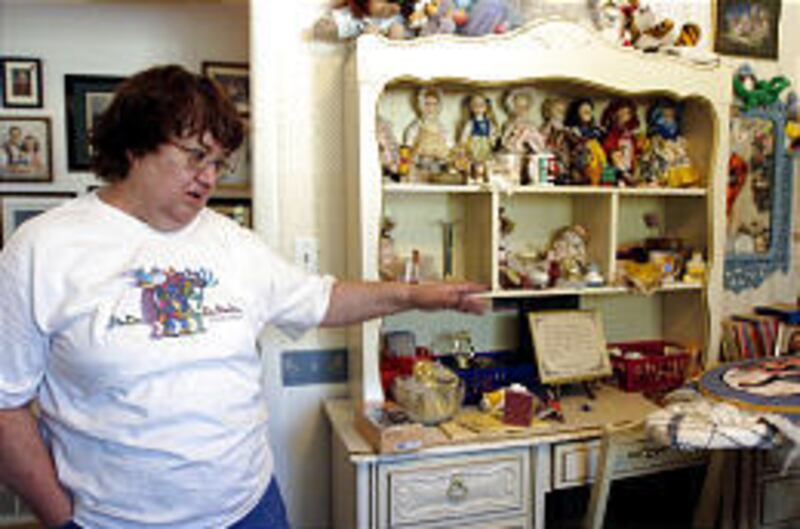
Since Jennifer's death, Clara Neddo had essentially left her daugh- ter's room untouched. As kind of a memorial to her she left her bed in place and her desk undisturbed.
She hung pictures of Jennifer and a gift that was given to her by Jamie Cogswell on the wall. But other than that had left the room undisturbed.
"I haven't been able to go through her stuff," she said.
That was until the beginning of this summer. Just two months ago, Neddo finally gathered the strength to go through the drawers of her daughter's desk where she found some of her old notebooks and writings that she had never read. She found six to eight notebooks full of letters that Jennifer had written to her friends over the years.
"It was a wonderful experience seeing her feelings. Some of them dated back to junior high," Neddo said. "It's like she's back here in a sense."
Neddo said her life has been going well the past few years. She teaches fifth grade in the Granite District but plans to retire after the next school year.
Staying busy and being surrounded by family has helped her get through the hard times.
"I think I've adjusted fairly well," she said.
Religion also played a strong role. Neddo, who is a member of The Church of Jesus Christ of Latter-day Saints, said what helped comfort her was knowing that she will see Jennifer again in the afterlife.
"We believe in life after death. I'll spend time with her and get reacquainted. I plan to spend a lot of time with her," she said. "Eternity is forever. The material life is a short time."
Still, Neddo admitted at times it's hard thinking about missing out on the "prime years" of her daughter's life, as she called them, especially now that many of her friends are getting married.
Neddo has not talked to Huntzinger since the accident. She said she would possibly be open to the idea if he wanted to, but she will not seek him out.
She said she is not angry at Huntzinger today.
"Certainly I'm sad. I wish he wouldn't have done it," she said. "It was a terrible mistake. I know he didn't intend to hurt my daughter.
"I think he's learned his lesson. It's time for him to move on and for me to move on," she said.
Neddo said she and her family would probably mark today's anniversary by going to the cemetery where Jennifer is buried and remember her "excellent girl."
"She did everything right. From the moment she was born till the minute she died. She had such a good life."
Elizabeth Phillips
Tom Phillips' daily jogging path takes him right by the site where his daughter, Elizabeth, was killed. When he gets to that spot he said he usually says "hi" and then continues on his way.
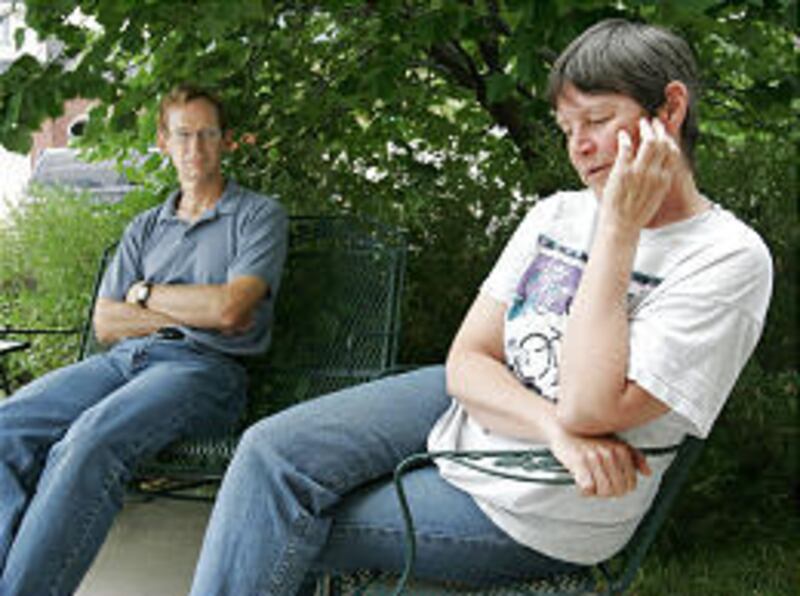
The moment Tom and Mary Phillips lost Elizabeth they felt as though they had lost control of life, and all their focus was on their daughter's death.
"You want your life back so bad," Mary Phillips said. "I spent months trying to get my life back. But that was the wrong goal."
It was when Phillips went to a national convention with others who had lost loved ones in drunken driving accidents that she met people who were still heavily grieving more than 20 years after their tragedy and spoke like it had happened yesterday.
"It scared me this would be my life forever, focusing on what I'd lost and not all the great things in my life — I didn't want to suffer from tunnel vision," she said.
Mary Phillips began to do extensive reading on how to cope with loss and became a victim advocate. Today, she has counseled hundreds of others who have suffered tragic losses.
Phillips, who has a master's degree in counseling, is two months away from finishing a book designed to help others who have suffered through tragedy and how they can make their lives better. She hopes to have the book published in 2006.
Through her months and years of research, Phillips has discovered certain elements follow a tragedy that everyone seems to go through.
"Trauma doesn't have to destroy your life. What matters is how you think about it," Phillips said. "This changing my mind about Liz's death is the hardest thing I've ever had to do. Just because something horrible happens to you, it doesn't mean your life is doomed. Through a horrible tragedy you can actually make a better life. I hate it that Liz's death brought me the gift of a life more fully lived, but it did just that."
Phillips said it took a lot of hard work to get to that point. Today she and her husband lead very busy and happy lives.
"They say time heals all wounds. That's not what it is. A lot of work helps patch up things and puts it in perspective," she said. "Liz's death is one thread in my life, not the whole quilt."
"You can't escape a component of your life, but you can put it in a place where you're OK with it," Tom Phillips said. "You have to be in control (of your life). Not just let tragedy take you down. Good things will happen for you again."
Mary Phillips has been very active since her daughter's death, working with such groups as MADD, the National Highway Transportation Safety Administration Region 8 Alcohol Conference and the National Drug Court Institute. She is currently working with Freeway Watch at DUIhope.org.
Phillips has also become active in the Utah Legislature in recent years, pushing for changes to the state's DUI laws.
"It's the stupidest; it's the dumbest crime in the world," Phillips said of drunken driving.
She was on a team at the University of Utah's Social Research Institute that is about to have a research paper published on how a standardized electronic system of tracking crime in Utah is needed. She has even written a grant application for the estimated $2 million needed to conduct a Wasatch model of the system. In addition, Phillips is pushing for the proliferation of drug courts on the misdemeanor offense level.
Tom and Mary Phillips say all tragedies, trauma and stress in a person's life have to be taken into perspective. Shortly after Elizabeth's death, Mary Phillips was standing in a food line at a restaurant when she overheard a father ranting about how disturbed he was that his daughter wanted a tube top because he thought it was inappropriate.
Phillips turned around to the man, told him about her loss and that she wish her daughter was still around so she had the option of buying her a tube top.
The conversation ended with the man saying he would buy one for his daughter on the way home.
Elizabeth's ashes were spread over Cecret Lake in Little Cottonwood Canyon. Her parents have hiked the trail a few times over the past decade. But they say there isn't a need to memorialize her in some structured way or dwell on anniversaries.
They received a letter from Huntzinger shortly after the accident, apologizing for what happened.
Today, she said it would be interesting to talk to him simply for study and research reasons. But otherwise Tom Phillips said it really isn't important to ever see him again.
"I don't want him in my life, period," he said. "I don't want to worry about him."
Tom and Mary Phillips said forgiveness really isn't the issue, rather restitution — but not in a monetary sense.
"I'll respect him if he pulls his life together," Tom Phillips said.
Laramie Huntzinger
The Deseret Morning News made several attempts to contact Huntzinger, the boy who was driving the car that fateful night, for his comments.
Huntzinger's mother, Noreen Thomson, expressed some interest in having her son interviewed. But neither she nor her son called the paper again for this story.
During the brief conversation, Thomson said Laramie, now 26, is for the most part doing well and has turned his life around. He is married and recently celebrated the birth of his first child. Huntzinger is also attempting to start up his own business, she said.
But she also said the past 10 years have been a roller-coaster ride and some days are still more of a struggle than others. Huntzinger isn't a person who is just going to forget about what happened now that he served his time, said his mother. He thinks about the incident a lot and struggled especially in the years immediately after the accident, she said.
Huntzinger served his sentence in the Decker Lake Youth Center until 1998 after being convicted of two counts of vehicular manslaughter. His blood-alcohol level that night was 0.11. The legal limit in Utah is 0.08.
Although he initially struggled at Decker Lake, a News article in 1998 noted that during his three years there he advanced six grade levels and scored well on the SAT. He was also deemed sensitive and articulate enough to act as a peer mediator to help other teens with communication and coping problems. He spoke at high schools about his experience as part of the 300 hours of community service he was also sentenced to serve.
A check of court records showed Huntzinger has had no other criminal charges in Utah since the accident.
E-mail: preavy@desnews.com