

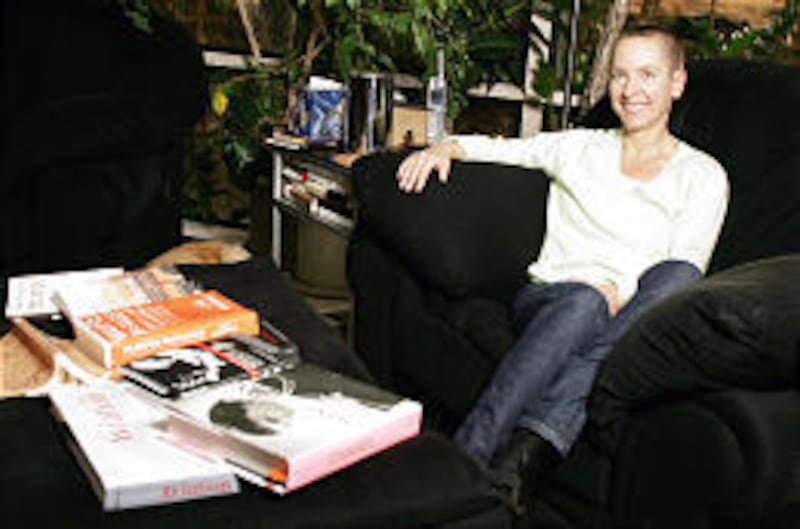

Before Katharine Coles sits down to write a poem, she sifts through a number of ideas in her mind — some of which she shares with eloquence.
"I may be thinking about many things from different disciplines," Coles said. "Newtonian physics, the Bosnian War and something theological. Because they occupy my attention so much, I figure out what relationship these ideas have.
"Then the pieces of poetic language start to come from each, so I put them together. I look at my notes and go through scraps of paper from my recent travels — and they may help me or they may not. I'm looking for those things that are intense enough to be poetic language.
"Someone told me that my poems felt intimate but were also cerebral — I like that idea, because thinking and feeling are absolutely linked to each other. I like to think I do passionate thinking."
Utah's new poet laureate, recently named by Gov. Jon Huntsman Jr., said she is always fascinated by the ways in which the various disciplines — math, science, etc. — talk to history and literature. Coles is an intellectual, but she is also a populist who is dedicated to bringing poetry to the people of Utah.
Specifically, she plans to distribute one-minute poetry readings as public-service announcements — and she hopes they will be televised and broadcast so that people living in Utah will hear a poem a day.
She has free rein to promote poetry in whatever way she chooses, and the Utah Arts Council promises support.
The 47-year-old Coles praised the two poets who preceded her in the post — David Lee and Ken Brewer — as powerful "populist poets." She misses them as "elder statesmen" but exults in the "amazing poets" she says are coming up. "I'll be excited to see who is next!"
That enthusiasm is typical of the energetic, charismatic Coles, who has been devoted to writing since she was a young girl attending Rowland Hall High School, where she cranked out pieces for the school's literary magazine. She studied English at the University of Houston and the University of Washington, then earned her doctorate degree from the University of Utah.
Today, Coles divides her time between being director of creative writing and associate professor of English at the University of Utah, and the prolific author of two novels and three collections of poetry.
A fourth collection of poetry, "Fault," will be published in 2008 by Redhen Press in California. "I hate to break it to you, but this is more of the same. This is the book where I'm comfortable with the material — getting it right for the first time."
She has also completed a first draft of a prose book. It will be called "Burnt Letters" and focuses on her grandfather, a petroleum geologist and explorer from 1926 through the early 1960s, and her grandmother, whom she deems as especially adventurous. (So that's where Coles gets it.)
In her three years of work on this book, she has traveled up the Amazon, to Havana, to Indonesia and to Singapore.
Her new calling isn't her first detour into administrative work. Recently Coles served a stint as president of the U.'s academic senate, the first poet to serve in that role. And with biologist Fred Adler, she co-directs the U.'s annual science-and-literature symposium, which is coming up in March.
Among the poets who are high on her most-admired list are Wallace Stevens, Jorie Graham and Robert Haas. "They are some of the people I'm speaking to in my work."
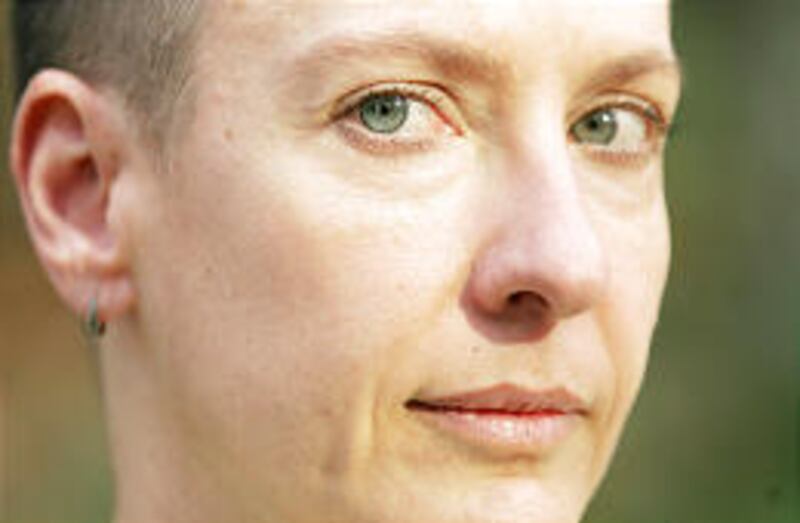
Physically, Coles is tiny and well-conditioned enough to be a long distance runner. "After a 20-mile run, I like to be ready to go to some social occasion in about 20 minutes. I'm not free of vanity, but my hair used to take a lot of time, so when I decided to cut it really short about 20 years ago, it was a huge relief.
"Sometimes, when someone asks me about it, I say, 'I do it because it is really sexy.' But, really, we're all going to die, and when my time comes I don't want to think that even one 20th of my time on Earth was spent doing my hair."
Coles is happy about what she sees as "enormous excitement about poetry both in Utah and in the country at large. "Poetry is a fine place to articulate meaning. In originating a poem, you create meaning for yourself. Then in finishing it, you want meaning for the reader. I'm always interested in what readers will experience with my poems."
E-mail: dennis@desnews.com