


It used to be, you couldn't go to a Winter Olympics without running into someone from Utah who was there trying to get the next one.
Ever since the Deseret Morning News started sending me to cover the Winter Games, beginning with Calgary in 1988, there were always bidders on the scene whose intention was, as one of the early ones, Jack Turner, observed, "to bring Utah into the Olympics kicking and screaming."
As most of the world and the U.S. Department of Justice knows, the bidders succeeded. The Olympic Winter Games of 2002 were held in the city of Salt Lake City to resounding worldwide acclaim and local astonishment.
Now, four years later, as the movement moves on for its Salt Lake encore in Torino, Italy, the scene has changed dramatically.
As I head off to cover the 20th version of the Winter Games, I find myself surrounded by another breed of Utahn entirely: athletes.
You won't be able to swing a large pizza in the Italian Alps the next 17 days without hitting a Utahn.
No less than a dozen homegrown athletes are 2006 Olympians — with "homegrown" defined as anyone who was either born in Utah or moved to the state at an early age to live, as opposed specifically to train.
Add in all those athletes who have moved here, at least part time, to train on our Olympic-caliber facilities, including large segments of the long-track speedskating, alpine, nordic and freestyle skiing teams — along with all sorts of bobsledders, lugers and skeletoners — and the number climbs to near 60.
All those Olympic boosters who predicted "If you build it, they will come," can now add, "If you build it, they will go."
In droves.
It is shaping up as the enduring legacy of 2002: You can take the Olympics out of Utah, but you can't take Utah out of the Olympics.
The inclusion of 12 bona fide Utah athletes competing in one Olympics takes on added significance when the perspective of history is added.
According to research by longtime Deseret Morning News ski editor Ray Grass (who can remember when metal skis were invented), in the 19 Olympics held before this one, the number of Utahns who participated was a total of 14. And that's counting three of the Torino athletes who were also on the U.S. team four years ago in Salt Lake City.
It means that the dozen homegrown Utahns entered in 2006 outnumber by one the other 11 Utahns who participated in all of the Games held since the winter edition began in Chamonix, France, in 1924 — which is something even Ray cannot remember. (To see the all-time roster of Utah's winter Olympians, see Ray's chart in today's Olympics Preview.)
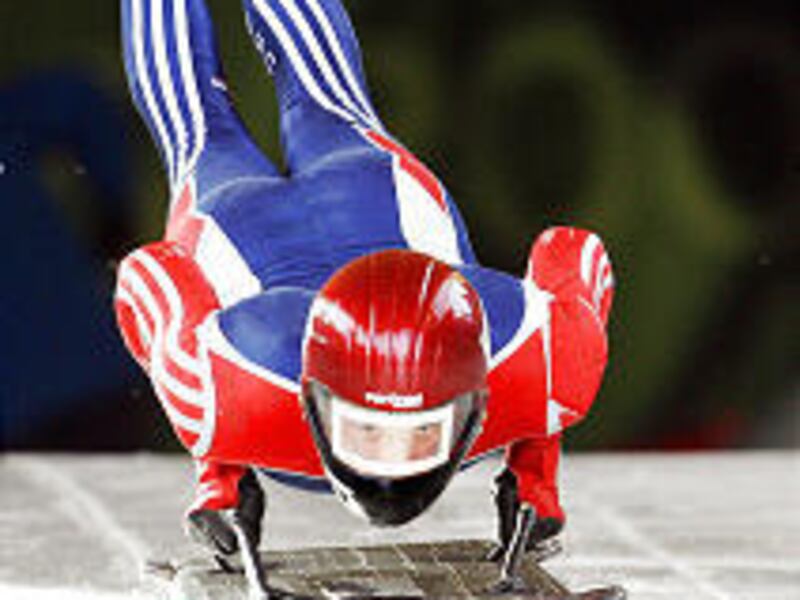
The variety of these modern homegrown Olympians is as impressive as the quantity. In Torino, Utahns will compete in alpine skiing (Ted Ligety and Steven Nyman), freestyle skiing (Joe Pack), cross-country skiing (Wendy Wagner), ski jumping (Anders Johnson), luge (Preston Griffall), skeleton (Zach Lund), bobsled (Shauna Rohbock, Steve Holcomb and Bill Schuffenhauer) and the cross-country/ski jumping sport called nordic combined (twins Eric and Brett Camerota).
The average age of the dozen is 24.4. The oldest is 32, the youngest 16. Ten of the 12 were born in Utah — eight in Salt Lake City, two in Provo. Joe Pack was born in Oregon and moved to Park City near the Olympic Park when he was 14. Anders Johnson was born in New York and moved to Park City near the Olympic Park when he was 3. For both, that year was 1992.
All of their stories are different, but the same. Some have local roots that run deep. Bobsledder Rohbock comes from a family that started the first flower shop in Utah County 85 years ago. Steven Nyman's father, Scott, spent 26 years directing the ski school at Sundance. Others are relative newcomers. The parents of Griffall, Holcomb, Wagner, Ligety and the Camerota twins all first found their way to Utah because of the skiing. All decided to stay for the same reason.
The common thread among them all is first-class training facilities in their backyard. It isn't stretching the point to state categorically that the Camerota twins, Schuffenhauer, Rohbock, Holcomb, Lund and Griffall would not be spending the next three weeks in Italy if the Utah Olympic Park hadn't been built. All were lured to their respective sports by the jumps and track built to host the Olympics. Johnson and Pack started out on the facilities at Lake Placid, so they could conceivably still be Olympians, just not Utah Olympians.
The three skiers — Wagner in cross-country and alpiners Ligety and Nyman — tore up Utah's mountains to make it to the Games and didn't need the Salt Lake Olympics to provide them that. But what the Salt Lake Games gave them, as well as the others, is a glimpse at what was out there. Most were forerunners in Salt Lake. Renee Camerota remembers her boys going off the 120-meter ski jump in front of 22,000 people. "It opened their eyes to what it was like," she said.
"Having the Olympics here showed young kids that they can dream and work hard and they can do it from right here," said Keith Griffall, who watched his 17-year-old son Preston take inspiration from the Salt Lake Games and parlay that into consecutive world junior luge championships before advancing to the adult World Cup and now the Olympic Games.
It was the same inspiration for Rohbock, who four years ago missed qualifying for the first-ever Olympic women's bobsled competition at the Salt Lake Games by a nanosecond. She was the first person to congratulate Jill Bakken and Vonetta Flowers after they won their gold medal at the 2002 Games, and now, after hundreds of runs on the Olympic Park track, she's the one favored to win gold.
It remains to be seen if the first Utah wintertime gold medalist will come in these Games of 2006. But it is a definite possibility. More than ever before are going to try. Meanwhile, the Olympic facilities of 2002 sit silent as a tomb. Except for the bidders, everybody's gone to Torino.
Lee Benson's column will run daily during the XX Olympic Winter Games in Torino, Italy.