


ASH FORK, Ariz. — Under blue skies and popcorn clouds, it is easier to see the allure of this gritty place that became Heikki Ingstrom's home when he stopped running.
In the heat of a summer day, it is blissfully silent. The nearest town is six miles away, and crows float above pinyon pines and scrub oak in this high desert community a day's drive from where Heikki built his life as a legendary runner in Salt Lake City.
Without the pavement moving under his once-flying feet — without running — the rural area had most of what the 47-year-old Utahn held dear throughout his life: peace and quiet, nature's embrace, room to roam and plenty of space for his dogs.
He seemed happy for a while after moving to the northern Arizona community, according to his friends and his mother. His lifelong sense of humor kept Heikki and his new family lifted when even the water tank behind his mobile home was as dried up as his ability in the sport in which he had made his name. But a few months later, Heikki was dead.
"His running style was at once powerful and smooth.'
— Richard Barnum-Reece, editor of Utah RunnerTriathlete magazine
The trophies and plaques are laid out like a golden quilt.
St. George Marathon, second place, 1986.
Silver State 50K/50-Mile Endurance Run, first place, 1992
Kettle Moraine 100 Miler, Eagle, Wis., second place, 1996.
Arkansas Traveller 100 Miler, male runner-up, 1996.
Quicksilver 50K/50-Mile Race, fifth place, 2001.
Wasatch Front 100 Endurance Race, first place, 1994.
In fact, nearly every year through the 1990s, there is a plaque recording Heikki's presence in the brutal Wasatch 100.
This is only about one-tenth of the awards Heikki collected in more than 20 years of marathons and endurance races. The rest are boxed in the basement of the Avenues neighborhood house where Heikki lived on and off since 1970.
Friends talked about Heikki at a recent gathering of elite runners in Memory Grove.
It was the perfect place to remember Heikki, said Tim Seminoff, who called Heikki his mentor. Seminoff looked north toward City Creek Canyon, half expecting to see his friend pop out of the canyon and run over.
Every week — right up until Heikki left town with a woman no one had met and few knew about — he was logging 100 miles on local roads and trails. His friend has moved on, Seminoff said, "but his spirit is still here."
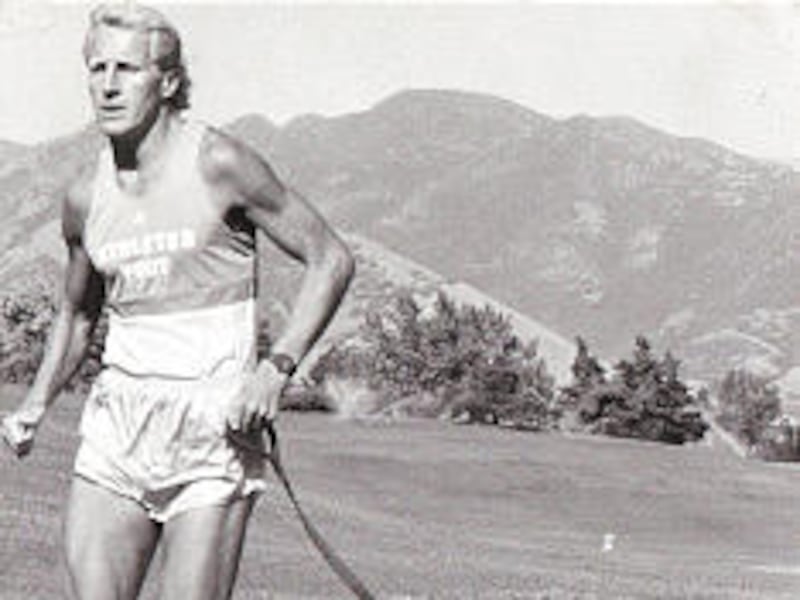
During the years he was running, the collection of awards — and fan base — for the 6-foot 2-inch, blond-haired athlete continued to grow.
"He was a Greek god," longtime friend and running buddy Ted Heal said, smiling. Heikki wasn't Greek, of course, but Finnish, having moved to Utah from the Baltic country with his mother and sister when he was 8. His startling good looks were also legendary.
"Every woman on 11th Avenue knew his running schedule," Heal said.
One woman told Jon Harper that she and friends would brown-bag their lunch up to 11th Avenue, sit on the wall at the Salt Lake City Cemetery "and do some Heikki watching," Harper told his friends.
Heal ran the Wasatch 100 with Heikki in 1991. It was the first year for both of them, and it stormed the whole way. Heal calls that 1991 race "the mud year." Heikki finished ninth in 27 hours and 40 minutes. Heal came in 40 minutes later.
"He was so carefree. He was always smiling and easygoing," Heal said. "You never saw his competitive side until race day."
And that was part of the fun, ribbing each other, taunting each other about who would prevail in the next outing.
Harper loved the rivalry. He beat Heikki by 20 seconds in the 1986 St. George Marathon to finish at 2:28:16, and by 30 seconds the next year. Against Heikki, that 30 seconds qualified as a "butt-kicking," Harper said.
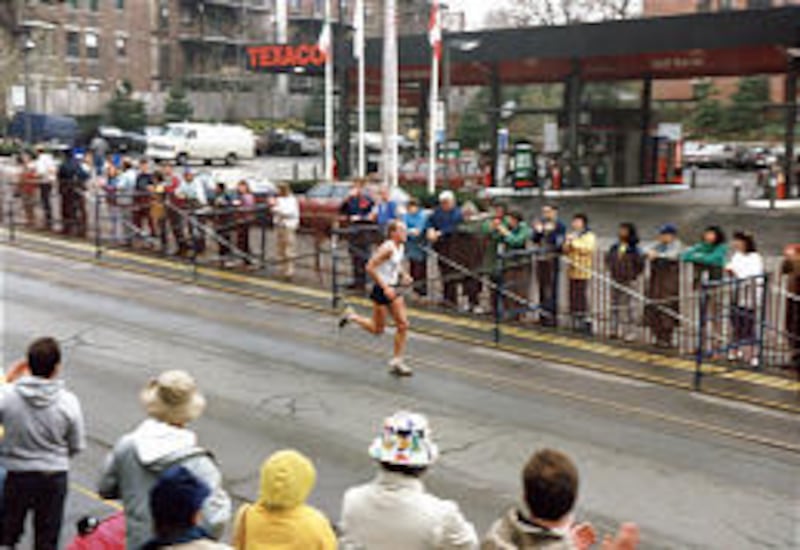
Harper still good-naturedly laments the 1987 Boston Marathon where Heikki placed 66th and he was 74th. Heikki was the 42nd American to finish that year.
In 2002, Tim Seminoff ran with Heikki for the last time. It was the Tahoe Rim Trail 50 Miler, and Heikki, then age 44, finished third. Seminoff came in four minutes later in fifth place.
They ran 48 miles together, and Heikki kept his friend going, Seminoff recalled. "We were having a really hard time, and he'd say, 'Let's just run this thing and get it over with.' "
Like most friends at the gathering, Seminoff preferred the good memories to the mountain of questions surrounding his death that now plague Heikki's friends and relatives.
"The ending chapter isn't great," Seminoff said, "but the rest of the book is incredible."
"He said he got married, and I thought he was kidding."
— Dwight Anjewierden, a friend
To examine the accomplished and mysterious life of Heikki Ingstrom requires an analysis of a complex man.
He was wickedly determined and competitive, but also generous with his smile, friendliness and support for others. He also had a compartmentalized, private, detached personality, friends and family say.
Stuart Ledbetter worked with Heikki for 15 years in a psychiatric unit for teenagers at Primary Children's Medical Center. As a counselor, Heikki had a great rapport with young people. He was calm under stress, not reactive, and great at making the kids feel safe, Ledbetter said.
"Heikki was always going for the underdog," Ledbetter said. "Some of these kids had had pretty tough lives, and Heikki was always their advocate."
He believes he knew Heikki pretty well — about his love of animals, reading, sports trivia, his fair-weather appreciation for athletic teams.
But getting personal information out of Heikki was like squeezing blood from a stone, Ledbetter said. Ask him about a girlfriend or anything private?
"I'll tell you later over a ginger ale," Heikki would always say.
"That guy owes me so many ginger ales," Ledbetter said.
To a person, everyone interviewed for this profile agreed that with Heikki you weren't ever sure if you were getting the whole story.
He was such a joker, such a side-stepper of questions, such an intensely guarded person, that often it wasn't clear what was true and what wasn't. Heikki wasn't a liar exactly; he just had a quirky personality, according to his friends. And they didn't seem to care.
"That was just Heikki," said Dwight Anjewierden, a friend since childhood.
Not only did Heikki withhold personal details of his life, he didn't talk much about his accomplishments either, said his sister, Erja Springman, who lives in Lake Tahoe.
"He never bragged about anything. In fact, it wasn't until he was gone that I really learned how accomplished he was at running," she said. "He was just a very private person."
But as it has turned out, this closed side of his personality has inflamed the mystery surrounding him.
A few months before he left town, Heikki was married. He told only two friends. He moved to Arizona, where his health, finances and safety began their descent.
He was injured, and one of the legs that had carried him thousands of miles became paralyzed. He couldn't work. He couldn't run. It took six months just to walk again.
There were stories about racial harassment because of his marriage to a Mexican woman. He told friends and family members in Nevada, Salt Lake City and Finland he had been repeatedly assaulted. Someone apparently killed his pet birds, laid them out on the bed and left a threatening note nearby.
It is unclear why he was so secretive about his marriage. It is unclear why he never reported any of the incidents to police, described his attacker or pushed them to catch the guy. And, if things were as bad as he said they were, why didn't he move home?
Sorting through all these details and questions left sheriff's department officials in Coconino County, Ariz., perplexed, too.
"The more I looked into it, the stranger it became," said detective Sgt. Dean Wells. "It was like the person who moved down here was a completely different person from the one up there."
"His wife said he never ran. She knew that he did. But nobody in our area here — nobody ever saw him run. It's just something he didn't do here. So talk about a night and day difference."
— Detective Sgt. Dean Wells, Coconino County Sheriff's Office, Flagstaff, Ariz.
Arizona turned out to be a world away from Riihimaki, Finland, where Heikki and his sister were born.
His 35-year-old father died when Heikki was six months old, victim to a family history of heart disease that also stole his uncle at 29 and his grandfather at 46.
Senja Ingstrom brought her two young children to Salt Lake City from Finland 40 years ago, when Heikki was 8 and Erja 10. "We were really close because we only had each other," Erja says.
Heikki would sit on his porch. "Hi," he'd say proudly to children walking by as he learned English.
He was a quick study at language and at friendships. One person described his personality as magnetic, and Heikki collected a range of friends through his days at the University of Utah, at LDS Hospital through jobs, where he worked as a phlebotomist tech, and at the Pub in Trolley Square, where he was a bouncer in the 1980s.
Earlier, friends spoke of his adventures at East High School, and then as a missionary for The Church of Jesus Christ of Latter-day Saints in his native Finland.
Mark Morris, a business litigation attorney in Salt Lake City, went to high school with Heikki, then met up with him again in the mission office in Helsinki, where Heikki was assistant to the president.
"Heikki was playful, and he had no malice," Morris said. "He enjoyed a good practical joke. There were several pranks in the mission home." Morris chuckled, but he wouldn't give details.
"He was happy doing the Lord's work," Morris said. "Those were good times."
It was during the mission that Heikki began running. Every morning, except Sunday, Heikki hit the road there, Morris said.
"He took his running very seriously."
"He was just as kind and appreciative when he was at the back as he was when he was winning. He was just happy to be out there in nature, with his friends, running."
— John Grobben, director of the Wasatch Front 100 Endurance Race since 1986
Imagine starting to run about 5 a.m. Say you start at East Mountain Wilderness Park in Fruit Heights in Davis County, as hundreds of devotees of the Wasatch Front 100 Endurance Run have for years. Run north on the Bonneville Shoreline Trail to the foot of Francis Peak, then climb 5,000 feet to the ridge line. Double back and run along the crest of the Wasatch Mountains through Farmington Flats, over City Creek Pass and southeast to Bald Mountain on the border of Salt Lake and Summit counties.
Keep running, and zig-zag your way all day and all night through Parleys, Lamb's and Millcreek canyons, rise to Desolation Lake and then along the Wasatch Crest trail. Continue through Big Cottonwood Canyon, American Fork Canyon and southeast to Pole Line Pass in Wasatch County. At this point, you will have run 85 miles.
Fifteen miles and hours later, the race finishes through Wasatch Mountain State Park at the Homestead Resort in Midway.
Few runners finish in fewer than 24 hours.
Today, Heikki still holds 12th place on the list of all-time fastest finishers of the Wasatch 100 Endurance Run. He won the race that year, after running for 21 hours, 42 minutes and 13 seconds.
Salt Lake City firefighter Barry Makarewicz was at his side the last 50 miles, pacing the friend he had known since 1981.
For 11 hours the two ran together, chatting.
They lumbered through lightning and thunder, darkness, cold and exhaustion. "With about 25 miles to go, he really started to drag, and I realized he was just low on calories." Makarewicz fed him Fig Newtons and granola bars, energy drinks and gooey gel packs. "Basically, it was anything I had at the time, because it was clear that was a problem," he said.
For a few hours, Heikki was so sick he just kept throwing up. He couldn't eat. "Even then he could make jokes," Makarewicz said.
Through much of the race, Heikki and Makarewicz were playing cat and mouse with rival runner Dana Miller, who held the course record and had won the year before.
Heikki took the lead from Miller at 54 miles but lost it again 74 miles into the contest when, just out of the Brighton aid station, Miller slipped by. Heikki lost some ground and couldn't see Miller's headlamp up ahead. But near the top of the pass, Miller appeared right in front of them. Heikki turned it on. "Let's bury this guy," he told his pacer. He passed Miller for the last time.
"It was the middle of the night; we were going downhill on this rocky trail, and Heikki was just hauling."
Makarewicz told friends of Heikki's who were gathered in January that it was an honor to be part of the race. "It must have been one of his finest moments. It certainly was a highlight for me."
At the finish line, Heikki showed his trademark gratitude, remembers John Grobben, who has met nearly every finisher with a handshake or hug since he took over the job of Wasatch 100 race director in 1986.
"He was always so nice and so gracious and so generous with his praise for other people," Grobban said. He deflected credit to everyone else — his pacers, his support crew, his check point teams.
Bill Johnston, Ted Heal, Tim Seminoff, Jon Harper, Bob Sperling, Makarewicz — these guys and several more were part of an elite brotherhood of Utah distance runners who trained and ran together.
In the ultra-running community, each person seemed to have a mentor, and Tim Seminoff's mentor was Heikki.
"This guy loved running. I mean, he loved it." But there is a significant measure of obsession involved in this kind of distance running, he said.
"It is an addiction, and it's hard to know what might have happened when he couldn't run."
"He cherished her."
— Phil, a neighbor in Arizona, said of Heikki's feelings for his wife, Ana
Ana, the woman Heikki married, remains a mystery.
According to police and family members, Ana Valdez Cordova lives in Tucson. She did not return numerous telephone calls for this article.
Police reports and official documents provide some details about the marriage — much more than Heikki ever told friends or family members in Utah. He shared details with only a few people.
Heikki didn't tell his boss about Ana when he came to Ledbetter's office one day and said he was quitting his job as a juvenile counselor.
"It's time to move on," Heikki told Ledbetter. "I'm going to Tucson."
It wasn't the first time Heikki had pulled up stakes in Salt Lake City. He moved to Nevada once for a few months and to New York for about a year. At one point, he lived in a Volkswagen bus in Santa Barbara, Calif. Heikki always returned to Utah.
According to police reports and court records, Heikki married Ana S. Valdez Cordova on Oct. 15, 2004. He still was living in Utah but moved to Arizona four months later.
In November 2004, Heikki and Anjewierden attended a football game between the University of Utah and Brigham Young University. They met at Chili's restaurant on 400 South and joined a crowd of Ute fans at a pre-game party.
After some chit-chat, Heikki said, "Hey, I got married."
"Yeah, right," Anjewierden remembers telling him. Anjewierden thought Heikki was joking, trying to sucker him into some story like always.
"Yeah, I really did," Heikki said. She was a good friend who lived in Tucson but was from Mexico, he told his friend.
"He said they were going to ship her back to Mexico, so he married her to keep her in the country," Anjewierden said.
He'd been spending some time in Tucson, Heikki said, and liked it down there.
Anjewierden said he was concerned, but not entirely convinced he wasn't being conned by his joke-playing friend.
"Just be careful," Anjewierden told him. "You can get in trouble for that."
The two had planned to go to the Fiesta Bowl together a month or so later, but Anjewierden could never track Heikki down.
In late January 2005, Barry Makarewicz reached Heikki on his cell phone as his friend was driving out of town on his way to a new home.
He told Makarewicz about Ana but said the marriage was a secret. She was college-educated, he said, but couldn't get a job in this country.
Ana told police she had known Heikki for three years and that she had met him on the Internet. She had three children, ages 12, 13 and 17, from a previous relationship, but the children spent most of the time with their father. Ana's boys were well-spoken and polite, according to some of Heikki's Salt Lake friends who met them later. Ana had relatives in Mexico and frequently traveled back and forth between the two countries.
Neighbors and people who knew them as a couple said the two got along well and never fought.
According to interviews and reports, Heikki was working doing landscaping in Tucson for a while. But in February, about three weeks after his move to Arizona, he suffered an injury that marked his descent into what friends said was depression and drinking.
Heikki told friends he stepped off a curb wrong and slipped a disc in his back. One of his legs was partially paralyzed. In fact, he could hardly move. He certainly couldn't run.
Heikki tried to rehabilitate the injury, and even traveled to Mexico for treatment. Progress was slow, according to friends he called in Salt Lake City.
In early August, Heikki met the rest of his family in Lake Tahoe for his mother's 80th birthday. Heikki was walking, but with a limp. Ana did not attend the gathering, and Heikki did not tell his family about her.
It seems Ron Barness was one of the last people to see Heikki on the Salt Lake trails that were his second home.
It was mid-August, and Heikki was most likely passing through town on his way back to Arizona from Lake Tahoe. Barness was going down the Shoreline Trail behind the U. Heikki was headed up.
As acquaintances and neighbors in the Avenues, the two men had known each other since 1990. "Tucker's grown," Heikki noted about Barness' golden retriever. Heikki was friendly as always and asked about business at Barness' adventure travel company.
"We talked for a minute, then we both went on," Barness said.
It is unclear whether Heikki re-injured his back and leg or if he lost interest in running again when he returned to Arizona. No one saw him run a step after that.
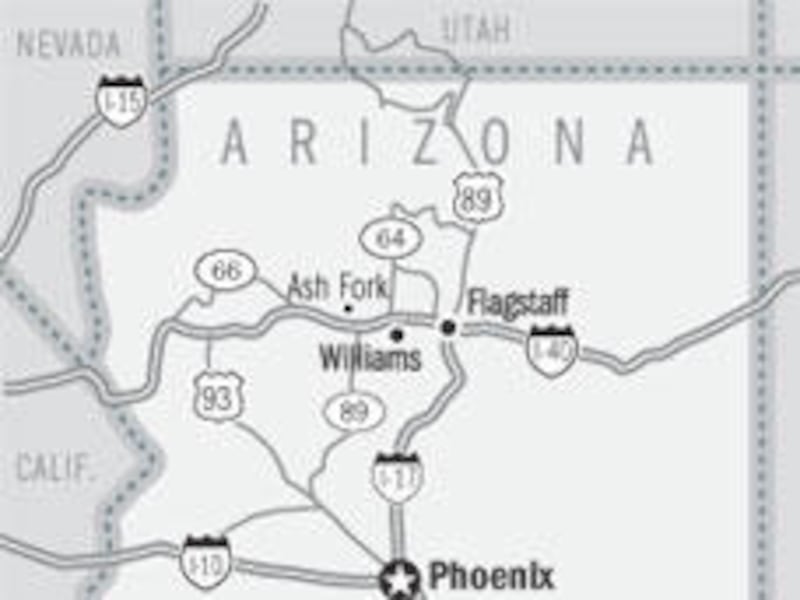
On Aug. 22, Ana accepted a job teaching math to the 57 students of a rural high school up north. The couple packed their bags in Tucson and moved to the dusty town of Ash Fork, Ariz.
But soon things got bad. Very bad.
Wednesday: Heikki's death in Arizona.
E-mail: lucy@desnews.com