




Sports is a passion for many in Utah, whether watching events in person or following them through the various media outlets.
Utahns also love to talk about and hear about their favorite sports teams and players, which is why a midsize media market has such major competition within the interactive medium of sports talk radio.
"The demand is there," said Jeremy Castro, director of sports and broadcast operations for KJZZ TV and The Fan sports network. "The sports fans in the market care about their teams, and what we're doing is trying to capitalize on that passion."
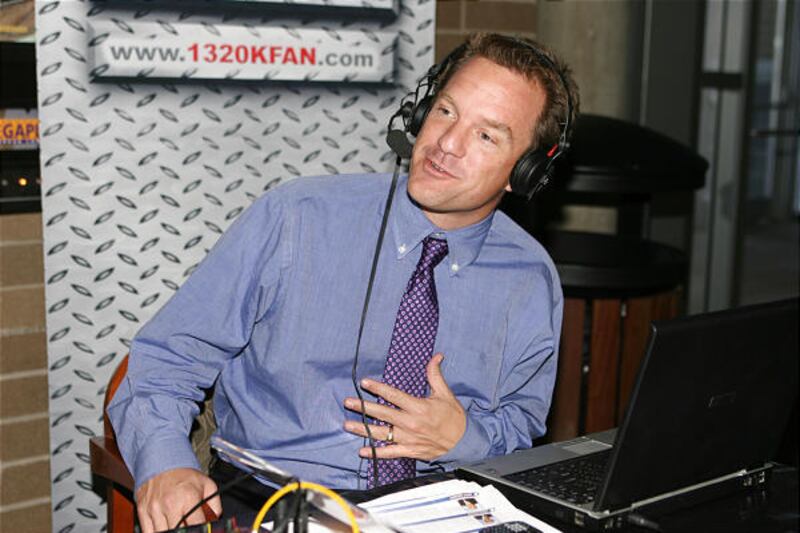
Recently launched by the Larry H. Miller Sports and Entertainment Group, The Fan is billed as Utah's super sports network with two AM radio stations (1320 KFAN and 1230 ESPN) and two television stations (KJZZ Channel 14 and the Fox Sports Net Rocky Mountain cable channel).
The radio stations are personality driven with local media stalwarts like David James and Patrick Kinahan hosting the morning drive on KFAN, and Salt Lake sports talk pioneer David Locke hosting the afternoon drive. Nationally focused programming is provided on ESPN 1230, though local hosts are given carte blanche to discuss whatever they feel is the hot topic of the day.
KALL 700 Sports features Bill Riley in the afternoons as its top local talent, with Kevin Graham and Gordon Monson anchoring the lineup at KZN 1280 The Zone.
"What drives the sports fan in this market are BYU, (the University of) Utah and the Jazz, in any order depending on the week," Castro said.
He said because those three teams have been in the market for so long, nearly every sports fan has some kind of tie to them, which fuels their interest and gets them listening and participating in sports talk radio.
"In any market you're going to be successful, you have to put on compelling local programming," said Riley, program director and afternoon host for KALL 700 Sports.
In this hyper-competitive market, the move has been toward pooling resources in an effort to enhance efficiency and profitability.
Such is the case with KALL 700 and KZN 1280. In the case of The Fan, the Miller Group has 1320 KFAN and 1230 ESPN, plus two television stations to bolster its market share.
"We can offer the sports fan and sports sponsor something (KALL and KZN) can't," said Castro. "We have four media outlets, not including the Internet, to deliver our message.
"Our (business) model is based on delivering on five different outlets as opposed to one (station)," he added.
In explaining the reason his station has chosen to consolidate, Riley said, "I think they felt like combining resources, combining sales staff and the power of two big (50,000 watt) signal stations was better than three or four stations beating each other up."
"The only way to be profitable is to control your expenses," said Steve Johnson, president of Simmons Salt Lake LLC radio group. "You can't be a stand-alone station. If you're part of a group, you can defray your costs."
He noted because Simmons has several stations in various formats and also has a cooperative agreement with KALL, the two sports stations are able to pool their resources, thereby increasing efficiency and lowering expenditures.
"If I can spread costs across several stations, it makes it so that (the company) can make money," he added.
Johnson said if a stand-alone station were to try to make it in the local sports radio market, it likely would not be able to survive due to the high number of competitors.
"Over the last few years, consolidation has (really) come into play (locally and nationally)," said Johnson. "You have larger (companies) coming together to make multi-station groups feasible to consolidate expenses."
When it comes to utilizing vast resources to create a competitive advantage, Castro believes The Fan is set up to do exactly that.
"We're going to be better because we're going to be bigger," he said.
Castro added having so many resources also helps greatly in The Fan's efforts to provide a top quality sports radio product.
Since ratings are not the focal point of sports radio, stations tend to direct more of their attention to what they consider their niche market segment — the age 25 to 54 male.
"If you've got teams (on your station), you use (them) as your cornerstones," said KALL's Riley. "We have Real Salt Lake and the University of Utah, two benchmark affiliations.
"What you try to do around that is plug in good programming," he added. "The power of sports talk radio is identifying and clicking with listeners (in the target demographic)."
"It's not about ratings in sports radio anywhere in talk radio, no matter what market you're in," said Riley. "With the exception of just a short list of markets in the country, ratings aren't a factor (in profitability and success).
"But you can do pretty well (financially) with a good (marketing and programming) plan and a good sales (and marketing strategy)."
He said sports talk and news talk are more about appealing to an audience, "which doesn't always show up in the ratings."
Johnson commends the Miller group for its business model behind The Fan.
"I like what they are selling," he said. "Using all of those entities (KFAN, 1230 ESPN, KJZZ TV and FSN) to spread (their programming resources and expenses) across."
He said it is similar to the way Simmons is utilizing its resources with the various radio properties under its media umbrella in addition to its partnership with KALL.
"We've got seven stations that we can use on those same competitive platforms," said Johnson.
The community of radio is relatively small and, with two media groups controlling the local sports radio landscape, most people in the business are familiar with one another. Many have worked together at various times while working at one or more of the top stations. But it doesn't diminish the competition between rivals.
"I think that we need to have more listeners, we have to have more sponsors and we have to capitalize on the advertising dollar," said Castro. "There's friendly competition, but winning for me is going to be generating enough revenue to justify the expenses and to put on the best, most quality product in the market."
On the other hand, Johnson said KALL and KZN have an arrangement that allows them to compete yet share revenue.
"Even though (there are two stations), we see them as one," he said. "So we add the numbers together. We see KALL AND 1280 competing against 1320 and 1230 combined."
"(KALL and KZN) are competitors in a sense, but we're still in the same family," Riley said. "In the end, for the bottom line we're working together, working toward a common goal."
E-mail: jlee@desnews.com