



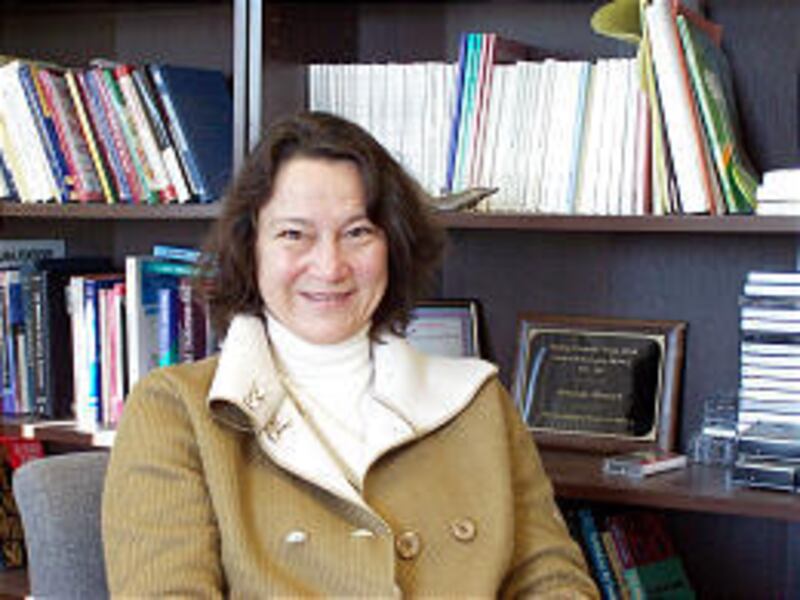
University of Utah social work professor Amanda Barusch doesn't much care for the phrase "midlife crisis." The words imply that any change is bad. Then, too, because the phrase is so common, we've come to think a lot of people will have one.
Some people who are in their 50s do make huge life changes — but they are the exception, Barusch says. Most of us just keep doing what we've always done. We don't head off for a new continent.
As for Barusch, she's 51 now and about to move to New Zealand. Some people have told her she's crazy, have labeled her plan a midlife crisis.
On the one hand, Barusch knows of no statistics to prove that people in their 50s are choosing change in ever-increasing numbers. But on the other hand, sociologists agree that humans yearn to grow and change over the course of their entire lives, says Barusch. "We seek an expansion of the self, to be all we can be."
And when people hit their 50s, says Barusch, "We are free to consider change." Our children are grown, she notes. "Mortality is bearing down. Our parents are dying, and their deaths make it real: that death is permanent."
To Barusch, New Zealand seems a conservative and well-planned move. She'll teach a subject she knows. She's taken a leave of absence, so her job at the U. will be held for her. Her children are in college; she's not abandoning them. In January her husband will take a leave from his job, too, and will join her.
Still, to hear her talk about moving so far away, about having to ship her belongings four months before she'll need them, makes the move sound somewhat daring. Also, she describes it so joyfully. As in, "I've always wanted an adventure of this kind."
Rick Graham is an artist as well as a professor at Salt Lake Community College. He teaches a 12-week course based on Julia Cameron's book, "The Artist's Way." Some of those who take his class are already artists, some are looking to find an artistic hobby and some have no desire to paint or make pots — but are seeking a way to live more creatively.
Graham has found, over the years, that his students have one thing in common: They feel vaguely unfulfilled.
He says they long to drop deeply into the core of their lives. His students want to talk about how to spend their time on this planet.
One man came to the class having worked for 20 years at a job he hated. Eventually he found work that paid less but that he enjoyed more. In his free time, he took up the guitar.
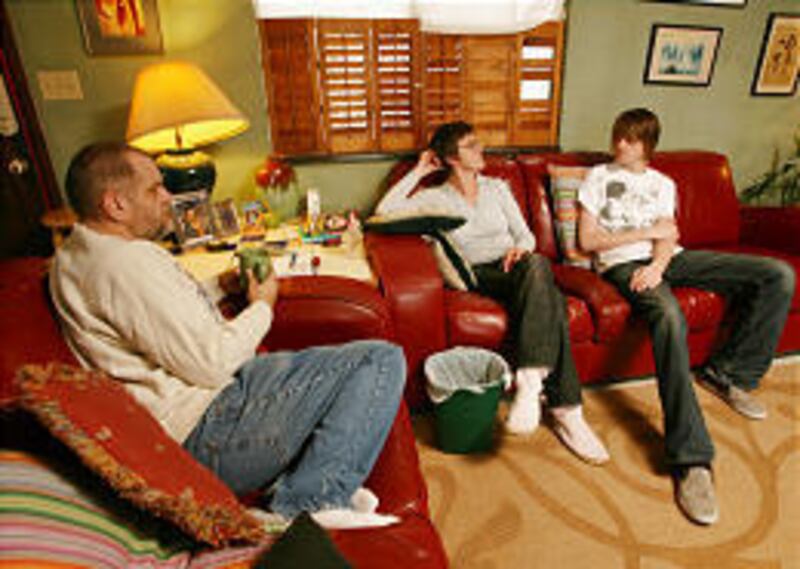
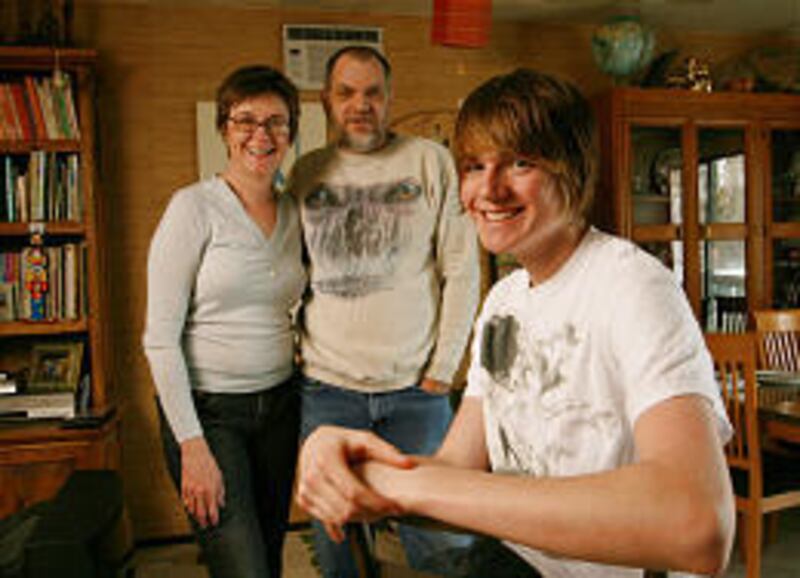
Jeanne Shaw turned 50 this year and wanted a change. Her 15-year-old son, Ashton, decided what form the change should take, when he suggested that the family move to Japan.
Andy and Jeanne were living in Japan when Ashton was born, but moved back to Utah when their son was tiny. Ashton has always been curious about Japan. Also, he knew that his dad, who teaches English as a second language, could easily find work abroad.
So Ashton urged the move even though he knew he'd end up graduating later than his peers, because it will take him at least a year to learn Japanese. He told his folks, "If we don't go now, we will never go, and if we never go, we will always regret it."
Jeanne says it was an emotional decision for her. "I had to write down a list of pros and cons. Pros: Ashton will be bilingual. We get health insurance there, which we don't have here. Also, when we've lived in Japan before we've saved money. And lost weight, eating like the Japanese." The cons include missing family left behind in Utah.
Jeanne is excited to try teaching, too, maybe a cooking class, maybe a scrapbooking class. Still, she says the move feels risky. Andy disagrees. He says it feels like a move up.
He likes teaching here, but he already has a job lined up in Japan, and that job includes housing. Although, he notes, "When we come back, we are resetting the clock in terms of seniority and retirement."
Maybe this move will mess up whatever long-term goals the family had going in Utah, Andy says. But the bottom line is, when he looked ahead at 20 years of sameness — he couldn't resist Japan.
In her book, "Getting Out From Under," Stephanie Winston helps people redefine their priorities using a list of "life themes." They include:
Adventure, ambition, art or music or literature, beauty (personal, home, possessions, environment), collegiality, faith/spirituality, family, figuring things out (problem solving), financial security, health/fitness, home, independence, intellectual pursuits, invention, leadership, love/intimacy, nature, parenting, physical movement (dance, sports), power, privacy/solitude, risk-taking, security, service, status (in the community), variety and diversity (of people, environment, activities) and wealth.
Study these themes, says Winston. Organize them by importance. Arrange them like the solar system. At the core, list your two loves. Maybe family and variety. Or faith and nature. In the first and second orbits, list other good things. If a topic leaves you cold, place it out in the Jupiter orbit. Perhaps ambition leaves you cold. Perhaps you can live without nature.
Drawing the orbits helps you see how your values match your actual life, she says. The orbits also show where conflicts lie. (If family is your core, why work 80 hours a week at a job in the outer orbit of importance?)
When you identify your orbits, you may become happier, rather than sadder, about the way you are living right now, Winston says. If you do decide to change, she suggests making just one change a year. (Don't change jobs and design a new home, for example.)
And she honors small changes as being good enough. If you want to lose weight, lose one pound a month. If you want to rise earlier, she says, get up 15 minutes earlier.
Ann and Daryl Hobson knew the excitement of change when they went on a mission for the LDS Church to the Cape Verde Islands in West Africa. They came home in 2004. They came home wanting to go again.
But these days Ann also needs to go to Boise regularly to help her siblings take care of their parents. She couldn't really spend two years in Africa, as she did the first time.
So when a chance came to spend three months in Portuguese-speaking Mozambique, the Hobsons took it. "We've felt for many years that we had time and abilities to offer and much to learn from other cultures and peoples," Ann writes in an e-mail.
The Hobsons are supervisors in the church's Care for Life program, in which volunteers and paid Mozambique staff help surviving members of poor families care for children orphaned by AIDS.
Ann says they miss their family, especially the hugs from grandkids, and they miss the cultural activities they enjoyed in Utah. But they love the rhythm of their days in Africa, love rising early to go to meetings that start with African singing and clapping. She finds it odd that they don't miss the material things — the pretty home, the comfortable car.
She writes that Mozambicans live quite humbly, and because homes don't have electricity, they spend from dawn to dark outdoors — cooking, washing, walking, planting or sewing on a treadle machine. "TVs, computers and stereos are a rarity, as are books," she writes. "Children play with the simplest of creations, in which tin cans, soda pop cans, wire and sticks play a big part."
Susan Crandell would agree with Barusch that there is no such thing as a midlife crisis. "Midlife opportunity" is what she called it when, at 52, she quit her job as editor-in-chief of "More" magazine to interview baby boomers for a book she titled "Thinking About Tomorrow" (Warner Wellness, $24.99).
People in their 50s are almost chronically overworked, she found. "It is a brave new idea that work should be fun," she writes. She interviewed a banker who quit his job to buy a small zoo, and a woman who spent her 50th birthday climbing Kilimanjaro.
Crandell writes, "When we're young, salary figures high among our concerns.... We need money to launch ourselves in life — to purchase a house, pay for a growing family. By midlife, the picture has changed. Money has paled as a motivator among the men and women I interviewed; we no longer define our worth by our tax bracket.... Second choices come from the heart. Some people are working longer hours at their reinvented job, but it doesn't matter, because they love their work. Others have finally found the confidence to lay down the terms of their employment.... Perhaps the best payoff of all for remaking our work life is the message it sends to our kids. When we refuse to settle for a humdrum job or trade dollars for satisfaction, we're showing the next generation what it means to have fulfilling work."
Denny Nestripke was 52 when he decided to redirect his life. He'd been an accountant, helping companies file their financial reports with the Securities and Exchange Commission. He says, "I got to where I thought I should be more involved in helping people just survive, rather than making the rich richer."
So he enrolled at the University of Utah to get a master's degree in family ecology. Along the way he volunteered as a court-appointed special advocate, befriending two young men who are in state custody, living in secure facilities. He also helped several nonprofit organizations develop a budget and an economic plan.
After he graduated, however, he could never find a paying job with one of those nonprofits. So he continues to volunteer and, to support himself, has resurrected his accounting business.
He's glad he went back to school, he says. He gained a new outlook on relationships and a greater understanding of the American economy — for instance, how various laws affect single mothers. When you are an accountant, you focus on rules, he says. Sociologists, on the other hand, look at trends and adaptations, and there is not always a right answer, he learned.
And because he has volunteered as an advocate with the same young man for several years now, he's been able to see some progress in that one life. Week after week, Nestripke often has been the boy's only visitor. The young man has gradually learned to trust him and count on him, Nestripke says.
Sara Davidson, 64, took three years to write a book about baby boomers finding the next stage of their lives ("Leap!" Random House, $25.95). In the process of writing, Davidson discovered all the things she did not want to do with the rest of her own life.
She writes, "The truth, I must acknowledge, is that I'm not in the same place I was when I began; the incidents and accidents of the past three years have made me half in love with uncertainty. Once again, I have no idea what work I'll do next or what companions will be with me, but I'm not fighting and raging against it. Expectancy is in the air.
"Certain points have clarified, the first being that we are more individuated than when younger, and what becomes clear for me may be utterly different than for you. I'd like to stay as healthy and attractive as I'm able, to do simultaneously what Thomas Moore suggests: accept age and cultivate the Venusian. I'd like to mentor a young person and work for progressive change. I intend to live with people of shared affinity in some form of community, let down barriers to love, and find sensuality in unexpected places. I want to treasure wildness and spontaneity and take surrender as a daily practice."
Davidson met a man who took up hang gliding at 80, a woman who started a theater company at 57, a couple in their 60s who decided to adopt a baby. She concludes, "The country ahead, from the extensive scouting I've done, is not arid — but rich and unpredictable."
Redrawing boundaries
"Aging can be the gift that establishes the boundaries of our lives, which previously knew far fewer confines and brooked far fewer restrictions. Everything within those boundaries becomes thus more precious than it was before: love, learning, family, work, health and even the lessened time itself.... The good is easier now to see; it is closer to the touch and the taking, if we are only willing to look truthfully at it there and gather it up from amid the cares that may surround it."
— Sherwin B. Nuland, "The Art of Aging."Percentage of the pie
A recent report from Boston College's Center on Aging and Work says that in 1980 people 50 and older made up 26 percent of the U.S. population, and in 2050 they will represent 37 percent of the population.
Aging and wealth
Americans 55 to 64 have amassed the greatest wealth. Their median net worth is $162,000. More than 15 percent of them have a net worth of over $500,000 as compared to 12 percent of those over 65 and less than 2 percent of those under 35.
— U.S. Census Bureau, 2005
Family finances
Many people in their 50s find themselves with financial responsibilities, making it difficult to try a new way to live. According to a recent survey by Putnam Investments:
- About 29 million working adults 45 or older have at least one living parent, and one-fifth of them (or 6 million workers) help their parents financially. They pay an average of $240 per month in parental support.
One-fourth of working adults 45 or older, who have a child who is 25 or older, either house or write a rent check for that child. Nearly half provide some degree of financial support for adult children.
Americans used to pay off their mortgages before they retired. They don't anymore. Half of all those over 64 have an average of 12 years left on their mortgages.
E-mail: susan@desnews.com