


MEMPHIS, Tenn. — Aug. 16 marks the 30th anniversary of the death of Elvis Presley. Some people think it may also mark the height of his popularity — as older fans die off in higher numbers than are replaced by newer fans.
That could be. But if you walk through the parking lot at the Heartbreak Hotel, across the street from Graceland, you'll see that Elvis still has broad and popular appeal. In our five-minute walk, my sister and I counted license plates from Ohio, California, Arkansas, Tennessee, Indiana, Ontario, Georgia, Wisconsin, Iowa, Missouri and Massachusetts. And that's just the people who drove. There were also the bus groups and those who flew in. We met people from Japan and Brazil as well as people of all ages from all over the country — all lined up to pay tribute.
I have to confess that for us, this was not a pilgrimage. Neither my sister nor I really got into Elvis during his heyday. She was too young, and I was too nerdy. As we were growing up, our parents were more into classical music; the pop music trend was to be tolerated rather than embraced.
Oh, we watched the famous "Ed Sullivan Show" that didn't include the hips. We went to some of Elvis' movies and liked some of his songs. But it wasn't until later — until rock had dropped its roll and then gone off to flirt with metal, and Elvis became mainstream, unless he was country or gospel — that we began to appreciate him for the icon he was.
Still, we had come to pay homage to that icon. We had come to see where he had lived, to discover some of what ignited all that passion in his die-hard fans, and to capture some of the context and perspective of his life and times.
Graceland's a great place to do all that. You don't get very far without catching Elvis Fever.
The all-Elvis, all-the-time radio station fills the air with sounds of the King before we even get to the visitors center, so right away we get caught up in the Elvis sound. There are posters and flags all around, too, so we definitely know we've come to Elvis country.
There are a number of other exhibits and shows in the complex, but we decided to start off with a tour of the mansion. Even though we are there on a weekday before the beginning of the heavy tourist season, there is a healthy-size line waiting for the shuttle bus. We hate to imagine what it could be like on busy weekends in the summer. After all, they tell us, this is the second-most-visited historic home in the country, second only to the White House. Besides, there's that music to keep us company as we wait.
We are also given personal audio sets to take with us on the tour. Throughout the house, there will be numbers to type in to get the background information. That way we can go as fast or as slow as we want; we can listen to everything or just some things. But we figure we might as well do it all, which takes us about an hour and a half.
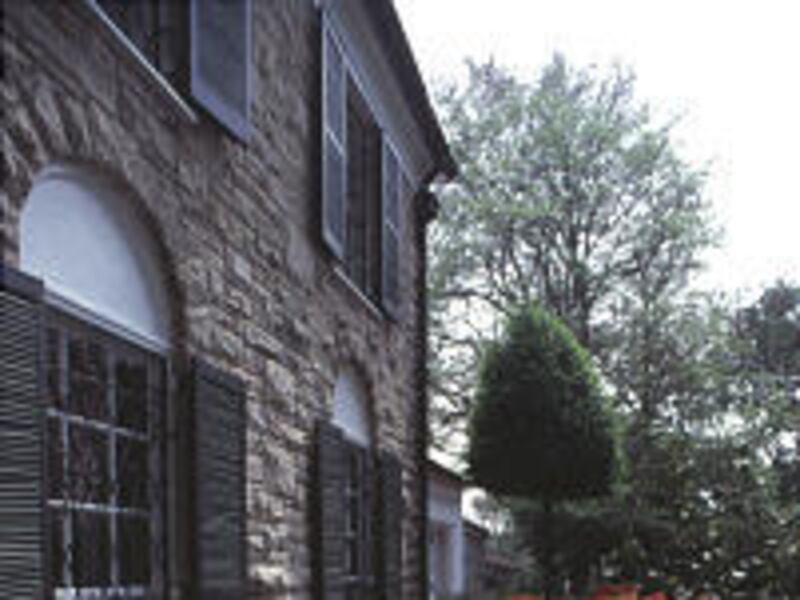
This mansion, built in the Southern style of 1939, became the home of Elvis in 1957 — when he was only 22. It was where he mostly lived after that (give or take a stint in the Army and various stays in Las Vegas and Los Angeles), and where he died.
The first thing that struck us about the house is that it is rather small. Somehow, I guess, we thought the place would be bigger-than-life, like its owner. For its time, it probably was well above average. But today, it seems modest and unassuming.
Still, it bears its name well. Set back from the road on the 14-acre estate, it does have a grace and dignity that come both from its architectural style and its history. For a young boy born in poverty in Tupelo, Miss., who made a promise to his parents that someday he would buy them a bigger house, it must have seemed grand, indeed.
And although the outside is rather traditional, the inside certainly isn't.
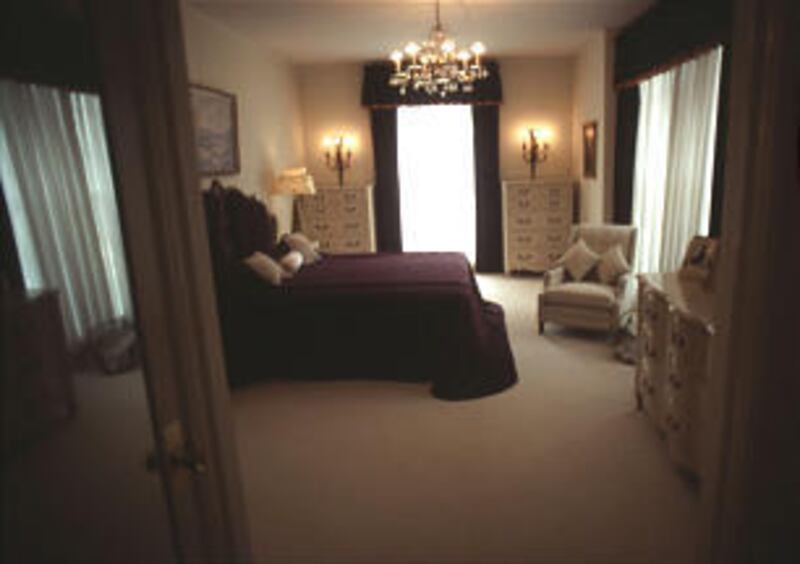
The tour consists of the main floor and the basement. The upstairs, which was Elvis' private quarters, is not included for several reasons, they tell us. First, even when Elvis lived there, he did not allow friends and visitors to go upstairs. It was always his private sanctuary. When Graceland opened to the public in 1982, Elvis' ex-wife Priscilla and his daughter, Lisa Marie (who now own the bulk of the estate), felt it should stay that way.
Also, the logistics would make it difficult to get the crowds up and down without adding a second staircase, which would alter the house. Some of the furnishings and accessories from these rooms are included in other parts of the house, however.
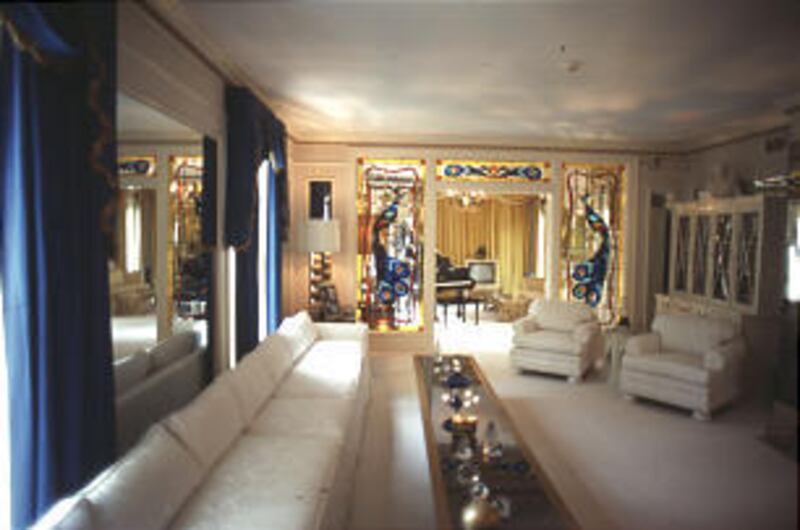
The main foyer, with its ornate crystal chandelier and narrow staircase, provides a suitable welcome to Graceland. Although the house was redecorated several times while the Presleys lived there, the main look throughout the mansion is from the late 1960s and early 1970s.
In 1974, for example, Elvis redecorated his living room in red shag carpeting and red French Provincial furniture, but when the house was opened for tours, the decision was made to go back to the blue-gold-ecru color scheme that was there for most of Elvis' years. It has a nice, elegant feel that spreads into the music room at the back.
On the main floor, we also see the bedroom suite belonging to his parents, Gladys and Vernon Presley; the more formal marble-tiled dining room and the large walnut-paneled kitchen. Elvis always had a staff of cooks and housekeepers, but he was known to make a peanut butter and mashed banana sandwich for himself now and then.
If the main floor is well-appointed and elegant, the basement of Graceland is something else. Here, Elvis' personality shows through in the "ultramodern" yellow shag carpeting, chrome arc lamps, yellow vinyl-covered bar and dark blue sectional furniture of the TV room. The TVs themselves — here as well as throughout the house — are small-screen, wooden consoles that once were so new and now look so old.
Elvis' nontraditional approach to decorating also comes through in the Asian-harem look of the billiards room and the wild and crazy faux-furred, tiki-furnitured jungle room. It's easy to imagine Elvis and his friends hanging out in these rooms.
An annex, converted from a four-car garage into an apartment, is filled with exhibits and furniture from both the upstairs rooms and the other decorating periods.
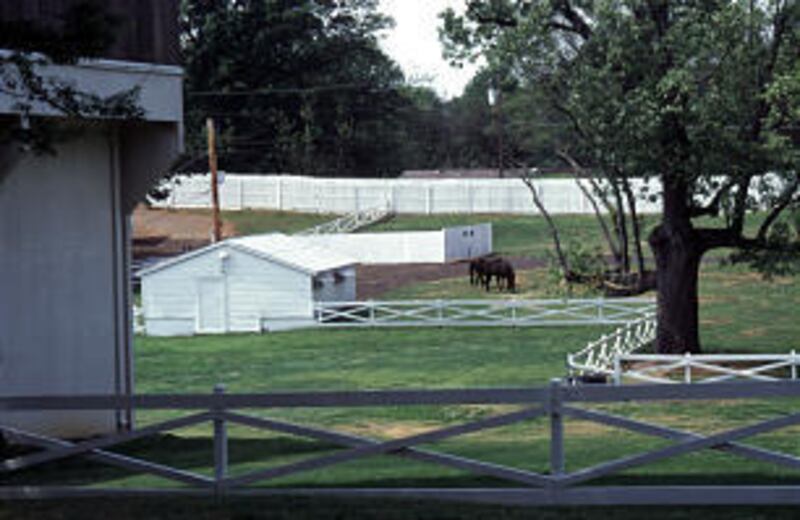
Out back are the stables and fields where Elvis kept not only horses but a variety of other animals such as donkeys, ducks and even peacocks. And there's Elvis' racquetball building and original business office.
And then there's the trophy building, which contains an extensive display of career mementos, stage costumes, jewelry, photographs and more. His gold and platinum records alone take up a full wall.
It is here that we get an increased appreciation for his amazing career. We learn he has sold more than 1 billion record units worldwide, more than anyone else in the recording industry. He had no less than 149 songs appearing on Billboard's Hot 100 Pop Charts: 114 in the top 40, 40 in the top 10, 18 at the very top. He was nominated for 14 Grammys; he won three — all for gospel recordings.
He starred in 31 feature films. His three network TV specials were among the highest rated shows of his time. His live stage concerts set attendance records all over the country.
Lesser-known honors include being named as one of Ten Outstanding Young Men of the Nation by the Jaycees in 1970.
We are also impressed with his charitable endeavors. Everyone knows he gave away Cadillacs, but maybe not as many realize that he raised $65,000 toward the building of the USS Arizona Memorial at Pearl Harbor in Hawaii, or that each year he gave $1,000 to each of 50 Memphis-area charities.
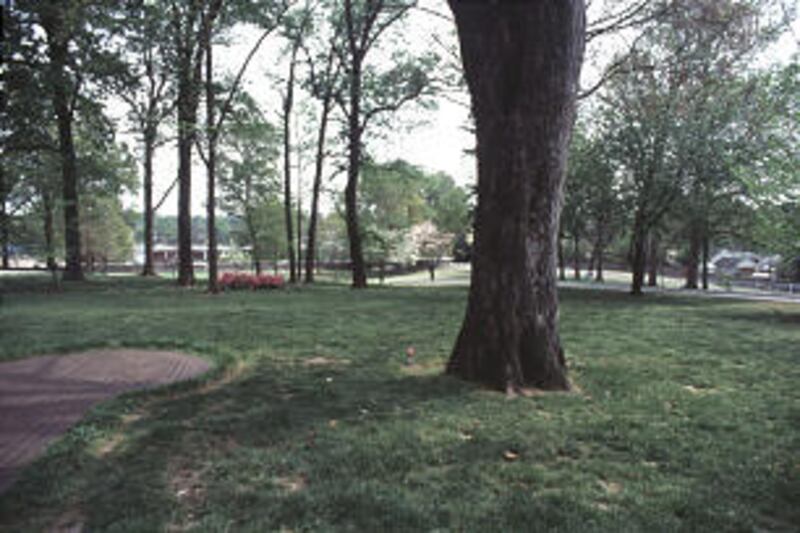
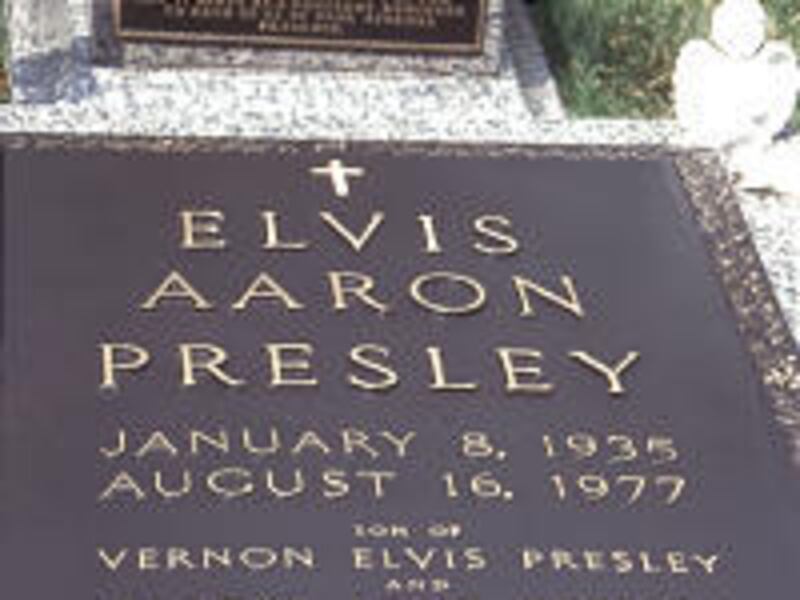
The final stop on the tour of Graceland is the Meditation Garden, where Elvis and members of his family have been laid to rest. This stop, more than any, separates the pilgrims from the rest of us. They are the ones with flowers, tears and a need to have their pictures taken by the grave site. Still, for any of us, it is a beautiful setting and an emotional walk-through.
Back on the other side, there's still more Elvis to see and do.
A cruise through the Automobile Museum offers a look at Elvis' passion for cars, including the famous pink Cadillac (some say it is the most famous car in the world) as well as other Cadillacs, his 1975 Blackhawk Stutz, his 1975 Ferrari, cars from his movies, race cars, motorcycles and more.
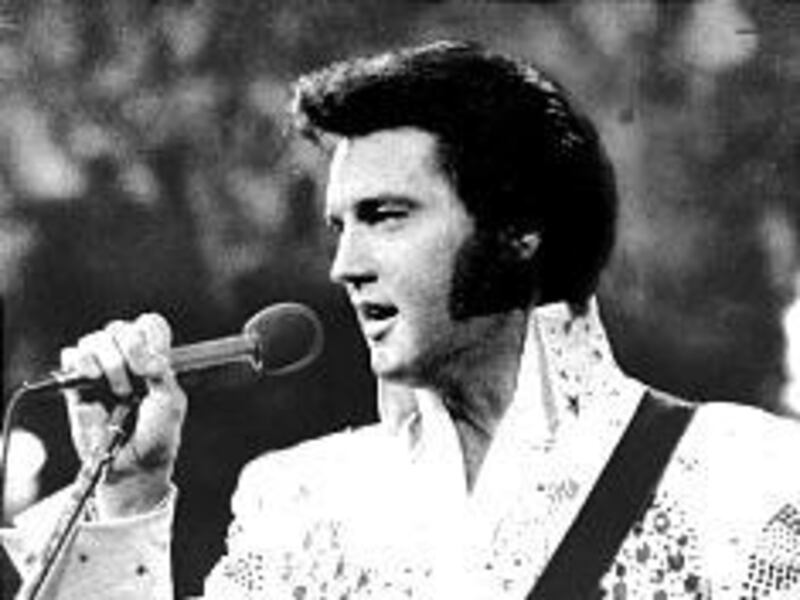
The Sincerely Elvis Museum shows us the evolution of Elvis the entertainer, with a collection of his iconic jumpsuits. Why did we ever think they were so cool?
Elvis After Dark offers more exhibits of clothing, personal items and photographs. The "Walk a Mile in My Shoes" film provides a 22-minute summary of Elvis' life and career.
There are also the two custom jets: the Lisa Marie and the Hounddog II, with his TCB (Taking Care of Business) logo on the wing and solid gold seat belts (including one stretching across a double bed) on lounge chairs inside. Like Graceland, they offer luxury of the '70s — but who wouldn't take it, even today?
All that, and we were not finished yet. What would a visit to Graceland be without one of those peanut-butter-and-banana sandwiches? We found it at the Rock 'n' Roll Cafe, where we could also have barbecue Memphis-style (with cole slaw on top) and corn fritters, topped off with a root beer float.
Back at our room at the funky '50s-themed Heartbreak Hotel, there was time for pondering some of life's mysteries.
What if we had got into Elvis earlier, we ask each other. Is he really "the world's greatest entertainer" as they claim here? What if he hadn't died at the relatively young age of 42 — would he have become just another old rock 'n' roller? Is Graceland's other claim true: Does everyone have a little Elvis inside?
Maybe so. And that just might be enough to sustain his popularity for years to come.
E-mail: carma@desnews.com