


OREM — Think the "terrible twos" are the result of spoiling and too much sugar?
Think again.
It's actually one of the times when the brain is changing physiologically, trying to slough off some of the extra material accumulated on the nerve pathways as he or she develops.
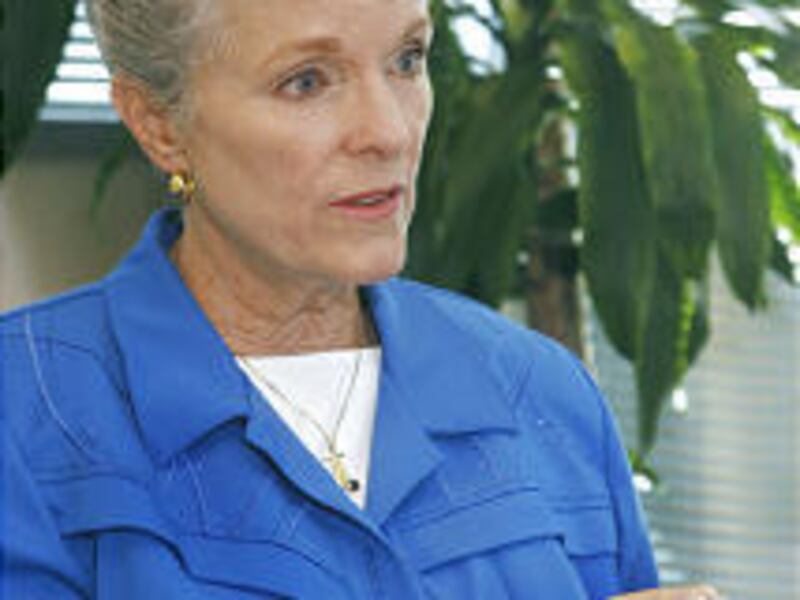
"There are two times when the neurons (in the brain) are like a garden that needs to be weeded," said Leah G. Welte, one of the speakers slated to lecture at Campus Education Week 2007. "One is the period we call the terrible twos. Another is between the ages of 10-12 or at the onset of puberty."
During those times, the brain is going through a kind of pruning process and it's important that parents and caregivers understand the child has little control over some behaviors.
She describes it simplistically like an electrical light cord with a hole in the insulating covering.
"If there's a hole in the covering, the message can't get through," she said.
"Those years from 0-5 years are absolutely crucial," Welte said. "It really is a physiological thing. If we start them off right, it makes it so much better for them. Without a good start, there are tremendous challenges."
Welts said the young child needs stimulation, healthy fats in his or her diet, plenty of opportunities to bond, time to ponder, and an environment rich in a variety of experiences. He or she should be read to and talked to, even though the baby cannot talk back in adult language.
"Let the baby respond and then respond back. The more you talk or 'chatter,' the better," she said. "All of that builds a fabric, a kind of background on which to hang information."
Welte said a mother actually has a hormone released at the time of birth that creates a desire in her to pick her baby up and quiet the baby's crying or respond to the baby's needs.
"If we listen to our inner selves, we know what to do," she said. "The problem is, in our world, we can get so busy we don't listen."
Welte will discuss her theories and research at classes offered on Tuesday-Friday at 8:30 a.m. in the Benson building (W-111).
Her topics include: "The Prenatal Brain Process — Things Expectant Parents Should Know," "What Happens in the Brain at Zero to Five Years — The Support That Adults Must Provide," "How Adults Can Facilitate Brain Development During Middle Childhood," and "The Adolescent Brain — How Adults Can Assist Teenagers."
Welte will be teaching this fall in the elementary education department at Utah Valley State College, holds a master's degree in education from Cal State in Los Angeles and has taught gifted children, college students and grades K-12. She teaches one- and two-day workshops for educators on brain structure and she is in the doctoral program at Utah State University.
This is her second year teaching at Campus Education Week.
E-mail: haddoc@desnews.com