





Key Bank tower implosion video 1
Key Bank tower implosion video 2
Boom ... boom ... boom, then a pause, and finally, an office tower that has been part of the Salt Lake City skyline for almost 30 years met its end early Saturday.
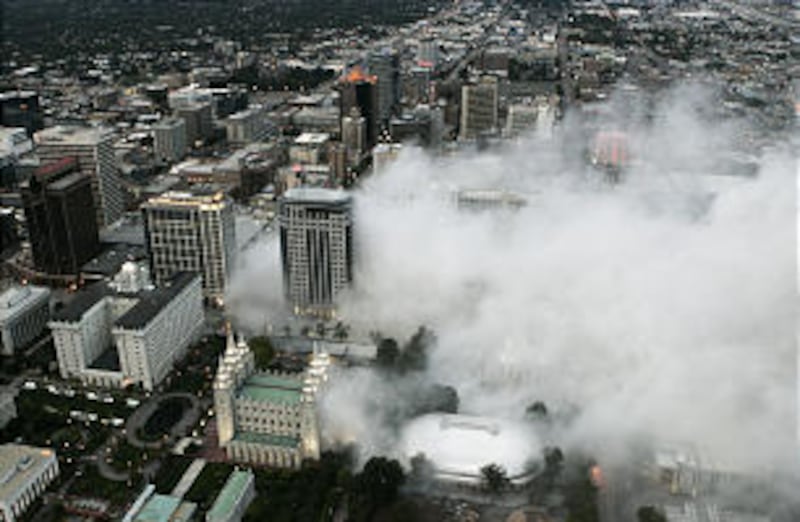
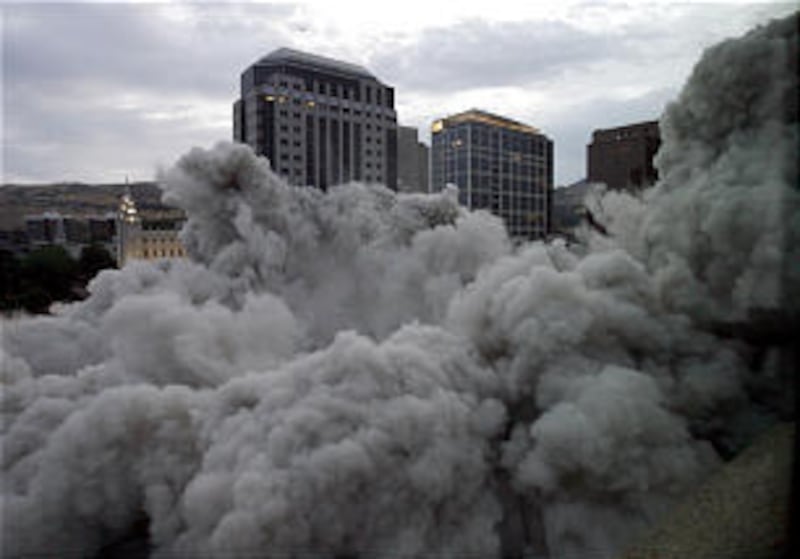
At 6:38 a.m., in the soft early morning light under dark clouds that blanketed much of the sky, the former Key Bank tower, 50 S. Main, came crashing down. Hundreds of employees from Key Bank and other former tenants watched from surrounding office buildings.
Julie Nelson, a 31-year employee of Key Bank, watched from the current Key Bank tower, a block east.
"It's bittersweet," she said later. "It was great to watch, but it's sad to see it go."
Nelson remembers the day in August 1980 when the tower celebrated its grand opening. She was pregnant with her first daughter.
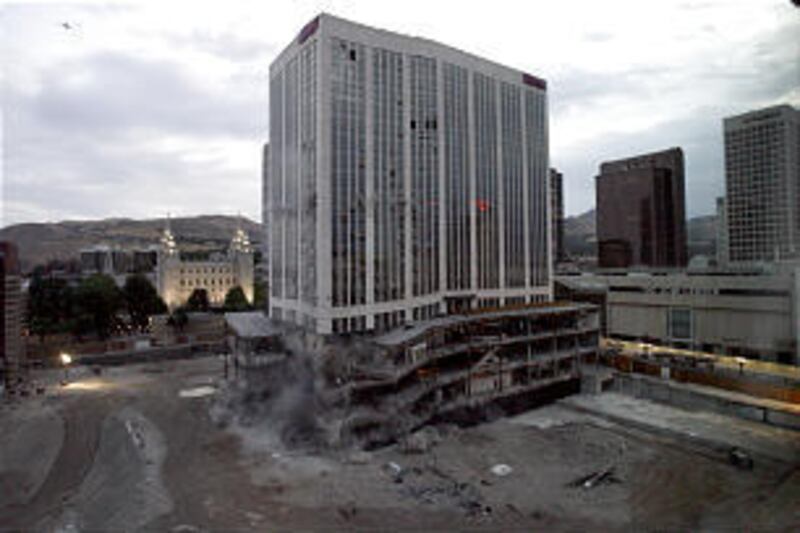
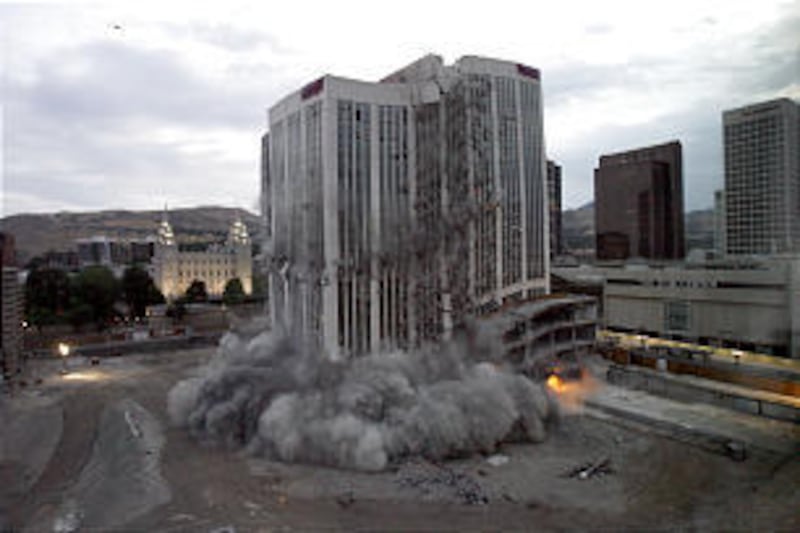
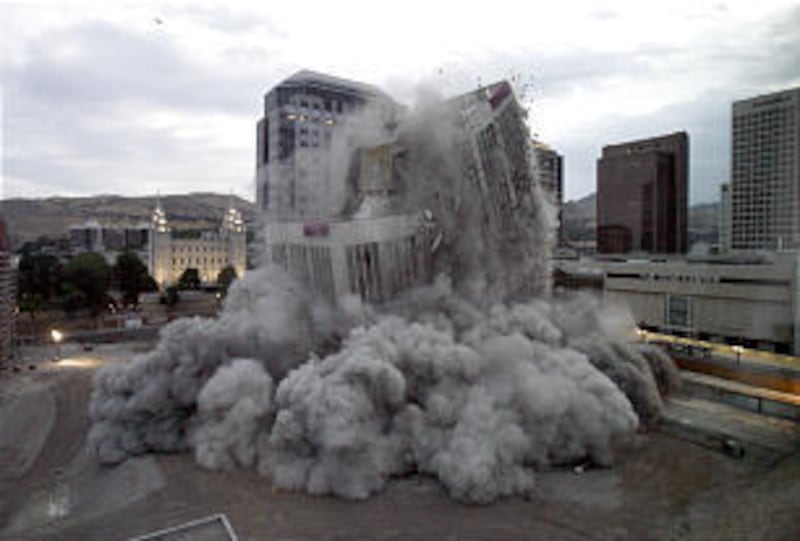
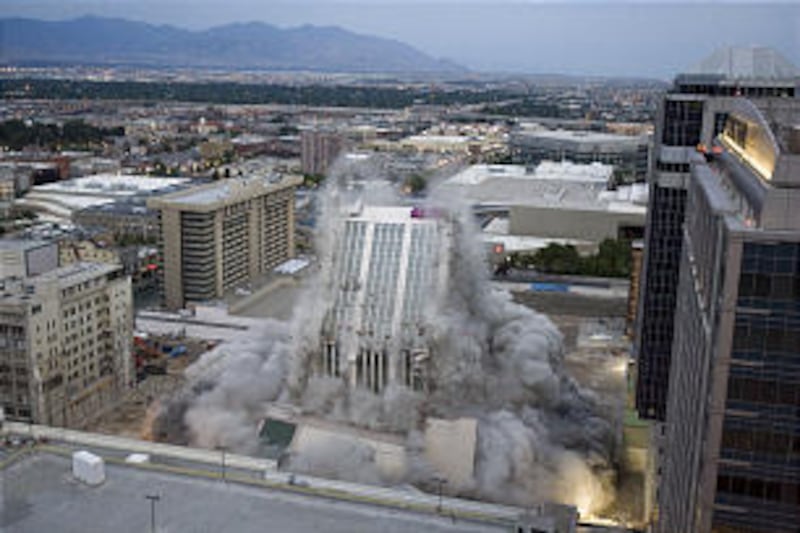
In the minutes leading up to the implosion, the building stood quietly as onlookers watched and waited. Then, without warning, the silence was broken by a sequence of nine blasts that rattled windows and shook the ground. About three seconds later, the tower collapsed in on itself, falling slightly to the southwest, just as demolition planners had hoped.
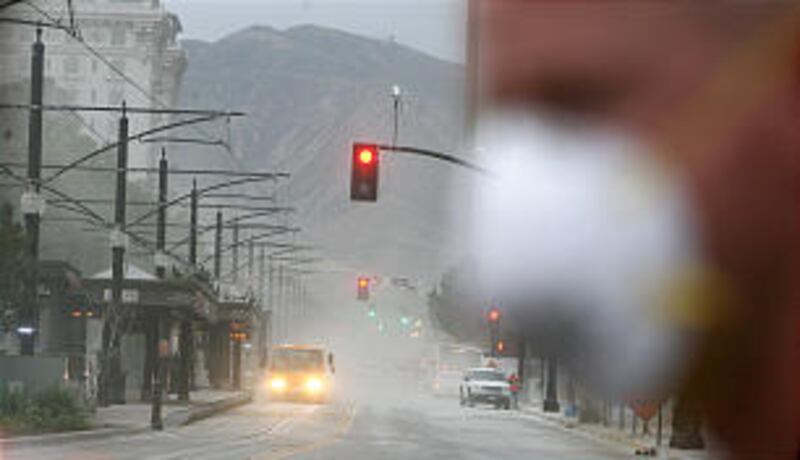
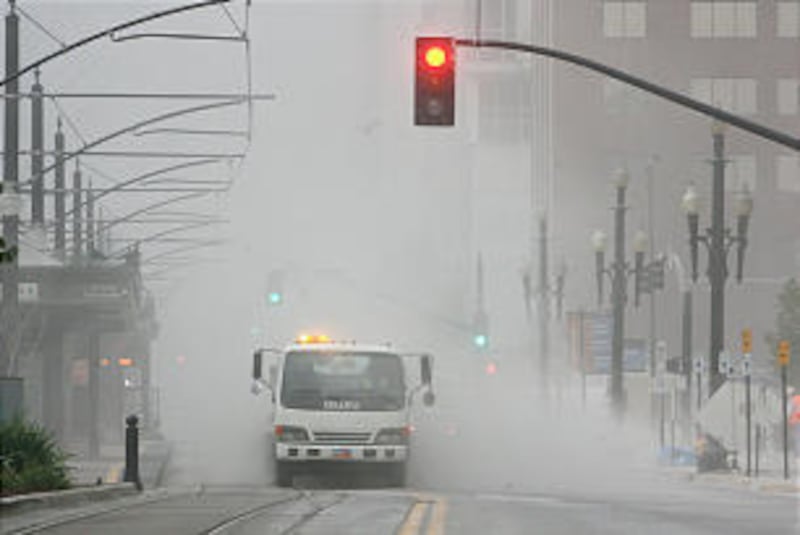
In the days before the implosion, officials said the chief threat to the implosion plan was weather, as lightning or extreme winds could potentially force a postponement. The implosion came about seven minutes ahead of schedule to prevent lightning flashes looming on the horizon from posing a risk, and a steady but gentle breeze helped the dust dissipate more quickly.
Employees watching from neighboring buildings had been warned they could have been confined inside for as many as four hours, but they were given the "all clear" to leave within a half-hour after the implosion.
The 20-story tower was built in the late 1970s and, until recently, housed the offices of Key Bank as well as several law firms, legal support services and other companies. It fell Saturday to make way for The Church of Jesus Christ of Latter-day Saints' City Creek Center development.
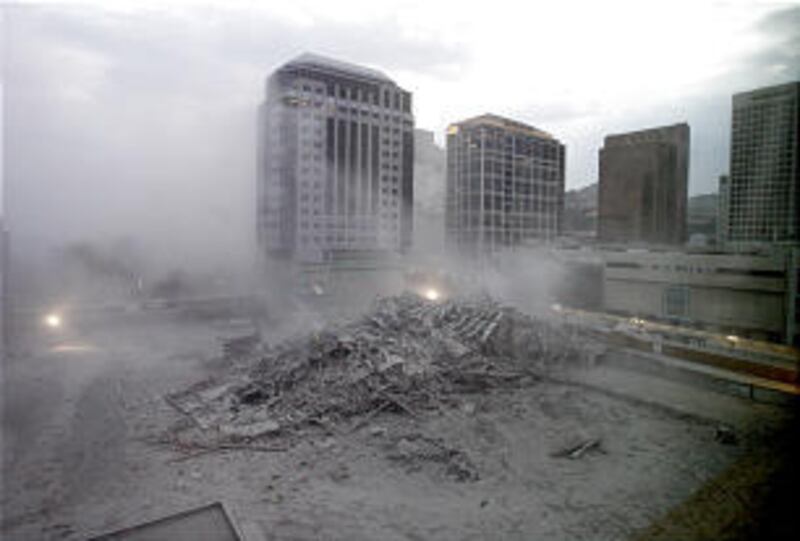
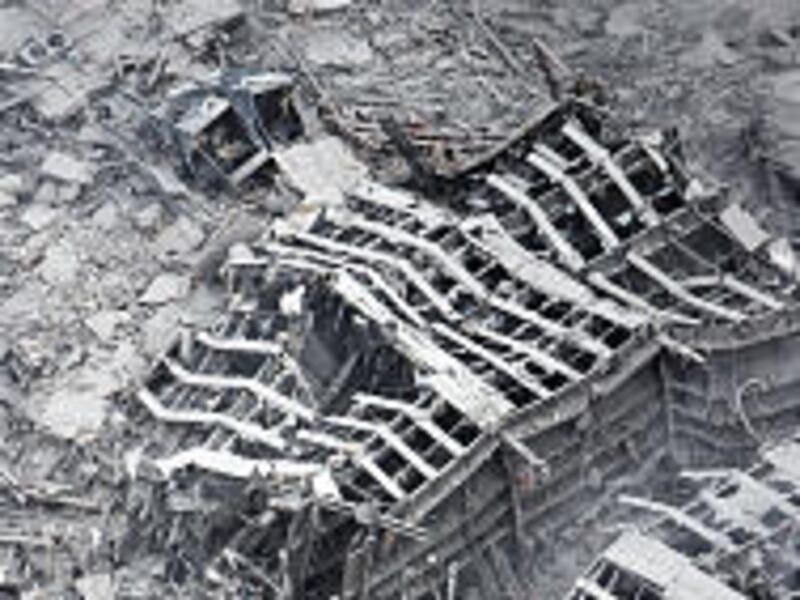
The building left an approximately 40-foot heap of rubble in its former footprint — 36,000 tons of steel, concrete and glass, most of which will be hauled off and recycled.
Ross Kendell, who headed Key Bank as president from 1987 to 1995, watched the implosion with "some very real sadness." His office for 15 years was at the top of the 290-foot building, with views of the state Capitol, Ensign Peak, Temple Square, the University of Utah and the Wasatch Mountains.
"In my view, it was the finest office in town," he said. "I was very biased."
Kendell recalled that in the building's youth, before elevators were up and running, he hoisted his 1-year-old son over his shoulder and carried him up 19 flights of stairs — the building had no 13th floor — to see the view from the top.
The fall of the tower marks the end of an era for the bank.
"I felt that the tower played a very important part in helping establish our bank as one of the major banks in the Salt Lake City and Utah market," he said.
Key Bank moved to the tower in 1980 from a nearby office building at 100 South and State Street, where it had been for five months. Before that, the bank was based in Ogden and was known as Commercial Security Bank.
"I'm satisfied that the development under way by the LDS Church will be a marvelous addition," Kendell said. "I've always been impressed that with everything the church undertakes it makes its decisions carefully, and whatever it does is an improvement to what was there. Though I am age 73, I look forward to seeing it and recognize that I contributed a few tears to the cause."
Kendell's grandson, 5-year-old Joseph Kendell, was more succinct in his summary: "Cool," he said. He admitted he was tired and would probably take a nap later in the day but said it was well worth getting up early to watch the building fall.
The Key Bank tower is the last building on the Crossroads Plaza block to be demolished for the project. Demolition work recently began on the adjacent ZCMI Center block, but none of the buildings there will require implosion.
Okland Construction, which is handling the demolition work for the Crossroads block, opted for implosion for the tower rather than other methods of demolition because it was deemed the quickest, safest way to take the building down. Alternatives would have taken months and months, snarling traffic and kicking up dust on a daily basis.
Okland contracted with Baltimore-based Controlled Demolition Inc. to carry out the implosion. Officials did not specify how much the implosion cost but said it was more than $1 million. Still, they said manual or mechanical demolition methods would have been more expensive.
The Key Bank tower is the first building to be imploded in Salt Lake City since the Hotel Newhouse in 1983. Controlled Demolition also handled that implosion.
The Key Bank tower came down after a series of sequential explosions — from the southwest corner toward the northeast — took out structural beams that left the building's 32 support columns with too much weight to bear. That caused the tower to fall in on itself. A mix of explosives was used, mostly RDX inside extruded copper bars.
The dust kicked up by the implosion was mostly silica. Harmful materials such as asbestos were removed from the building before the demolition.
The University of Utah Seismograph Stations detected a small seismic signal at 6:38 a.m. on a seismometer less than one mile from the demolition site, but analysts need to look at other stations to determine whether the signal was caused by the implosion or by something else, said U. spokesman Lee Siegel.
Contributing: Wendy Leonard
E-mail: dsmeath@desnews.com