

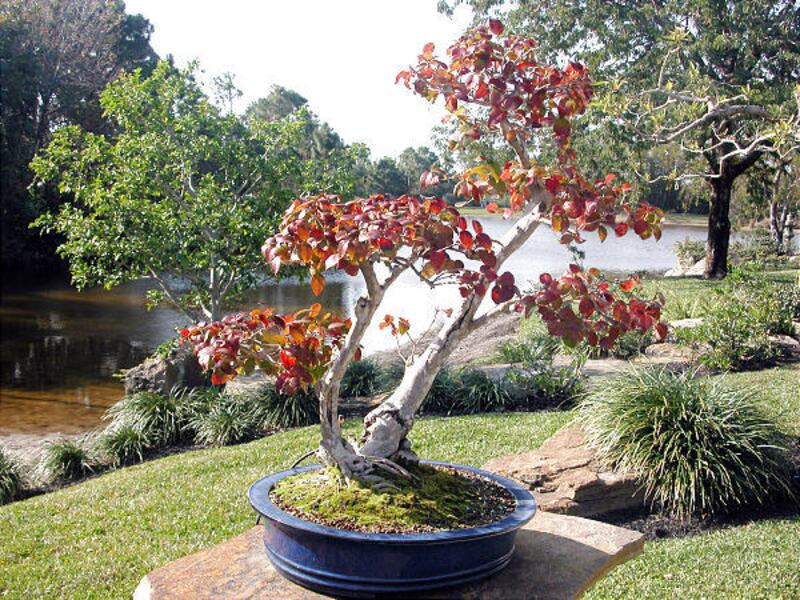


There are many kinds of gardening that I like to do and some that I just admire from afar. One that falls into the latter class is the ancient art of bonsai.
I freely admit that I do not have the time and the patience to indulge myself in this art, which started in China about 1,000 years ago and later moved to Japan. Growing the plants goes beyond horticulture. To many, it becomes a spiritual, cultural or artistic form.
Bonsai (pronounced "bone-sigh") is a Japanese word that means "tray-planted" or "tree in a pot." It refers to mechanically dwarfed trees or to the art of training and growing miniaturized trees in containers.
Simply placing a tree in a small pot does not make a tree a bonsai. Bonsai trees are not genetic dwarfs but depend on rigorous and time-consuming training to create artistic or other significant effects. These practices can continue for centuries, as the trees are revered and encouraged by their caretakers.
Achieving the perfect bonsai is a horticultural and artistic triumph. The artist trains these trees, wiring the trunk and branches to move them, over time, into the desired positions. In addition, the roots and branches are regularly pruned to make the tree take on the appearance of great age and beauty.
Bonsai trees are trained from nursery-grown trees or are collected from the wild. Each method has advantages and disadvantages. Nursery-grown trees are easily obtainable and relatively inexpensive, but they can take years to obtain the look of great age that bonsai fanciers try to achieve.
Trees collected in the wild add another dimension to the hobby. For some, finding the tree and then spending months or years preparing to dig it up and move it into a pot is an adventure in and of itself. (It goes without saying that collecting trees requires permission from the public or private landowner.)
Finding the right kind of tree is also important. Some believe — inaccurately — that these plants are cared for like traditional house plants. Most of the trees are temperate zone plants, which need four seasons to grow and develop. Most flowering bonsai require cold temperatures to allow them to form flowers.
Most species of pines, spruces, firs and other evergreen conifers are cold-hardy in our area. The same is true of other favorite deciduous trees, including several kinds of maples, elms, azaleas and other species. Species that must be protected from the cold temperatures include Norfolk Island pines, several kinds of Ficus trees and other tropical plants.
One of the most critical issues when growing bonsai plants is watering. Because the plants grow in extremely small containers with limited soil, they require a great deal of care. Select the soil with great care. It must drain freely but contain enough organic matter to keep the critical moisture near the roots.
Poorly drained soil is never suitable for bonsai. If the roots sit in water for any length of time, it can be fatal. Pay strict attention to the soil moisture and carefully water the plants before the soil dries out and stresses the plants.
Just as soil moisture is critical, so is humidity. Because of our dry climate, most bonsai trees benefit from increased humidity. There are several methods to accomplish this.
One way is to fill a leak — and rust-proof tray with gravel. Add water within one—half inch of the top of the gravel and then set the plant on top of the gravel. The water in the pebble tray evaporates into the air around the plant. Another way is to buy a commercial humidifier.
The limited soil volume and the use of soil-free growing mixes also necessitate careful fertilization. Use a complete fertilizer with nitrogen, phosphorous and potassium and chelated trace elements when the plants are actively growing. Follow the manufacturer's directions, but don't overapply fertilizer as it can burn the plants.
For more information on this challenging and rewarding hobby visit the Fall Bonsai Show at Red Butte Garden. Members of the Bonsai Club of Utah will display trees from their collections, answer questions and demonstrate bonsai techniques. Trees and supplies will be available for purchase.
If you go
What: Fall Bonsai Show
Where: Red Butte Garden
When: Saturday and Sunday, 9 a.m.-5 p.m.
Cost: $6 for adults, $4 for senior citizens and children 3-17; free for Red Butte members
Phone: 581-4747
Larry Sagers is the horticulture specialist, Utah State University Extension, at Thanksgiving Point.