

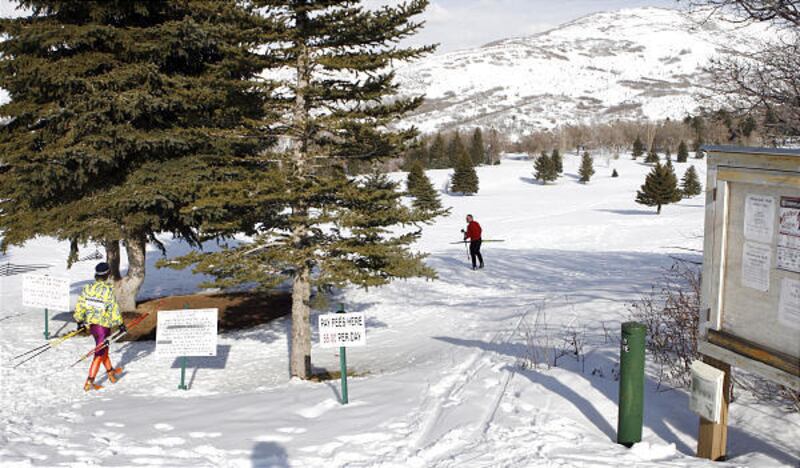

It's easy to see the appeal of cross country skiing. It's easy ... as long as there's snow, and there is snow this year.
Step out with the right foot, then the left, right, left, right ... just like walking. Then, for a little variety, skiers can add a little glide — right foot thrust out, left foot back and slide. And, if and when they choose, they can stop and lean on the ski poles and enjoy the quiet — it's almost always quiet — and the surroundings, whether it's on a snow-covered golf course, a tree-lined mountain trail or an open meadow with not a single mark in the snow.
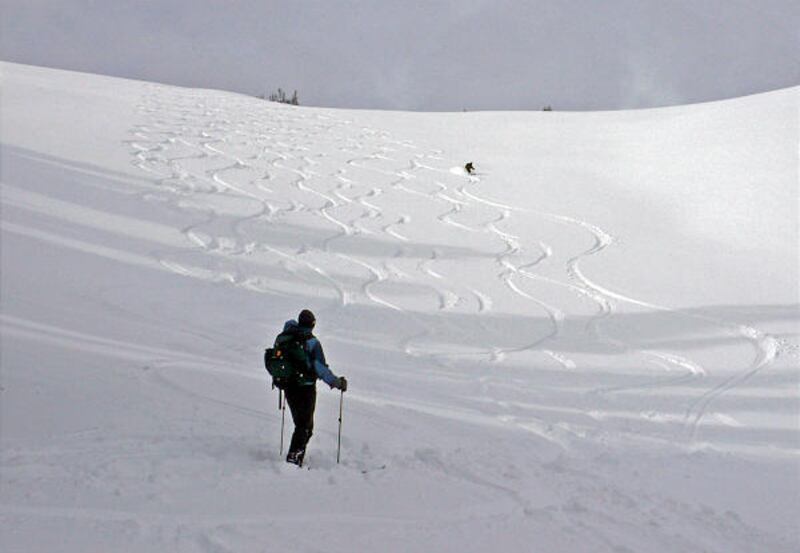
Skinny skis can take a person uphill or downhill, along a prepared track or through backcountry powder. Skiers can go out on a bright day or overcast day, in shirtsleeve weather or in frigid cold, or out on a short excursion or a daylong adventure that includes a backcountry lunch.
All of which, in some way, accounts for the fact that nordic skiing's popularity is growing, or it would appear so in talking with staff from some of Utah's nordic centers.
Consensus seems to be that there was an increase last year, despite poor snow, and an even larger increase this year, due in part to the good snow, and also the urge to get outdoors and the real affordability of nordic skiing.
As one track manager said, "Whole families can get into cross country for what it cost for one set of alpine equipment."
Also, along with cost and the short learning curve, some growth is attributed to an increased number of alpine skiers making the switch to skinny skis.
John Brooks, touring store manager at the Solitude Nordic Center, is one of those who's noticed an increase in skier numbers this year.
Reasons given include the cost and the fact that more people these days are interested in fitness and exercise, which are both byproducts of even a casual stroll on snow.
He also said he measures the increase by the increased number of beginner lessons going out daily, "not only to individuals but to whole families."
Track passes at Solitude are $18 for a full day. Daily rentals for an adult for classical equipment is $18 and for skating equipment it's $20.
Kelsey Coy, who works out of the activity center at the Homestead, said she is seeing more families out this year, "mainly because this is really a family-type resort. But we're also seeing a lot of individuals. We've got good snow this year and that helps. Last year we had to delay our opening because we had no snow."
A trail pass for the track that follows the golf course is $6 for an all-day adult pass. Daily rentals are $12 for an adult and $7 for a junior package.
Brandon Adams, an instructor/director at Soldier Hollow, said that thus far into the season the skier count is up around 10 percent over last winter's figures.
Here, too, the increase covers a broad range, from single individuals to whole families. Another measuring stick is the fact that the number of beginning lessons has also increased.
"Most of the beginning lessons we are giving are for classical skiing because it's easier to learn. Skating takes a little more experience," he said.
As noted, there are two styles of cross country skiing — classical and skating.
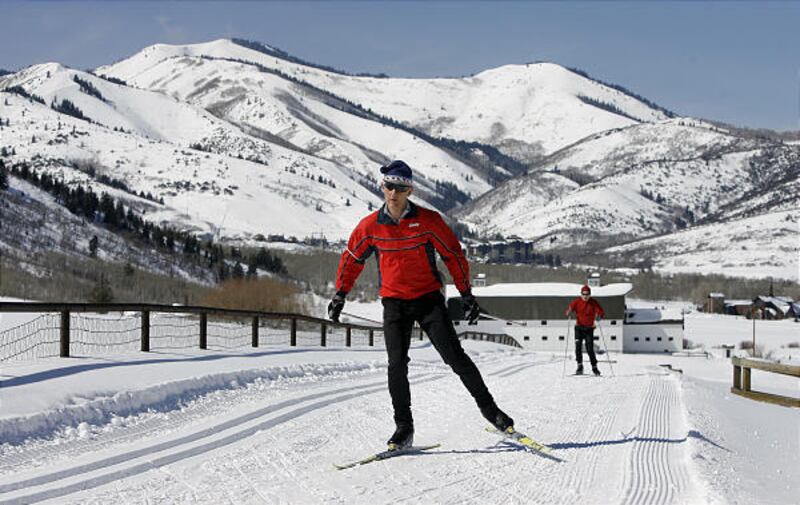
Classical is old-world skiing; skating is new world. Classical involves a parallel sliding motion, identical to walking. Skating is a little more technical and involves a V-shaped stance, widest at the tips, and then pushing off alternating skis in a skating motion. Classical skiing is more relaxing and slower; skating requires more energy and speeds are faster.
Tracks around Utah groom a 16-foot-wide trail designed for both classical and skating. Two parallel grooves to one side of the groomed trail hold skiers in the classical form. Most of the trail is smooth and intended for skaters.
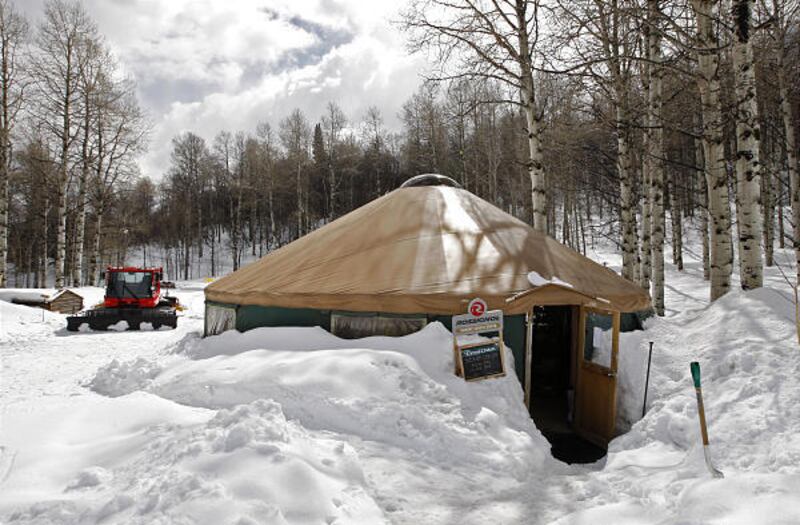
And then there's the backcountry experience. Entire winter areas are open to cross country, from high mountain excursions to mid-elevation tours through the trees. Those headed into the backcountry, however, are urged to get an up-to-date avalanche report.
As far as equipment goes, not much has changed over the past four or five years. Waxless skis are still preferred by the newer skiers since they require no technical skill to prepare. Skiers will find today's boots more comfortable and warmer, and bindings much easier to get into and out of.
As far as attire goes, anything will do, but the suggestion is that skiers layer their clothing so they can remove shells when things warm up and replace layers when things cool down.
There's no reason to stay indoors in the winter not when it's possible to take a stroll in the mountains, on skis, or hit one of the prepared nordic center's and escape into some of the most spectacular country in the world.