

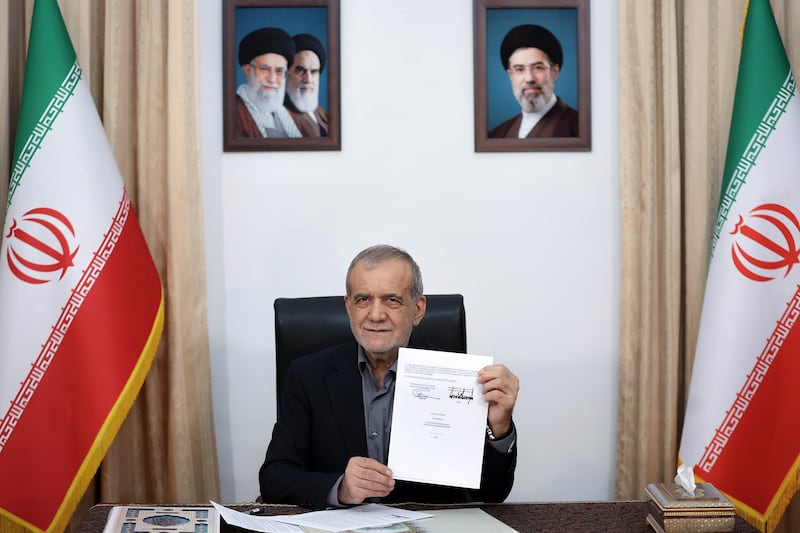

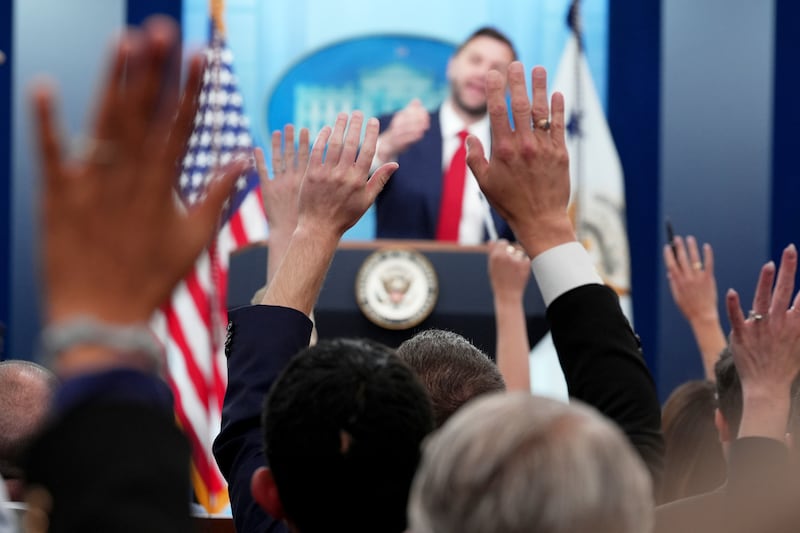
The Trump administration will brief Congress on its deal with Iran “very soon,” Vice President JD Vance said on Thursday — but some Republicans are already displeased with what they have seen.
White House officials sent the two-page document to members of Congress on Thursday, marking the first time lawmakers have physically seen the deal since it was initially signed over the weekend. But Republicans say they have questions for the administration to ensure President Donald Trump’s original goal to thwart Iran from developing nuclear weapons.
“The return of stability in global energy markets is a welcome sign of economic relief for American families, but we must be clear-eyed about the long-term implications a final resolution with Iran will have on our national security,” Utah Sen. John Curtis said in a statement. “As negotiations continue following this initial agreement, I would encourage the Administration to do what would have been advantageous from the beginning: actively engaging with Congress. Doing so ensures the American people are more directly represented in the outcome, which will help secure a lasting win for the United States.”
Senate Majority Leader John Thune, R-S.D., told reporters he has put in a request for a briefing with senators, although one has not yet been scheduled.
The top Senate Republican said he found the deal to be ultimately “good for Americans” because of the reopening of the Strait of Hormuz and the diminishing of Iran’s nuclear capabilities. But he raised questions about one of the deal’s provisions that provides a potential $300 billion reconstruction fund to Iran.
“I don’t think there ought to be any financial incentives or any financial relief given to Iran absent their commitment to end the nuclear program,” Thune said.
That provision has raised eyebrows among several other Republicans as well. Although the deal leaves the door open to the possibility that the money would be provided by Persian Gulf states, many lawmakers say Iran shouldn’t receive any financial support.
“Specifically, the $300 billion fund for the reconstruction and economic development of Iran — though not funded by U.S. taxpayers — would make Iran’s payoff under President Obama’s 2015 deal look like a pittance by comparison,” said Senate Armed Services Committee Chairman Roger Wicker, who warned the deal is “out of step” with Trump’s original goals.

Sen. John Cornyn, R-Texas, also raised questions about the deal — and expressed concerns it won’t deter Iran from developing nuclear weapons in the future.
“While I support the president’s Operation Epic Fury and I think he showed a lot of courage, political and otherwise, by degrading Iran’s ballistic missile program and delaying their nuclear program — I don’t think anybody should be under any illusion that they have lost interest in developing a nuclear weapon or wiping Israel off the map, and remaining at war with the United States,” Cornyn said on Thursday. “So, I think this is just an intermission. I don’t think this is a conclusion.”
The deal officially signed Wednesday by Trump and Iranian officials triggers a 60-day window, which Vance said began on Thursday, for a final agreement to be made. That final deal is expected to include more details on what is next for Iran’s attempted development of a nuclear program.