


Amid the "cricks" and "hollers" and "bald knobs" of northern Arkansas' Ozark Mountains, there grew up a hardy and hearty people. In this rugged land, they learned to survive by their wits and their knowledge of local flora and fauna. They had barely enough to get by, but that didn't dampen their spirit or their joy of life.
Almost any occasion could be reason for celebration; any celebration was reason for music, with fiddle, banjo, guitar, dulcimer and more.
These folk have been stereotyped and caricatured as hillbillies, and as with any such case, there are elements of truth in the common view. They were poor; they sometimes made moonshine and took great delight in outmaneuvering the government's revenue men; there was occasional feudin' and fightin'.
But, as with any such case, there is truth that goes beyond the stereotypes. And these mountain folk were good neighbors, hard workers, faithful believers and, above all, accomplished musicians.
They still are.
That's what you will discover if you visit Mountain View, Ark., a tiny little town with a big heart and and a bigger outlook. Mountain View, quite simply, bills itself as the "Folk Music Capital of the World."
It's not an idle boast. These hills are truly alive with the sound of music. On any given weekend or, for that matter, any given day during the season — which kicks off with the Arkansas Folk Festival the third weekend in April and goes until the BeanFest & Championship Outhouse Races on the last weekend of October — you'll hear mountain, folk and bluegrass music everywhere.
The festival features nonstop music at the Historic Courthouse Square as well as concerts at other venues in town. There's also a parade featuring antique cars, marching bands, clowns, horses, a dog show, an amateur talent show and more.
But even after the festival, the music goes on. Jam sessions are held almost nightly, and often all day on weekends, on the square for anyone who wants to bring a musical instrument, a pair of spoons, something else or nothing else, and wants to sit in. As they like to say, "you can't hardly spit without hitting some grinning guy strummin' a banjo."
There are also a variety of music theaters and "pickin' barns" that offer somewhat more formal entertainment.
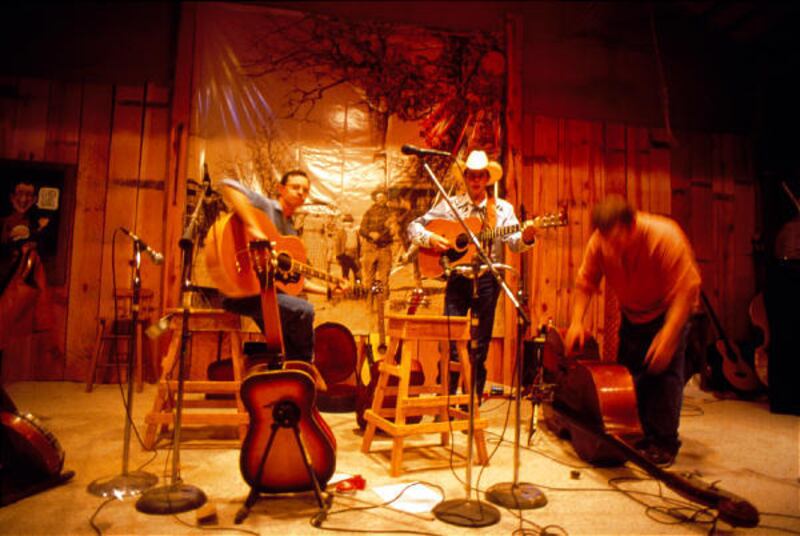
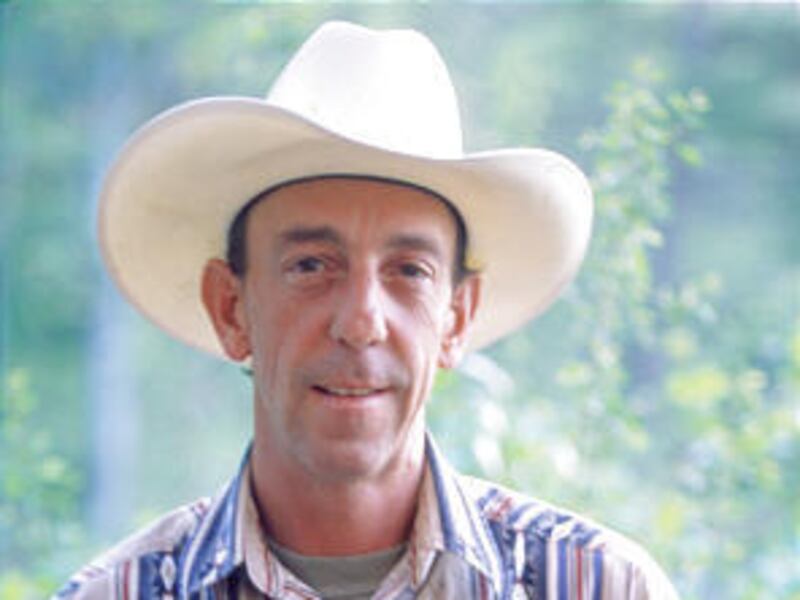
John Taylor owns one of those theaters, where almost every weekend from mid-February on and several times a week during the season, he and his sons offer down-home music, dancing, food and crafts.
Taylor began playing the banjo with he was 12. "Around here, there wasn't much else to do," he said, joking. But his dad played; his granddad was a fiddle player. "I was raised where music was so a part of life it was like eating," he said.
He wouldn't have it any other way. "Music has afforded me a lot of friends over the years — people from all over the country."
At the first notes of Taylor's concert, audience members get up to dance, line dances and country dances that they do with an infectious exuberance.
The music is interspersed with some gentle humor: "Did you know the toothbrush was invented in Arkansas?" Taylor asked. "Yep. Anywhere else, it would have been called a teethbrush." And, "do you know what karaoke is to Arkansas folk? Pallbearers in Oklahoma — you know, carry-Okies."
But the music is the heart of the show; music that not only fills the present with toe-tapping, knee-slapping fun but also evokes a connection to past generations that is almost tangible.
It's the same feeling you get on up the hill a ways at the Ozark Folk Center, a state park established in 1973 to preserve and interpret the Ozark mountain way of life.
The focus is both music and crafts, said Jimmie Edwards, a center director.
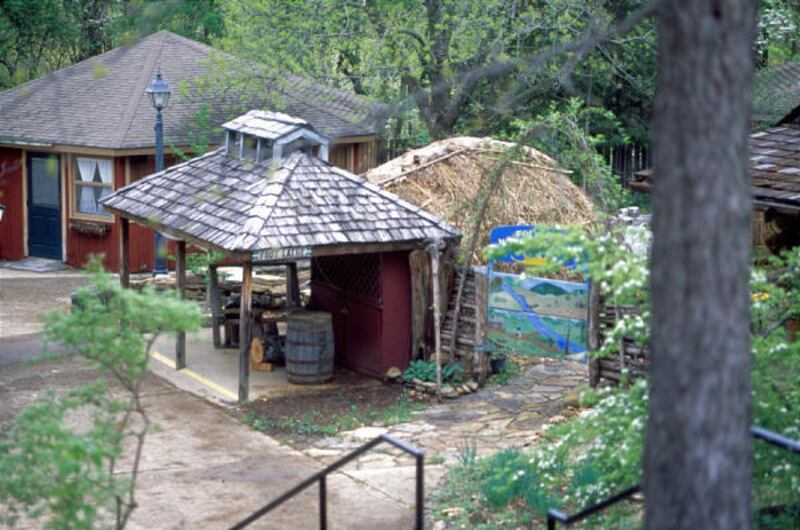
The Craft Village features 24 buildings and outdoor areas that offer craft demonstrations and daytime music programs associated with life in the Ozarks from 1820-1920.
"These are the crafts that people needed to survive," Edwards said.
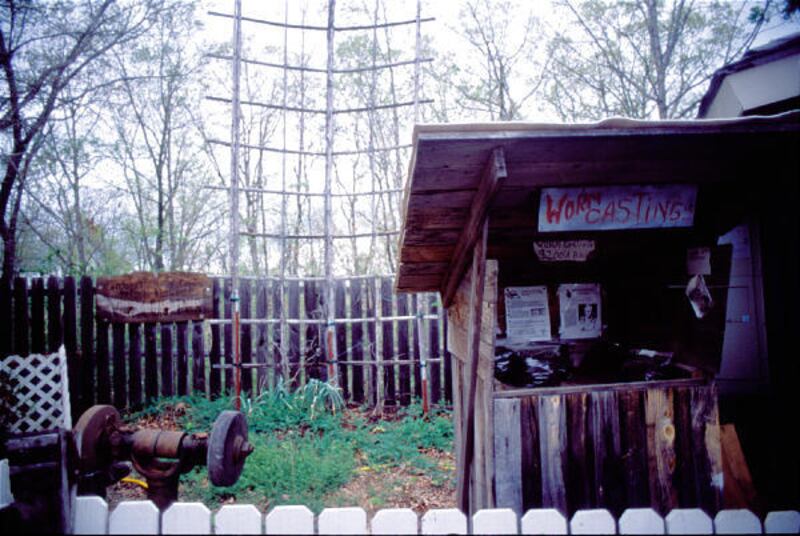
They include blacksmithing, broom-making, spinning, weaving, soapmaking, quilting, tinsmithing and candlemaking. They're housed in cabins and buildings indigenous to the area.
There are also gardens filled with herbs and plants native to the Ozarks. Herbs were especially important in mountain culture, used not only as food but also as medicine, Edwards said. Special herb festivals, demonstrations and workshops are held at the center throughout the year.
Other plants were also important. Native wildflowers were used as dyes. Other plants were used as textiles. They are all grown in the terraced hillside garden, which has been recognized as one of the premiere herb gardens in the South.
The center also features live music performances of traditional, pre-World War II music at venues in the park and nightly in the theater.
The Dry Creek Lodge offers an economical place to stay. The Skillet Restaurant offers down-home country cooking that includes everything from Southern barbecue and corn bread to fried green tomatoes and sweet potato pie. "Just don't ask for seafood," Edwards said. "We don't get much of that."
But you can pile freshly baked rolls high with peach or apple chunky — none of the namby-pamby apple butter here.
There's also the Homespun Gift Shop, which sells some of the craft items made on site, as well as other Ozark souvenirs.
Some places are losing those old-time crafts, Edwards said. "We sure don't want that to happen here. Or to lose the music, either."
That was the original idea behind the Folk Center. Plus, Edwards said, back in the late '60s, Congress was looking for ways to help America's rural areas as part of the war on poverty. At that time, Stone County, of which Mountain View is the county seat, was the second-poorest county in the state. Nearby Izard county was the poorest.
The '60s also brought radical changes to society. And some people hated to see the old ways go, Edwards said. So the Ozark Folk Center was created for a twofold purpose: as a place where the "cabin crafts, music and lore of the Ozarks could be studied, preserved and performed" and to provide jobs for the local people so they wouldn't have to leave the area.
One of the unique features of the center was the creation of a Committee of 100, comprised of women from each county in Arkansas, to oversee the functioning of the center.
Under the committee's auspices, the center provides traveling exhibitions, demonstrations, concerts and educational programs. And there is a crafts apprentice program for people who live in the area. College level workshops and other educational programs are also done in cooperation with Arkansas College of Batesville.
The Ozark Folk School, which is held in March, offers classes on everything from the art of storytelling to country chair making, gourd banjo making, rug hooking, spirit carving, stained glass, tinkers trades, weaving and white oak basketry.
It may seem like it is all about crafts and music, but the Ozark Folk Center is really "a people place," Edwards said. "It tells the story of a unique way of life."
The people here, he said, are not professional entertainers. "But if you come with an interest in getting to know its people, you'll go home with a much more complete appreciation of Ozark tradition."
(By the way, if you happen on up the road to Branson, Mo., another music center, you can learn more about Ozark history at the IMAX movie, "Ozarks: Legacy & Legend," made by Academy Award-winning — and Utah connected — director Kieth Merrill. It's well worth a look.)
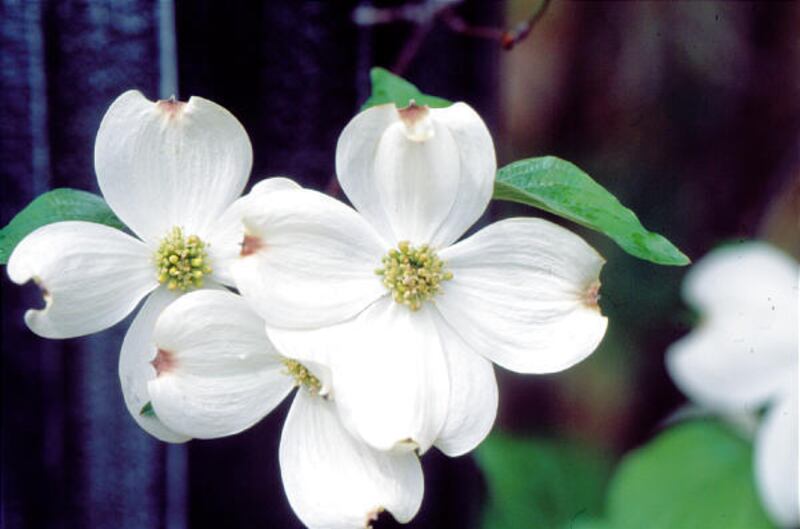
The setting for the Ozark Folk Center — as well as for the town of Mountain View — is a beautiful one: hills, forests, flowers in all directions. The terrain is filled with dips and hollows as well as slopes and peaks (the things that are known locally as hollers and knobs). In the spring, they are all dusted with blooming dogwood for a breathtaking view.
The name of Mountain View seems aptly chosen, but you will learn it came rather randomly. Stone County was not formed until 1873. With the county came a need for a county seat, and so a place was chosen. Up until then people had mostly lived in the hills and hollers, but a little town began to grow up around the courthouse — it still only has a population of less than 3,000 — and a name was needed. A group of residents got together, but they could not decide on a name. So the choices were put in a hat, and Mountain View was the one drawn out.
The region is rich in lore as well as lifestyle that has been shaped in large part by the geography and geology of the area.
Another thing that geology has created is interesting underground formations. This is also cave country. Nearby Blanchard Springs Caverns offers a dramatic look at what a little water can do, given enough time. This "living, working" limestone cave was called "one of the most extraordinary finds of the century" by Life Magazine.
A variety of guided tours, by U.S. Forest Service guides, take visitors along paved trails through water-carved passages lined with stalactites and stalagmites, by an underground river, by delicate soda straws and crystalline formations, through the Ghost Room and the Cathedral Room, past the world's largest flowstone. More adventurous spelunkers can do the Wild Cave Tour through undeveloped sections of the cave.
Outside the cave, you can hike or drive to Blanchard Springs, where the water exits from the cavern. It's considered one of "the prettiest spots in the Ozark National Forest."
The area offers campgrounds, swimming holes, fishing, picnic areas, hiking trails and other adventures in nature.
Any way you look at it, Mountain View is a fascinating place. As they like to say, it's a place to "create instant memories that have been years in the making." Any day you drop by, they say, is a great day "to enjoy yesterday." Above all, you can't ask for a better place to "frolicate."
If you go ...
• Mountain View, Ark., is located in the northern part of the state. It's approximately 100 miles north of Little Rock, 160 miles west of Memphis, Tenn., 100 miles southeast of Branson, Mo., and 300 miles south of St. Louis, Mo.
• The 46th annual Arkansas Folk Festival takes place this year from April 18-20. For more information, visit www.ozarkgetaways.com
• The Ozark Folk Center is open from mid-April to the end of October. During the Folk Festival, admission to the Craft Village is free. At other times, it costs $10 for adults and $6 for children, as does admission to the music auditorium. Family passes, combination music and craft passes and multi-day passes also available. For more information about the center or its educational programs, visit www.ozarkfolkcenter.com or call 870-269-3851.
• At Blanchard Caverns, the Dripstone Trail is open daily from April through October and Wednesdays through Saturdays from November to March. The Discovery Trail is open daily from Memorial Day weekend through Labor Day. The Wild Cave Tour is available only by advance reservation on the same schedule as the Dripstone Trail. For more information, call toll free, 1-888-757-2246 or visit www.ozarkgetaways.com.
E-mail: carma@desnews.com