

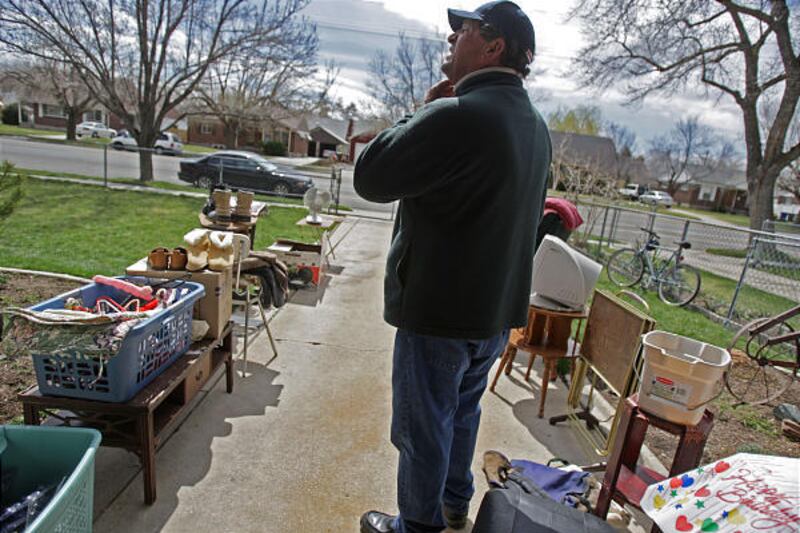
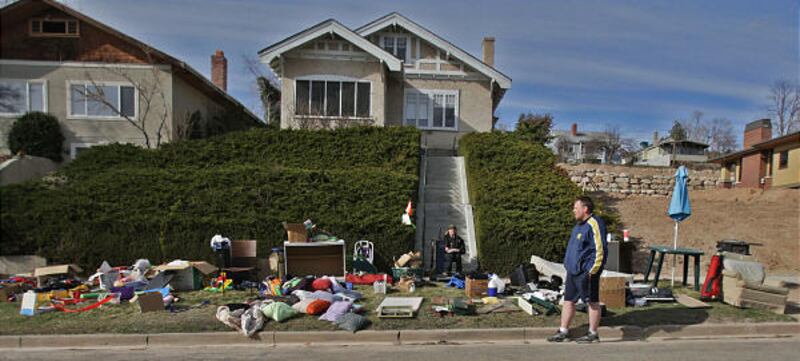

If you are thinking of having a yard sale, William Athey says, "make sure you have a bread machine and an old computer monitor. Every yard sale I've been to has those items."
Athey is kidding, of course, but he knows a lot about garage sales. For the past five or six years, he and Amelia Graehl have been teaming up to go to the sales almost every weekend during the season.
The two recently held a workshop on how to put on a successful garage sale at the Salt Lake City Main Library, where Athey is an employee and Graehl works as a volunteer.
The first thing they stressed was planning ahead. You can't just get up one weekend and decide to have a sale and expect to do very well, they said. "Start planning several weeks or even months before," Graehl said.
Begin sorting out the things you want to get rid of well in advance. One idea is to keep boxes handy so you can put things into them as you decide you don't need them anymore. When one box gets full, move it out to the garage and start a new one. "And don't ever bring that stuff back in," she said.
Getting rid of the stuff that is in your way or no longer of use can be a wonderful feeling, she added. "There's something almost discernible, a lightening feeling."
That's the thing to remember about a yard sale, Athey added. The main purpose is to get rid of things, not necessarily to make money.
The two offered more suggestions on how to have a good sale:
Before the sale
• Check local zoning and housing regulations or with your homeowners association as to what you can or can't do. In Salt Lake City, you are allowed to have no more than two yard sales in one year, for example. For a one- or two-day private yard sale, you generally do not need a business license.
• Go check out some other garage sales before you have your own, Athey suggested. "Talk to the people about what is working or not working." Take notes of what you like and don't like.
• Visit your neighbors to see if they are interested in participating. "The more people involved, the bigger crowd you'll draw," Graehl said. Even if they don't want to be part of the sale, they will know that one is going on and may be more tolerant of crowds.
• Advertise. The more people that come to your sale, the more stuff they will take away. Don't rely just on day-of-sale signs.
Check with your local newspaper. A classified ad in the Salt Lake City newspapers, through MediaOne, will cost $31 for four lines, run on one day. A six-line ad with logo run on two days will cost $60.
If you don't have a lot of stuff to sell, that might not be economical, Athey said. But it will reach a wide audience, particularly those who check the classifieds specifically looking for yard sales.
Free advertising options include online sites such as www.craigslist.com and www.ksl.com.
If you have big items, such as furniture, or popular items, such as baby clothes and toys, mention that in the ad.
Some yard sale shoppers try to beat everyone to the goods and may show up before your sale is supposed to start. If you don't want to deal with them, be sure your ad says "no early birds," or consider something like "early birds pay double."
• Make signs. The best signs are bright-colored and big enough to be read from the car, Graehl said. "The address is the most important factor; put it first," she said. "If you live on a cul-de-sac, dead-end street or other hard to find place, the more signs the better. If you are having an off-time — starts at noon, for example — make that information large and noticeable."
You might want to put signs with arrows as they get closer to the sale.
Check in advance where you might be able to put signs. Ask local businesses in the area. Be aware that it is illegal to put up signs on private property without permission.
The utility pole has become a favorite bulletin board. Technically, you are not supposed to post signs there. However, a representative of the Salt Lake Housing Commission said if you put the signs up for one day and take them down, you will probably not have problems.
• Look over your inventory to check its condition. Sometimes minor repairs or running dishes through the dishwasher will enhance their value. Packaging game pieces or nuts and bolts in plastic storage bags will keep them organized.
Clothing should be relatively clean, Graehl said. Most people will take it home and wash it before they use it. But clean-looking will sell better than dirty and stained.
• Decide how you want to handle pricing. Haggling can be part of the fun of a yard sale, but it can take time and energy away from other chores. These experts suggest prepricing.
You may be able to group like items in a box with one price sign. You may want to paste individual stickers on each item.
If more than one family is participating, a good idea is to let each family have a different color of stickers. Then as you sell the items, you can paste the stickers in an inventory book. That makes it easier to divide up the proceeds at the end.
And remember that you aren't running an eBay auction, Athey said. "Experts advise selling for pennies on the dollar. You aren't going to get full retail price for anything at a garage sale. If you have things that are worth a lot of money, sell them in other ways."
Their guidelines: 50 cents for paperback books, $1-$2 for hardbacks; CDs, $1-$2; DVDS, $2; T-shirts, 75 cents to $1-$2; sweaters, $2; pants $1. "With furniture and bigger items you have more leeway," he said. "The price will depend on how old they are, if they work." A couch could go for $50-$200, depending on condition.
• Decide on your date and time. Do you have a contingency plan for bad weather?
"Don't be afraid to start the sale early in the morning," Graehl said. "A lot of yard sale regulars like to get up and going early."
At the sale
• Take common-sense precautions. Plan to have at least two people at the sale at all times. One can act as the cashier while the other interacts with the customers. Keep a vigilant eye at all times. "Most people are honest, but some will steal if they have a chance," Athey said. "I lost a bicycle at a sale once. I turned my back for a minute, and when I looked back, some guy was riding away on it."
Don't let people go into your house for any reason. If there is a bathroom emergency with a child or elderly person, escort them in and wait for them to come back.
Keep your eye on the money at all times. You might consider keeping it in a fanny pack around your waist or in apron pockets or a cash box that someone sits by at all times.
• Be sure you have a lot of change, both small bills and coins. Most yard sales don't take credit cards, but will you take checks?
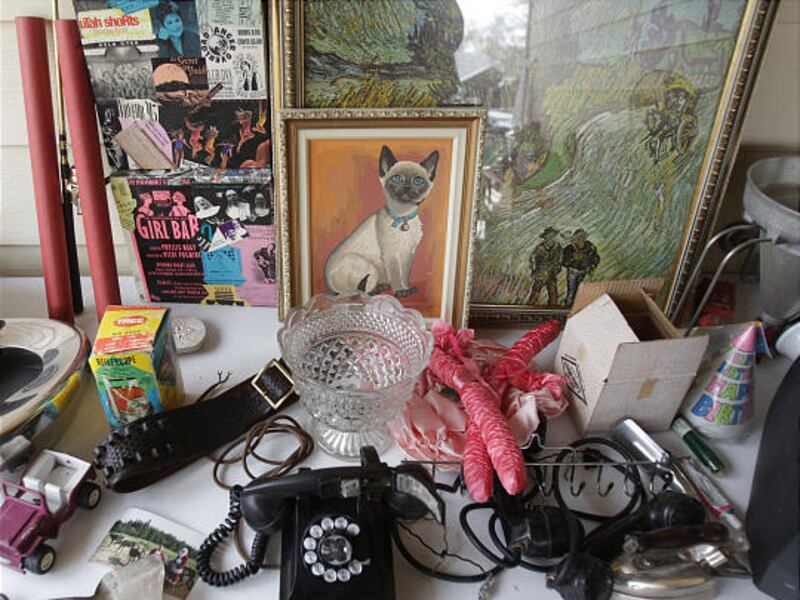
• Display your items as much as possible. Tables are good because they get things at eye level, said Graehl. If you don't have tables, consider borrowing or renting them. If you have tables that are not part of the sale, label them "not for sale."
Clothes racks work well. If you have to spread clothes on the lawn, put them on an old quilt or blanket. "Don't put your clothes in plastic garbage bags or boxes that people have to go through," she advised. "Remember, the more attractive it all looks, the better you will do," Graehl said.
• Put the furniture, eye-catching and most popular items out front.
• Have a mirror, so people can hold up clothes and jewelry and see how it looks. If you are selling electrical items, have a plugged-in extension cord so they can make sure those items work. You'll be more likely to sell them.
• Have extra grocery bags or boxes on hand so people can carry away their purchases. If you have glassware for sale, have sheets of newspaper to wrap it in.
• If you have a lot of little items or things that you don't think people will buy, put them in a "free box." "You'd be surprised at what people will take if it is free," said Athey. Another idea is to have a box of little toys and let each child take one for free.
• Consider having refreshments: punch and cookies, a bowl of candy, even cookies and candy that you sell. Food always draws a crowd, the yard sale experts said.
After the sale
• Know what you are going to do with the things that don't sell. Will you put them at the curb with a sign that says "Free" on them? Will you gather them up and donate them to charity?
"Just don't take anything back into the house," Graehl said. "You are clearing your clutter."
• Take down your signs. This is part of being a good neighbor. "Plus," Athey said, "people can look at the sign and know exactly where you live."
E-mail: carma@desnews.com