

HOMEDALE, Idaho — The two-word command is barely audible.
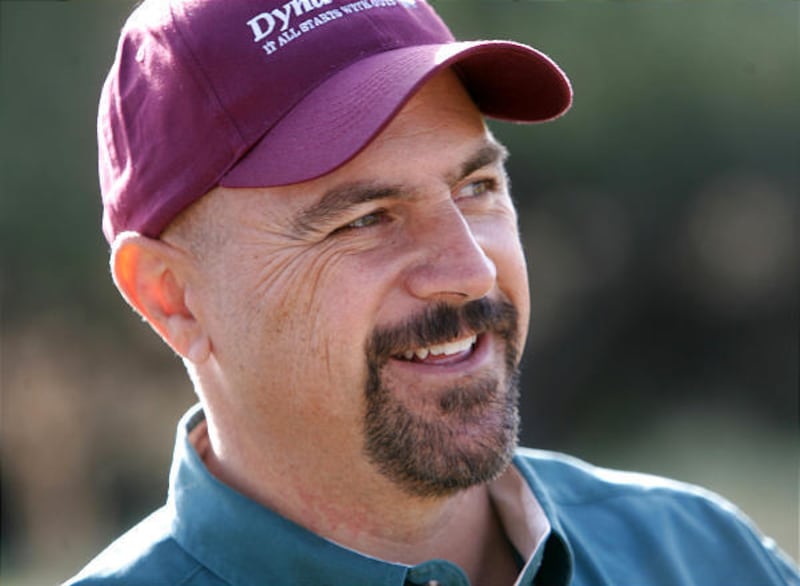
"Come by," Lavon Calzacorta says, his voice just above a whisper.
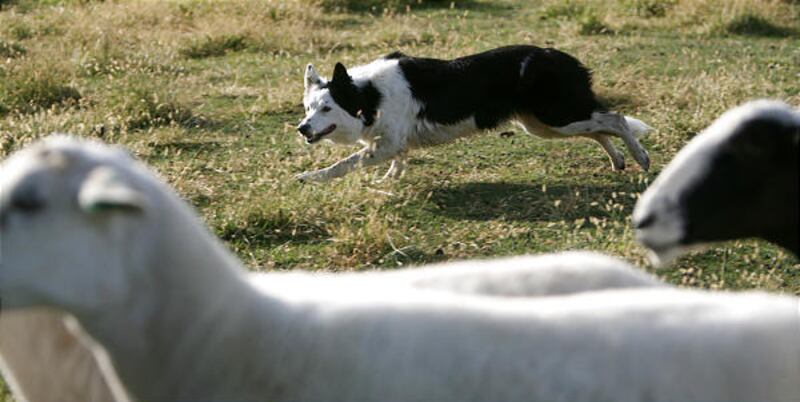
The quiet command is enough to send his dog Tess tearing across wet grass to a band of sheep and herd them clockwise around a pasture. Responding to soft beeps on Calzacorta's whistle, Tess reverses the band's direction, speeds it up, slows it down, stops it cold.
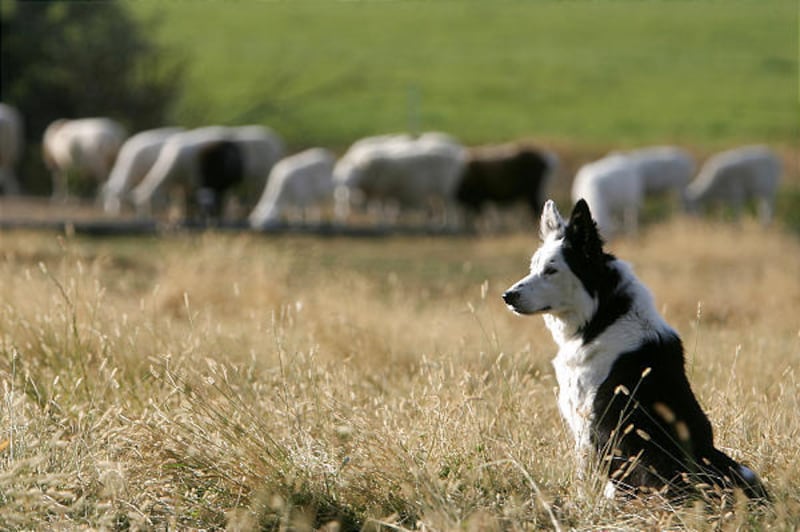
Border collies and other dogs have helped shepherds herd their flocks for generations. Like all great competitors, however, Tess raises what working sheep dogs do to the level of art.
"Watching Lavon and Tess work together is like watching music happen," fellow trainer Rebekka Hankins of Wilder said. "It's an amazing level of partnership and teamwork that you don't often see." That's a big part of why Tess and Calzacorta, her owner, trainer and handler, are Idaho's state champions. Tess also finished fourth out of 150 dogs at the National Sheep Dog Finals in Oregon in September, bringing home a trophy and $1,800 in prize money.
His passion for working with dogs began on the ranch where he grew up near Jordan Valley, Ore.
"We always had working dogs for the cattle, and I missed it when I left and moved to Idaho," he said. "One day I went to a sheepdog trial at Notus and realized I could really get into that. It's like what I'd always done, only more refined." He started 12 years ago with a different dog, entering trials close to home. Gradually the time commitment increased and the shows got farther away. Tess brought the competition to a new level.
"It takes three things to make a great sheep dog — good breeding, good nutrition and the drive to be a top performer," Calzacorta said. "Tess has plenty of all three.
Tess, 6, is a product of Caldwell's Helsley Ranch, where sheep dogs have been bred and trained for years.
"A lot of people don't think it takes much to do this," Calzacorta said, "but you get five old sheep who have been part of a flock of 2,000 and try to separate them out and get them to do what you want them to do, well, it's not easy." At major trials, dogs run 400 to 600 yards just to get to the sheep. A typical exercise might be to separate all the sheep with collars out of a flock, round them up and put them in a pen. The total distance traveled can be several miles. Points are deducted for miscues.
"It takes a lot of mental toughness for the dog," Calzacorta said. "The trainer can be a long ways away, so the dog has to have the confidence to do it alone." He and Tess spend about 15 hours a week training. His approach is to "work on what the dog can't do naturally, not on what it can. You have to recognize what the dog has trouble with and work on that. That way you have the combination of what comes naturally and what it learns to do better." Calzacorta, 42, lives on a small farm near Homedale, Idaho. He grows hay and keeps about 20 sheep, mostly to use for training. He also works as an operations manager for Meridian's Dynamite Specialty Products, the animal supplements he credits in part for Tess's success.
"It's great because I get to do what I love, and they support me," he said.
Tess, he says, "is just reaching her peak so we have two more good years to compete with her." Next year's national competition will be in Virginia, where he hopes Tess will give the top dog a run for its money.
And if not, he has three younger dogs coming up.
"I want to finish first," he said. "Doesn't everybody?"
Distributed by McClatchy-Tribune Information Services.