


When Leslie Lammle was 5 or 6, she remembers someone giving her a piece of toast with strawberry jam. But when she looked closer, right in the middle was a red lump that turned out to be not a strawberry but a big, fat beetle.
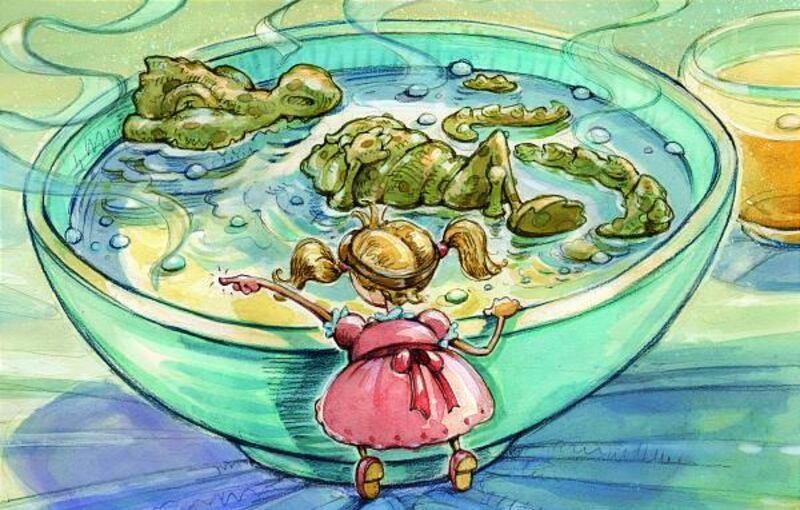
When she started writing a book about a very imaginative little girl who sat down to eat her breakfast, the girl got, not toast, but a bowl of porridge. And it turned out that the lumps in the porridge morphed into, not a beetle, but a crocodile. And the crocodile, it turns out, came from a favorite drawing Lammle had completed for a magazine illustration project, but it had not been used.
"I love taking two or three events like that and merging them into completely different scenes," she says. "I've learned that a good idea never goes to waste."
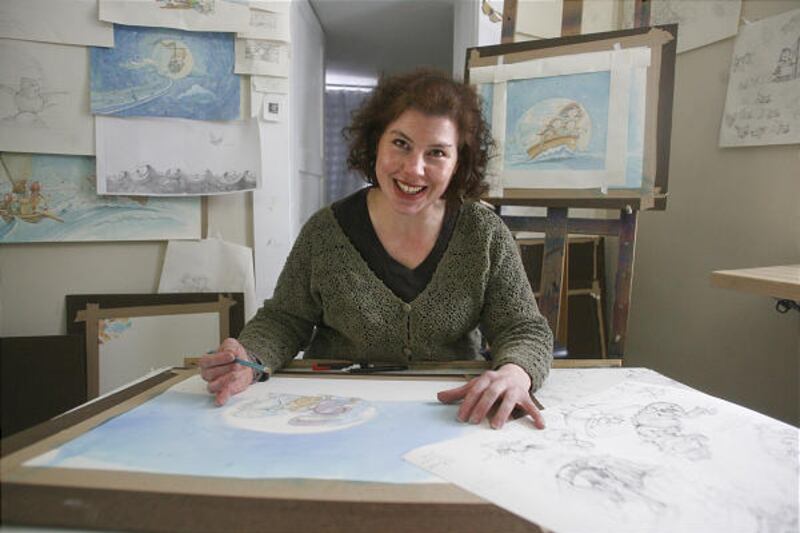
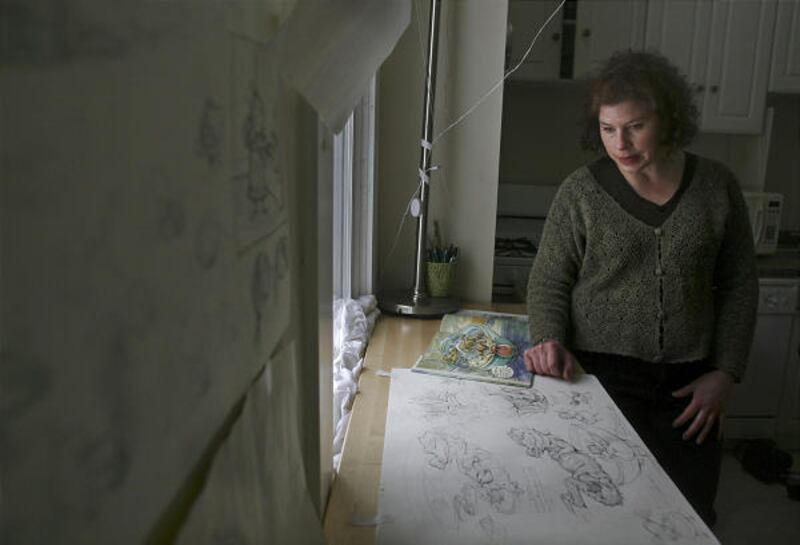
Lammle began her career as an illustrator with the Deseret News in 1997 but went on to become a freelance illustrator. Still based in Salt Lake City, she works regularly for publications such as The New York Times and The Wall Street Journal as well as a variety of travel, food and other magazines. She has just had her first book published, a children's book (with the crocodile in the porridge), called "Once Upon a Saturday" (HarperCollins, $17.99). "I was so excited when it first came. I had to have someone else open it," she says.
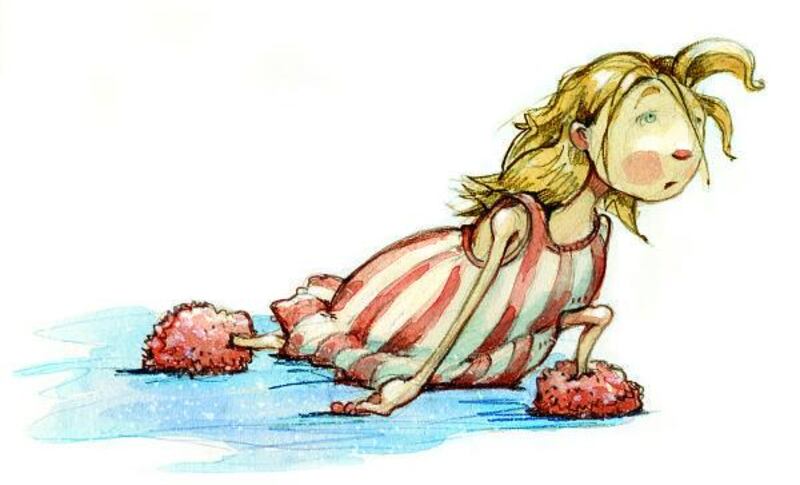
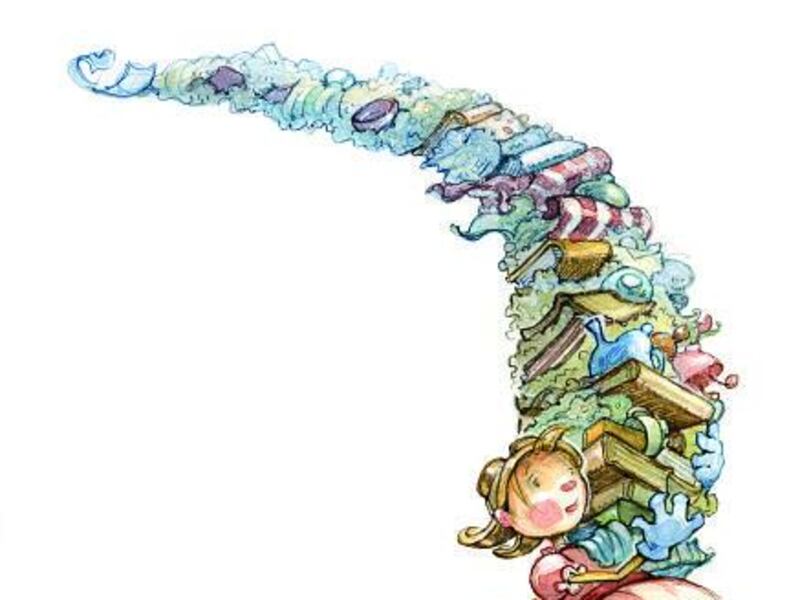
The story tells of a little girl named June who is excited that it is Saturday because she has a whole day of fun planned: searching for wild animals, learning to fly, discovering long-lost treasures. But first, she has a BIG list of chores. Lucky for her, the only thing bigger than her list is her imagination, and she finds that with a little ingenuity, even humdrum activities can become an adventure.
Doing a book is a lot different than doing an illustration, Lammle has learned. Instead of just one idea and one drawing, she must come up with something like 35 to 40. But it has been an interesting, exciting process, she says. "It was a true delight."
Lammle is currently working on a second project, this time a book written by another author. It's called "Pajama Pirates on the Go," all written in verse. "It's a perfect story for my style," she says.
Then there will be a third book, one with a story that she will again write. That one is still in the idea stage, but she has lots of possibilities in mind. "I like to start out with the characters. Once I have those in mind, then I can see where they will go. This one will start, I think, with a tidy, quiet little kid."
She loves that starting process. "The best part is thinking up the ideas, the brainstorming. I try not to fall too much in love with any one idea, in case it gets eliminated. But I know it may come in handy later."
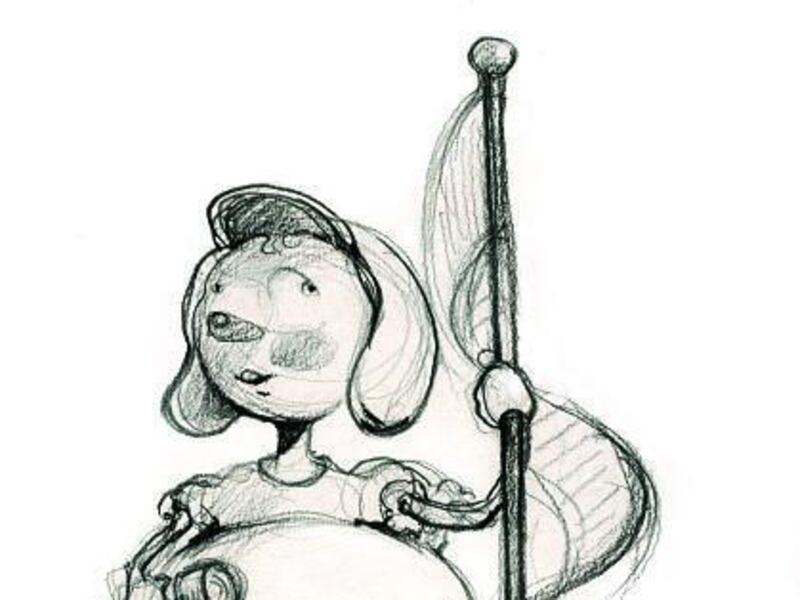
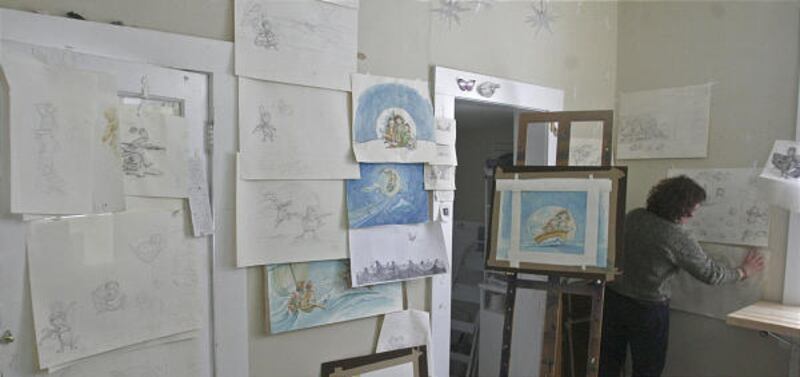
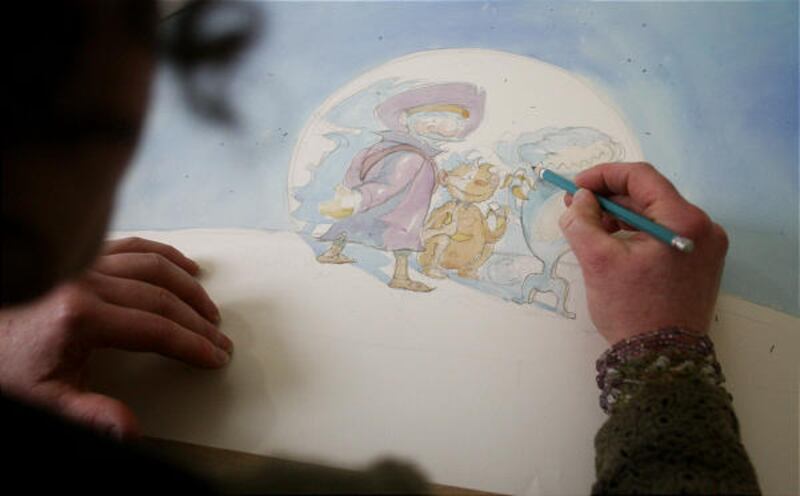
"The learning curve from the first book to the second was dramatic," she says. "Now I start off thinking where the seam will fall, where the text will go, where colors have to be lighter or darker." She starts with a pencil, a Prisma 6B, and eventually colors with watercolors.
There's a lot of back and forth with the editor, working until everything is just right. "I don't even add the color until the drawing is approved," she explains. "And now I think more about how page design enhances the story." For example, in "Saturday," where June is going about her normal life, all the pictures have borders, but when her imagination takes off, the borders go away.
A lot of subtle things go into her illustrations, and she credits the year she spent at the Deseret News with teaching her a lot about design. "I took a workshop there that talked a lot about how the eye focuses on the page, and that's my goal to hit on every page. I don't want to overburden the eye with excessive detail."
The other thing that Lammle draws on for her work is her childhood. Not just the things like beetles and jam, but the house she grew up in. "In my mind that house is embossed in gold."
Lammle was born in British Columbia and spent her first nine years there. Then the family moved to Toronto, on to Anchorage and finally to Salt Lake City. "My father worked for U.S. Steel, and his speciality was working with the mills that were in trouble."
But the house in B.C. was something special, she says. The trek from the upstairs to the basement passed all kinds of dark places where monsters could hide. There was a wine cellar and piles of materials all around. There were countless little spaces where all kinds of things could be, and an old spiral staircase. "There was enough there to give me ideas for years and years. It was a great background," she says.
And that's one thing she hopes kids will take away from her "Once Upon a Saturday" — the joy of imagination. There's so much you can do, she says, with a little imagination.
E-mail: carma@desnews.com