


In 1885, Alexander III, czar of Russia, wanted a special Easter gift for his wife, Maria Fedorovna. For Orthodox Russians, Easter was the year's most important holiday, a joyful celebration of rebirth and renewal marked by the exchange of decorated eggs and other presents.
For his gift, the czar went to a young jeweler named Carl Faberge, who was beginning to make a name for himself in Russian society.
Even now it is possible to imagine the delight of the czarina, as she received what seemed to be a simple, white enameled egg. The egg opened, and inside was a yolk of gold. The yolk opened; inside was a jeweled hen. And inside the hen was a tiny replica of the royal crown and a tiny ruby egg.
Such was her delight, in fact, that Alexander commissioned Faberge to deliver a new Easter egg each year.
And thus was launched what has become one of art world's unique legacies and one of history's fascinating stories, filled with its own triumph, tragedy and cycle of rebirth.
After Alexander's death in 1894, his son, Nicholas II, continued the Easter tradition, ordering Faberge eggs for both his mother and his wife.
In all, some 54 Imperial Easter eggs were made between 1885 and 1916, each more ornate and exquisite than the last. Other clients began to want Faberge eggs, as well.
But times change, and with them the fortunes of the Russian ruling family. After the Russian Revolution, the Romanov family was deposed, exiled and eventually assassinated.
To the incoming Bolsheviks, anything that represented Imperial opulence was anathema. The palaces were ransacked and their treasures removed. The House of Faberge was nationalized, and the Faberge family fled to Switzerland, where Carl died in 1920.
Some years later, to raise needed capital, Stalin began selling off the Faberge eggs and other treasures that had been looted.
Of the original Faberge eggs, only 69 are known to have survived. Some of those are in museums; many have ended up in private collections.
"Some of those Imperial eggs have sold for incredible amounts," says Curtis Bennett, vice president of retail operations for O.C. Tanner. "Some for as much as $20 million. Faberge, in his wildest dreams, could not have imagined what would happen to his eggs. But they were made of the finest materials, the highest artistry. They are highly revered and passionately sought for, and whenever there have been exhibits — in New York or Chicago, and other places — the lines to see them have gone out the door and around the block."
But the tradition and artistry of the early eggs has carried over to the modern day, he says. Faberge eggs are still being made, and today's creations show the same "exquisite design, craftsmanship and passion that the originals did."
That achievement was a long time coming, however. After the death of Carl, his two sons tried to carry on the business, but they lacked both the genius and business acumen of their father, and for a time, the Faberge name faded into relative obscurity.
In 1989, Victor Mayer, a "well-known firm of Pforzheim jewelers, was appointed sole authorized workmaster for today's production of Faberge jewelry and objects d'art," notes Geza von Habsburg in a history of the Faberge work. "With its exclusive line of jewels and jeweled objects, the German firm continues the rich tradition and legacy of the celebrated Russian master."
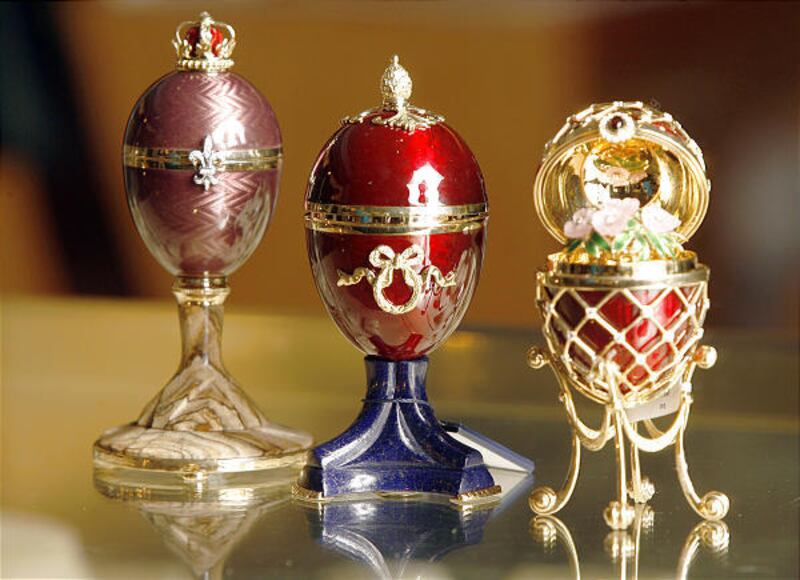
Utahns can get a peek into this history and tradition as well as view the exquisite craftsmanship of modern work at the Salt Lake O.C. Tanner store, which currently has three of the modern Faberge eggs.
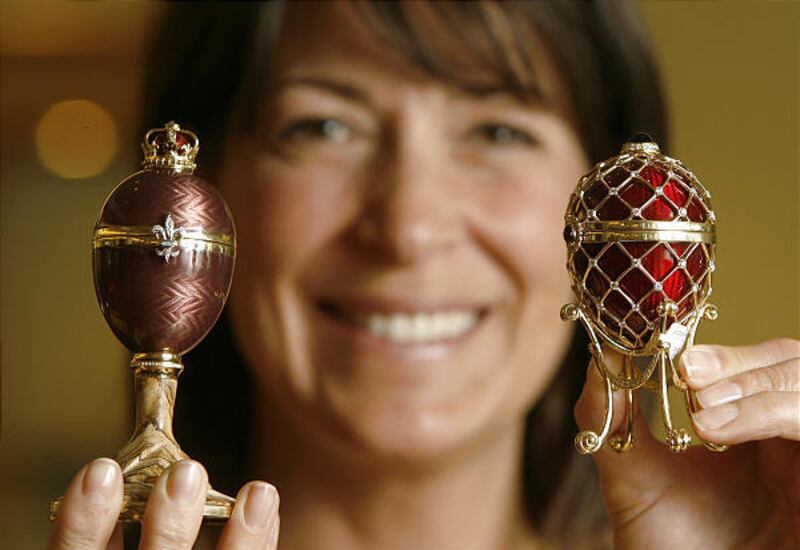
Of special note is the Rose Egg, one of only 12 made, and the only one that came to the United States. It is the only one still available anywhere in the world. The egg is made of 18-karat gold, covered with several coats of translucent dark red fire enamel, done in a guilloche method. The egg is covered with a fine netting of gold wire set with diamonds.
As with all Faberge eggs, it opens to a surprise: a bouquet of roses handcrafted of pink tourmaline with diamond centers.
Almost as fantastic is the Lion Egg, hand guilloched and coated with translucent enamel in a rare and elegant "malva" color. The egg rests on a base of Kalahari jasper and opens to reveal an 18-karat gold lioness and her cubs. It is one of a limited edition of 75.
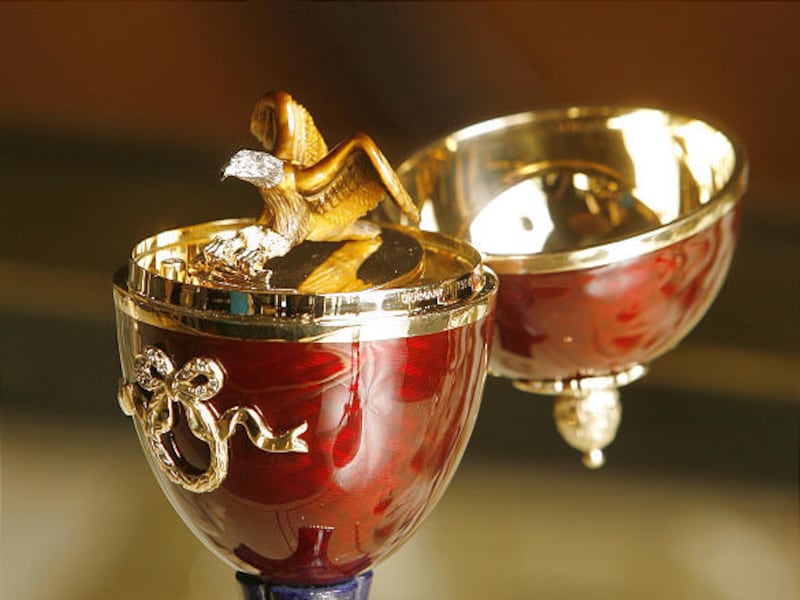
The third egg is part of an Endangered Species series. This one features a bald eagle that can be removed on its magnetized platform. It's one of Bennett's personal favorites. Plus, he says, "whenever one was sold, a portion of the proceeds went to groups working to preserve those species."
What makes these eggs even more special, says Bennett, is that they are among the last of their kind. These pieces have a value ranging from about $32,000 to about $60,000, and Faberge is going to discontinue making eggs at this price point, he says. "No one knows for sure what the new price point will be, but it will be more exclusive, perhaps in the quarter-million-dollar range."
So, he says, there has been quite a fervor among some dealers, trying to buy up as many as they can. "We could easily have sold these to dealers looking to flip them for a profit," he says, "but, and I know it sounds kind of corny, I'm more interested in looking for a good home for them, where the craftsmanship and beauty will be truly appreciated."
He feels a sense of obligation to the founders of the company, he says. "Obert Tanner was a lover of beauty. When I first saw these eggs, I knew that if they had been available in Obert's time, he would have mandated that we carry them. He would have wanted Salt Lakers to see them."
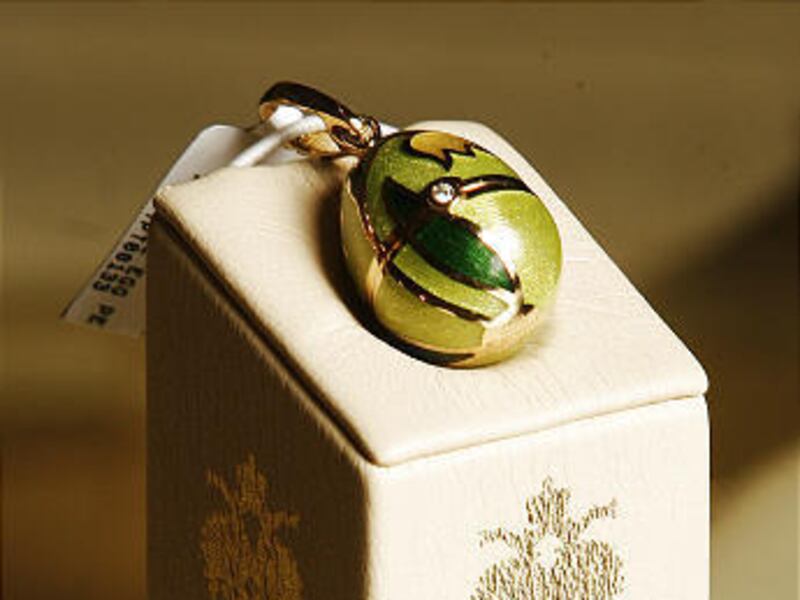
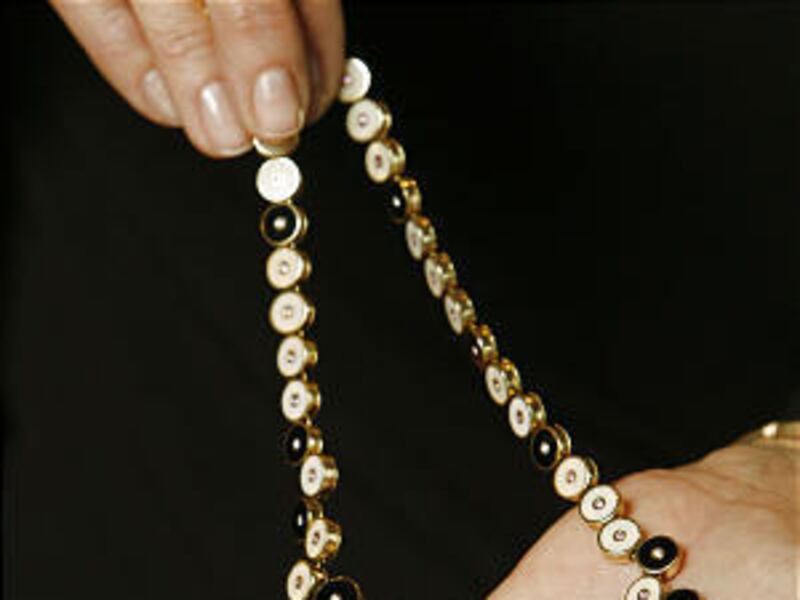
Nor is the cachet of the Faberge name limited to eggs; the company also does remarkable jewelry, ranging from egg-shaped pendants, some of which open to a surprise inside, to a bib-style "parapluie" necklace of enameled discs inspired by Japanese parasols that is one of only 12 in the world. The company is also famous for its time pieces that feature the trademark enamel work.
The very name Faberge conjures up such tradition, such passion, he says.
"My dream is to someday bring an exhibition of the Imperial eggs to Salt Lake. It would be impossible to bring them all, but there are some in private collections that might work. I'd love to bring in some craftsmen and authors of their history to let people learn more about these remarkable works of art."
And that's truly how to look at them, he says. "Many people put them in the same genre as a Picasso or Van Gogh. They are objects of art."
E-mail: carma@desnews.com