

GRANTSVILLE, Tooele County — When the housing boom eventually spilled westward beyond the Oquirrh Mountains, homebuilders were quick to capitalize on the cheap open land and plentiful water awaiting them on the edge of the desolate Great Salt Lake Desert.
With its umbilical-like connection via I-80 to the Salt Lake Valley, Grantsville scratched Utahns' itch for large lots and larger homes at significant discounts compared to the big city. New subdivisions began appearing to the south and west of the town's traditional footprint triggering, for a time, comparisons to Eagle Mountain and other high-flying enclaves in the outer reaches of surburbia.
Develop. Sell. Repeat. It was as if sleepy Grantsville had started tweaking meth and everyone — from the developers, to the city fathers, to the real estate agents, to the eager homebuyers, to the guys laying sod and sprinkler pipe — wanted to share in the high.
"It was a frenzy. I don't know how else to describe it," explains one area contractor who's a lifelong Grantsville resident.
"There may have been a few too many developments on the books," admits city planning commission member Angela Grant recalling Grantsville's go-go years of 2006 and 2007.
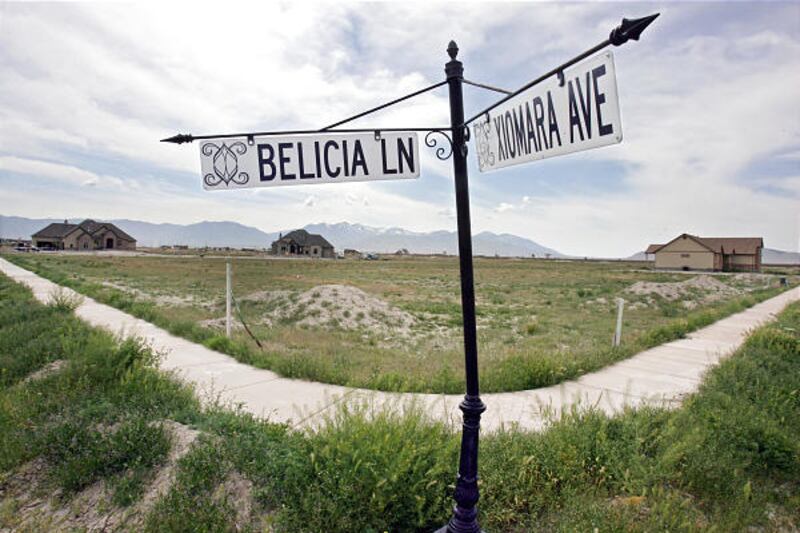
But by 2008, go-go had gone bye-bye and the aftermath remains evident today. Off Durfee Street, in the gated Dolorosa Estancia subdivision, siren calls from enchanting and exotic street names like Montego Court, Xiomara Avenue and Belicia Lane have been drowned out by sounds of the deflating housing bubble.
Although a large sign posted at the entrance to this upscale equestrian subdivision indicates 11 luxury lots have been sold and four more have been reserved, only five of the development's 70 lots, originally advertised for sale between $90,000 and $155,900, appear to built on. One is only partially finished with a "For Sale by Owner" sign in the front. A neighbor volunteers that there hasn't been any work done on the house for months.
Lawsuits and rumors of lawsuits swirl around the project like a West Desert duster. Grantsville recently sued Dolorosa Development in 3rd District Court, seeking payment for two years of unpaid irrigation water assessments totaling more than $25,000.
Nowhere are there indications of the planned 4.5-acre private park and riding trails once promised by local developer Josh Henwood, who declined an interview opportunity. But in comments to the Tooele Transcript Bulletin in late April, Henwood blamed the project's stagnation on the economy, telling the paper, "Nothing is selling right now."
If Dolorosa Estancia qualifies as the numero uno example of Grantsville's housing challenges, the nightmare of short sales and foreclosures that is the Silver Fox subdivision, located across the highway from Wal-Mart's huge regional distribution center along the town's western edge, is right behind it.
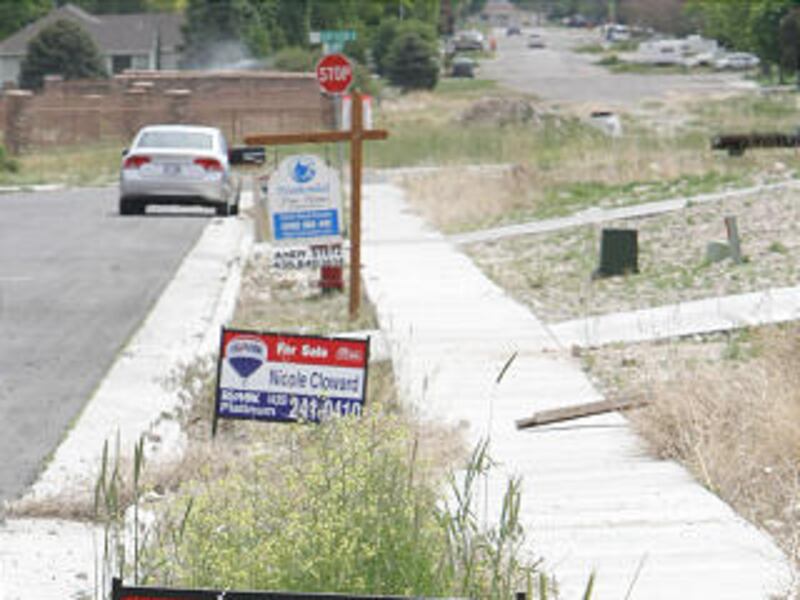
But there are also plenty of other stalled or troubled projects with their own tales of woe scattered across town, including Cherry Grove, South Willow Ranches and Blake Mountain. Even healthier, established projects like Anderson Ranch and Palomino Estates, aren't immune from increasing short sales and foreclosures. It adds up to scores of new and nearly new homes and improved building lots sitting vacant or in the process of becoming vacant again.
Current pricing is starting to reflect the crunch too. Homes originally marketed between $350,000 to $400,000 are now being offered in the $280,000 range and lower.
City officials, who responded to the boom by rolling out the red carpet for developers and then topping it with a "Welcome" mat for good measure seem mostly unfazed by current conditions. Neither do they view the glut of empty lots or rising numbers of sales and foreclosures as approaching crisis.
"I would have to say, 'No.' I haven't heard that we (the city) didn't handle (development) right," said Grantsville finance director Jeremy Walker, when asked whether in hindsight city officials might like a do-over.
As the city's numbers guy, Walker points out that it's developers who have shouldered most of the losses to date. Recent legal action taken against Dolorosa Development aside, he said, Grantsville has already collected nearly all of the revenues and fees from these failed or failing projects, so the city isn't being adversely affected financially.
Walker does confess the city is feeling some small financial pinch following back-to-back years of 50 percent decreases in construction-related revenues, such as building permits. But he declined to say what tinkering, if any, the slowdown might mean for the yet unapproved fiscal 2009-10 budget.
Grant, a real estate broker by profession, doesn't see how the city could have done anything differently.
She said the Planning Commission's job is to evaluate each project and decide if it meets the ordinances and zoning on the books and then make a recommendation to the City Council for final approval. If someone wants to develop their land and it's within the law for them to do so, Grant said, it's not the city's job to stop them.
Maybe the calm at city hall is a reflection of the steady approach to things taken by many of the city's estimated 9,000 residents.
Bill, a 79-year-old retiree, who asked that his real name not be used, is living in one of just five homes completed in the Meadows at Ranch Road development, also off Durfee Street. The fifth and final house built in the subdivision was finished several months ago and there's no indication of future activity despite plans calling for dozens of additional homes to be built.
But you'll hear no complaints from the soft-spoken homeowner who, along with his wife, moved from their Rose Park home of five decades at their daughter's behest to be closer to her.
"We've got the home and we're doing fine. Things will eventually fill in around us," says Bill surveying acres of empty building lots to his south. He says the town's friendly people and laid-back lifestyle are reasons enough to give a thumbs up to the relocation.
Donning her Realtor hat, Grant remains positive and doesn't believe the excess housing inventory is cause for alarm.
"I don't think we're in a housing crisis (in Utah) the way some other markets in the U.S. are in a housing crisis," Grant said. "Homes are still selling as long as they're priced right."
She said it's a cycle and now there's a lot of opportunity for people out there. The fact that Grantsville and Tooele County remain less expensive than the Salt Lake market continues to attract buyers. She said 94 listings in Grantsville have sold during the past 365 days at a median price of $219,000 according to the Tooele County Multiple Listing Service.
"I see things starting to turn. We're busier than last year. Banks are starting to loan," Grant said, predicting that real estate will really start to pick between the beginning and middle of 2010.
Surprisingly, today's market isn't much different from the one Grant found shortly after entering real estate more than seven years ago. "There were a lot of short sales and foreclosures then too," she said.
Much of the city's upscale inventory was caused by builders trying to maximize profit by building larger homes on larger lots of one-third acre and more, she said. Dolorosa, where Grant currently has listings for sale, is a beautiful project but unfortunately arrived late to the party.
Silver Fox is the problem child it is, she said, because would-be investors tried to make an easy buck and got caught in the housing downdraft. Still, she predicts most of the short sales and foreclosures there will be off the books by the end of summer along with much of the city's other excess housing inventory.
E-MAIL: chuck@desnews.com