

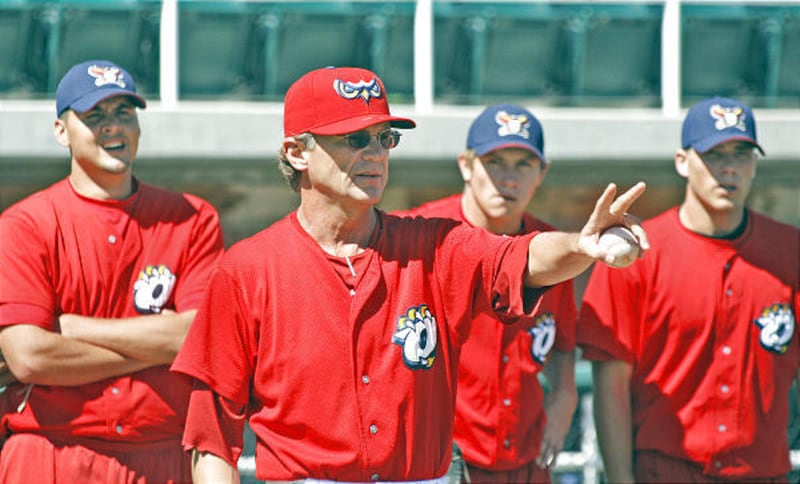
OREM — When Orem Owlz manager Tom Kotchman left his team last August and rushed home to south Florida to be at his ailing wife's bedside, many wondered if the veteran coach would return for another summer in Utah.
But with wife Susan's miraculous recovery from a brain hemorrhage, the type of which are often fatal, and her slow but steady return to normal health, the Kotchmans figured the coach in the family needed to get back in the game.
"If I wasn't comfortable with it, and she wasn't comfortable with it, trust me — I wouldn't be here," Kotchman said upon his return to Orem for a ninth season with the Pioneer League team and his 26th year with the Los Angeles Angels of Anaheim organization. "Am I little hesitant? Yeah. I'd be crazy not to be. But it's the best job for my family, because if I was at another level managing full-time, I'd be gone seven or eight months instead of just two-and-a-half."
Still, Kotchman entered the season with a new perspective. He has more appreciation for baseball, fans, fellow coaches, his players, his friends, his family and life.
"When you go through a life-changing experience like that, it just changes everything. That whole experience was just overwhelming. I mean, the support we received and the things people were doing for us. And I held my wife's hand more in two months than I did in 27 years of marriage. I tell everyone, 'Don't take anything for granted,' " Kotchman said.
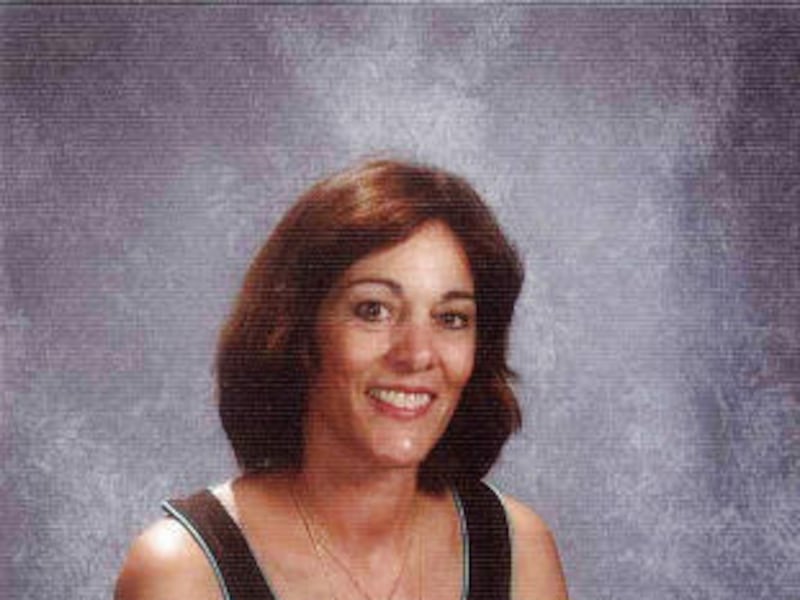
On Aug. 19, 2008, Susan, an elementary school principal in Seminole, Fla., was settling down for the night after the first day back to school when she began feeling intense pain in her head. She called some neighbors to assist her. They called 911 and, within minutes, she was on a hospital bed in St. Petersburg fighting for her life.
Across the country, the Owlz had just defeated the Missoula Osprey and were boarding the team bus when Kotchman received a call from son Casey, the first baseman for the Atlanta Braves, telling him about Susan's condition, which had become extremely critical.
"I always tell my players that they are going to see three things from me — constructive criticism, laughter and tears. But I didn't think they were going to see me totally break down. I got off the bus, walked down the hill and stood in left field and just totally broke down. There's nothing in a coaching or scouting manual for that, a call like that. I never want to get a phone call like that again," he said.
Kotchman was on the first flight he could catch out of Montana. On a stopover in Denver, he called Casey, who had flown to Florida from New York, to see if Susan was still alive. When he arrived in Tampa, he quickly grabbed a taxi to the hospital.
"I walked in and she had a mask over her eyes, and I kissed her on the lips, and she said 'Tommy?' and, being the sarcastic person I can be, I said, 'Were you expecting someone else?' and she said, 'Tommy, that's not funny.' Then I told her that we're all here."
Doctors told Kotchman, son Casey and daughter Christal that about half of those who suffer a hemorrhage like Susan's (a subarachnoid hemorrhage) die before reaching the hospital. About half of those who do reach the hospital alive subsequently die soon after.
Susan, who spent 15 days in intensive care, was medicated and monitored, and was awakened every two hours to have a light shined in her eyes. At one point, she even told her husband that she couldn't take the pain anymore, and was ready to go. The Kotchmans were getting regular updates from family friend and Tampa Bay Rays' team doctor Michael Reilly.
"Those first three or four days, we were preparing for the worst," Kotchman said.
On about Day 5, however, Susan began to complain more about the pain in her back rather than the pain in her head.
"That's when I said 'Now we've got a chance,' " Kotchman said.
A few days later, she was getting around with the use of a walker. Eventually she was stir-crazy enough that the doctors let her go home, with the caveat that her husband would administer her vital medication every four hours for the next 10 days. After those 10 days, she returned to the hospital for further examination, and was sent home again with doctors saying she had less than a 1 percent chance of having a similar hemorrhage again. She was officially one of the rare survivors of her condition. She now wears a "Miracle Mom" pendant around her neck.
"They told her just to listen to her body, so she's not pushing it. She's taking it literally day by day. But she's like a one- or two-inning pitcher. ... She gets fatigued very quickly," Kotchman said.
Susan eventually returned to working as a principal a few hours each day last winter and spring. She's hoping to return full time this fall.
"If her stamina allows it, she'll do it. If not, she won't. But she loves her kids," Kotchman said.
In early June, she flew to Cincinnati to watch Casey and the Braves play the Reds. Last week, she flew to Utah to spend four days with her husband — going to the ballpark each day and walking around the Utah Valley University campus with a bottle of water.
Kotchman and his wife talk every day, and she'll likely fly out to Utah again before the season ends. And when the season is over, the Kotchmans plan to take a trip to the Grand Canyon — a place Susan has never seen — for the couple's first vacation by themselves in many years.
"She's always been there for me, Casey and Christal, so now it's our time to pay her back," Kotchman said.
The 54-year-old Orem manager is one who always shares his experiences with his players. For sure, the things he's experienced the past 11 months with Susan will be passed on as well — with the hope that the players will come away with more appreciation for their talents and the relationships in their lives.
"If they haven't gotten that now, they'll get it at sometime during the season. You don't take anything for granted, whether it's your family or this game," he said.
e-mail: jimr@desnews.com