

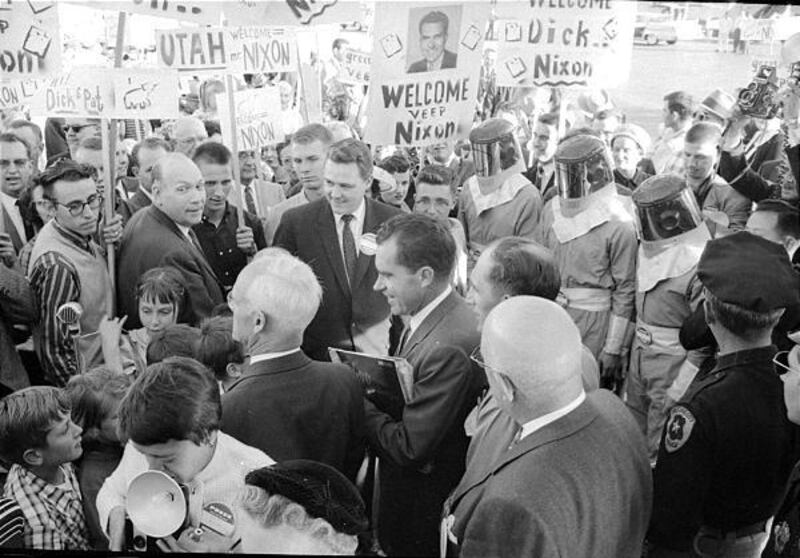

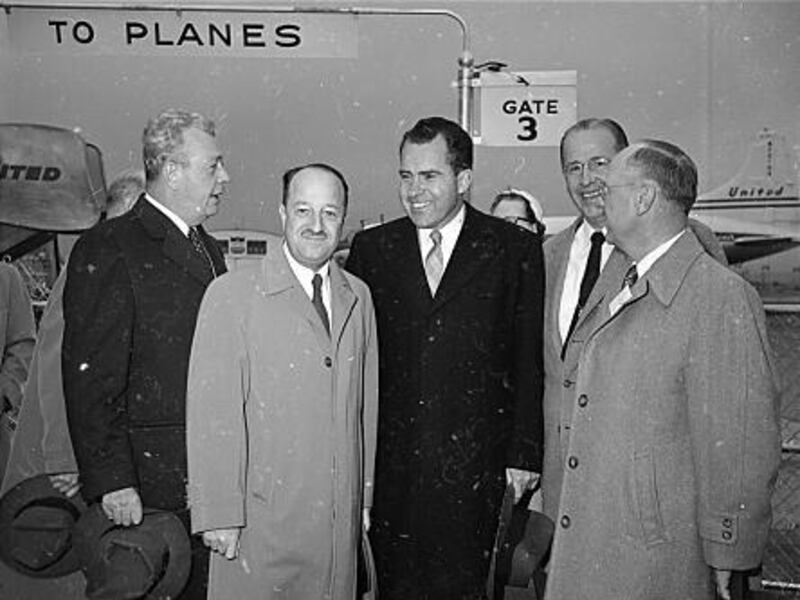
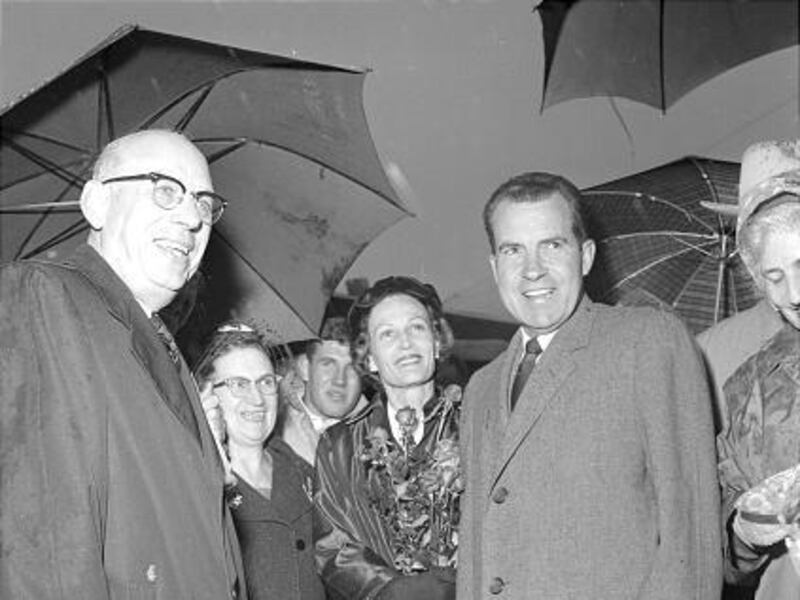
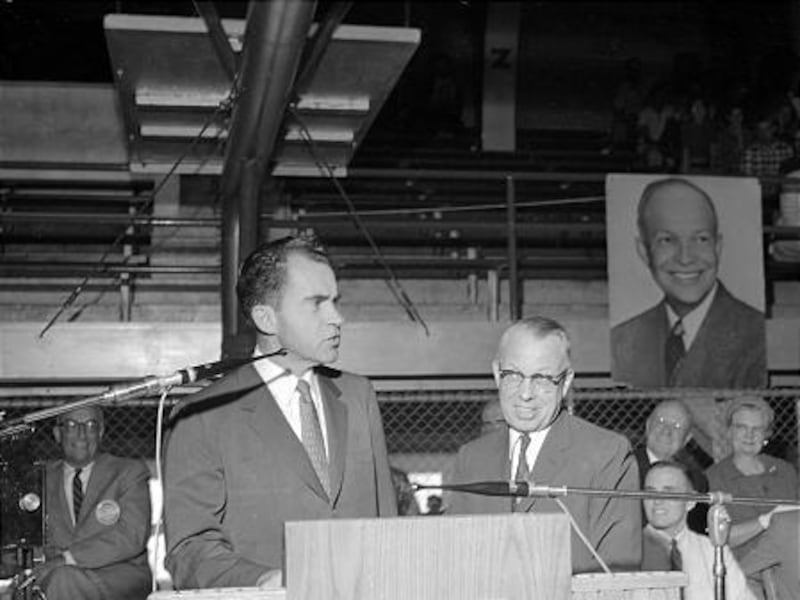

SALT LAKE CITY — Fifty years ago today, wind whipped cold rain at the more than 500 people who waited for Vice President Richard M. Nixon's plane at Salt Lake City Municipal Airport.
It was in the afternoon of Oct. 10, 1960, and Nixon was keeping his promise to campaign in every state — even the new states of Hawaii and Alaska.
An article in the Deseret News 50 years ago said most of the Nixon-for-president fans at the airport were high school and college students.
One of the college students was George Kennedy, who held up a sign that read, "Kennedy for Nixon." The Democratic Party's candidate, John F. Kennedy, had spoken in the Salt Lake Tabernacle only three weeks earlier on Sept. 23. Now, it was Nixon's turn.
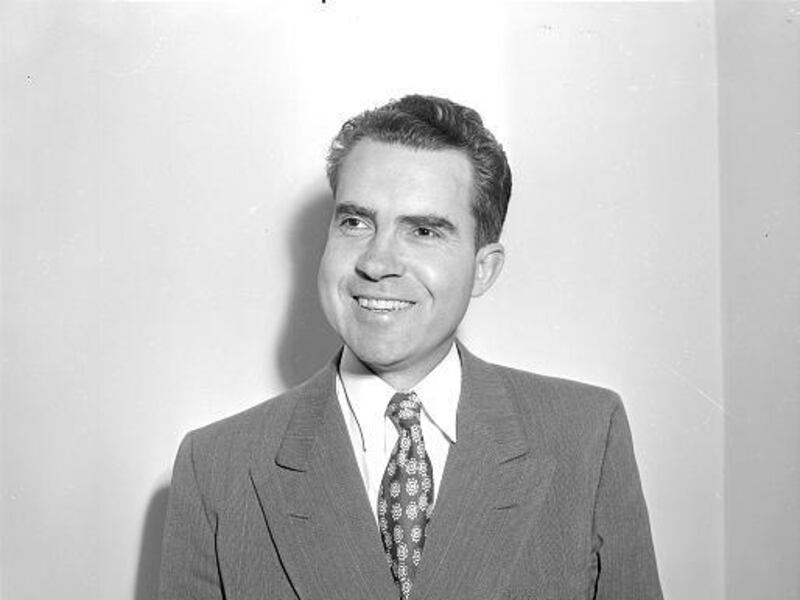
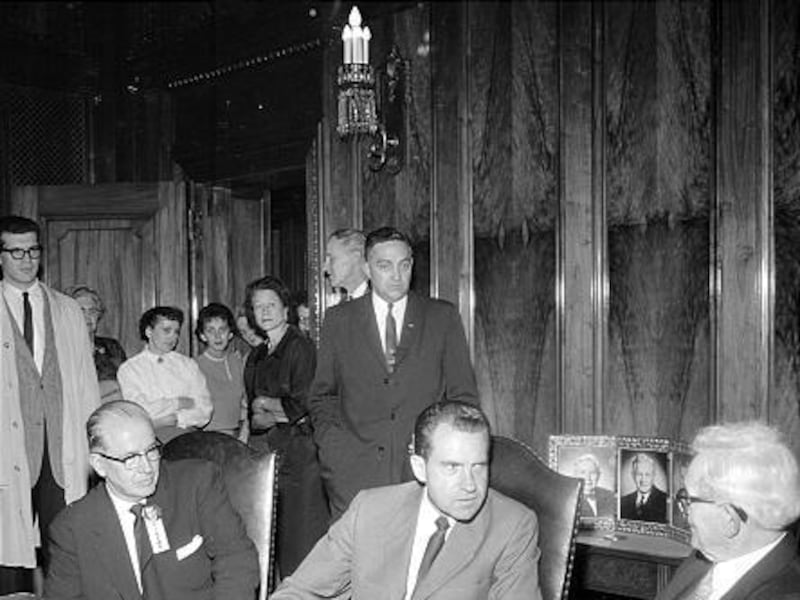
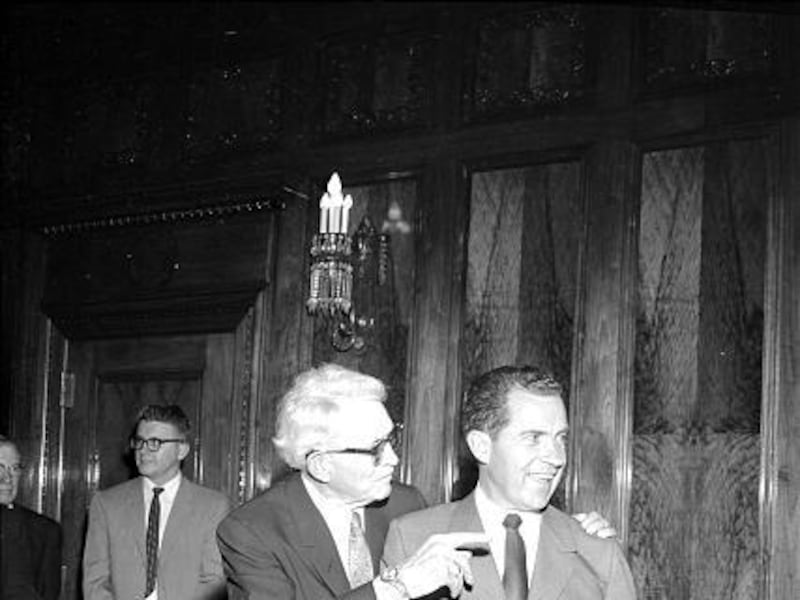
Utah photo historian Ron Fox scanned about 750 photographs from the Deseret News Archives of Nixon's 11 visits to Utah from 1949 to 1970.
At the airport
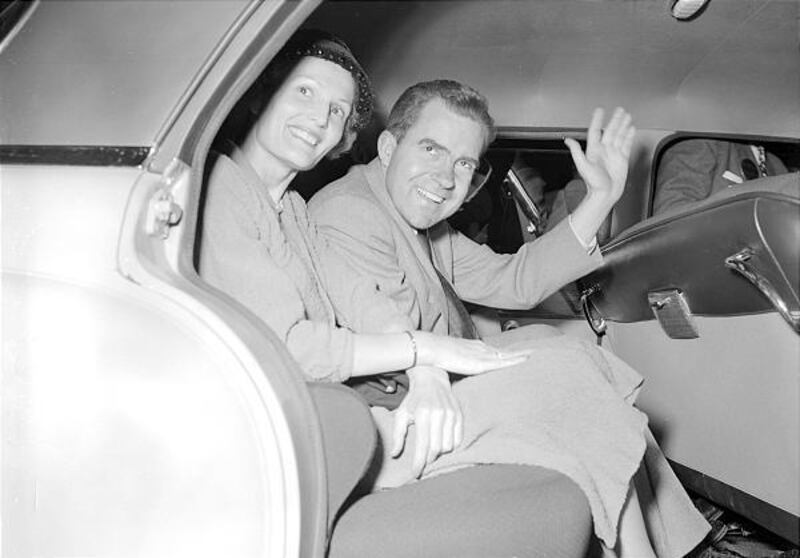
When Nixon and his wife, Pat, stepped out of the propeller-driven plane into the cold rain, the Deseret News reported that "his face was ruddy, and he seemed to sparkle as the crowd roared his name." This was only two weeks after Nixon appeared to be in ill health on the nation's first televised presidential debate.
Nixon plunged into the crowd.
"In contrast to many who greeted him," the Deseret News reported, "the vice president disdained hat or umbrella as he sloshed through the rain, shaking hands and waving."
Pat Nixon was soaked by the rain and was temporarily separated from her husband when fans in the crowd tried to shake his hand. As she tried to rejoin him, she overheard two women speaking: "He doesn't look a thing like he did on television," one said. "He looks good."
"Yes, he's really good looking," the other women said.
Pat Nixon, who was clutching roses given to her by Utah Republicans, turned around and smiled.
Ezra Taft Benson, then President Eisenhower's secretary of agriculture and a member of The Church of Jesus Christ of Latter-day Saints' Quorum of the Twelve, greeted Nixon in the rain.
Nixon and Benson had had deep disagreements in the past over agriculture policy, but United Press International said their meeting was "quite cordial." Nixon remarked that the rain was good for the farmers. Benson told him, "Be sure to claim credit for it."
Nixon addressed the crowd while Pat Nixon held an umbrella over his head.
"We (the Republican Party) have been blamed for the drought," he said, according to the Ogden Standard-Examiner, as he followed Benson's advice, "so I guess we can take credit for the rain."
The 'endorsement'
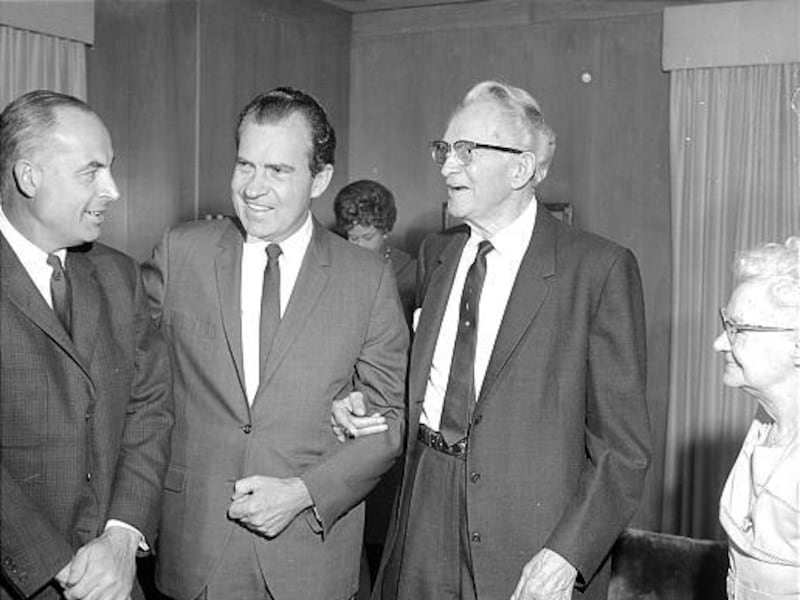
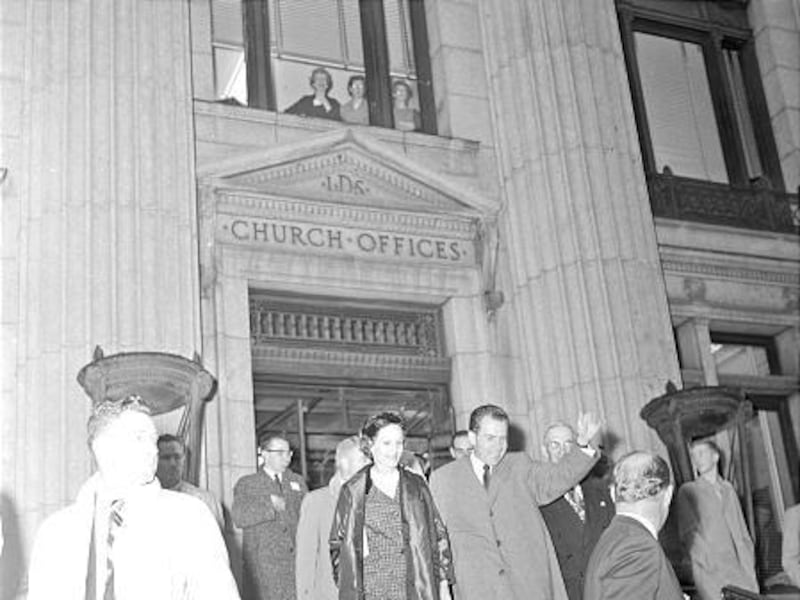
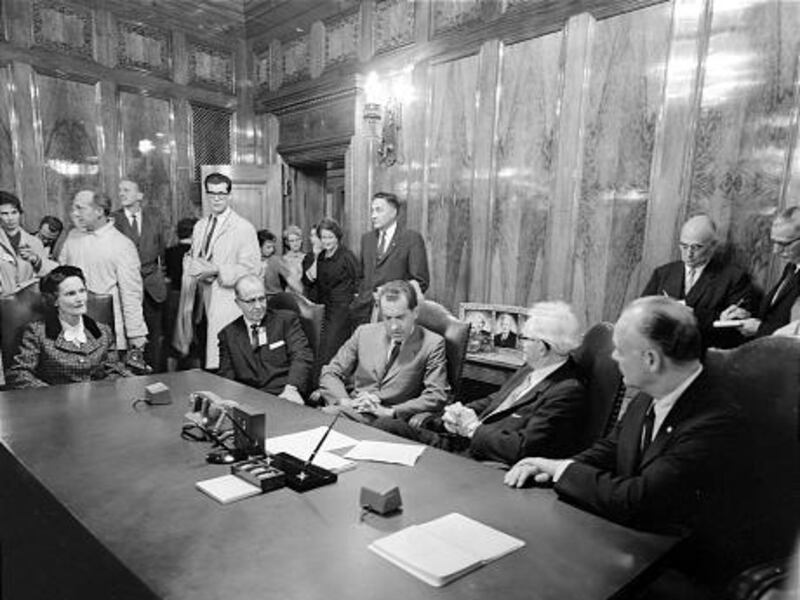
The three-day general conference of The LDS Church had finished the day before. President David O. McKay drove his car 45 miles through the storm from Huntsville to meet with Nixon at church headquarters.
The Deseret News said they "hit it off famously."
Pat Nixon sat quietly for most of the 45-minute chat, the Deseret News reported, "laughing at the jokes, coughing lightly on several occasions and pushing her rain-spattered curls in place."
Nixon joked that President McKay had more hair at 87 years old than he did at 47.
"Pat always said that if I lost my hair that, I'd have to get another wife," Nixon said with a smile.
"No," Pat Nixon corrected him. "I said you'd have to get a hairpiece."
The conversation continued in a light-hearted way, with frequent interjections from the group of mostly media representatives.
President McKay then began to speak about the need for spirituality in solving America's problems. The Deseret News said "a hush descended, as the group listened intently."
"The important thing is the dignity of man," President McKay said. "America must be aggressive in promoting its ideals of freedom, justice and spirituality."
Nixon nodded vigorously and said, "I agree with you perfectly."
"We must prove to them that we have something the communists have not," President McKay said. "We must be aggressive in promoting our ideals abroad. We want a man who can succeed President Eisenhower in this regard. Can you do it?"
"I can be aggressive without being belligerent," Nixon replied.
The conversation covered many areas, from the weather to politics to Nixon's genealogy. Benson, who was also present, interjected at one point to tell Nixon "this man speaking to you is one of the greatest examples of spiritual courage in the world."
During the interview, President McKay said, "I sat by your competitor in this office a few weeks ago, and I told him that if he were successful, we would support him. In your case, I'll say we hope you are successful."
This comment by President McKay was taken as an endorsement by the media. The Ogden Standard-Examiner's headline trumpeted "President McKay Gives Nixon Full Endorsement." United Press International called it "the almost unprecedented endorsement of the spiritual leader of the Mormon church," but noted it was "informal" and "unofficial." The church issued a clarifying statement the next morning that said President McKay was speaking as a Republican and as a personal voter.
In the Tabernacle
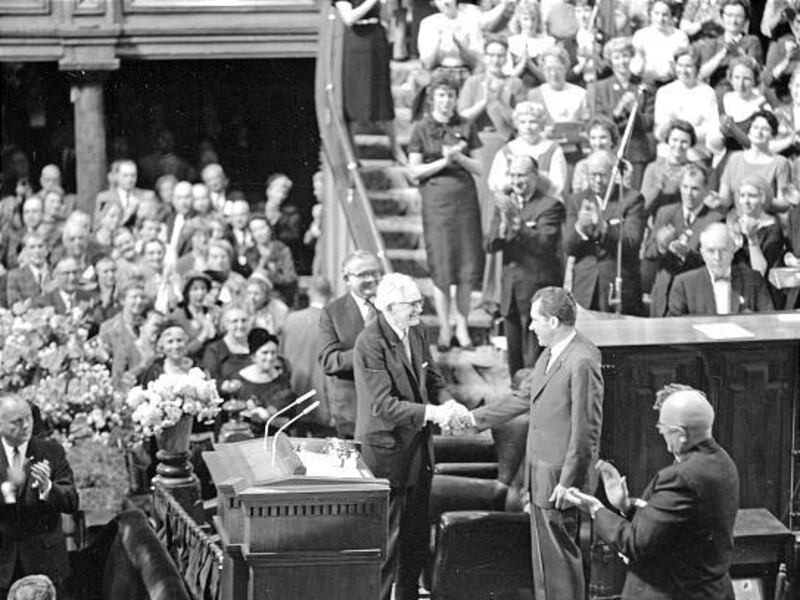
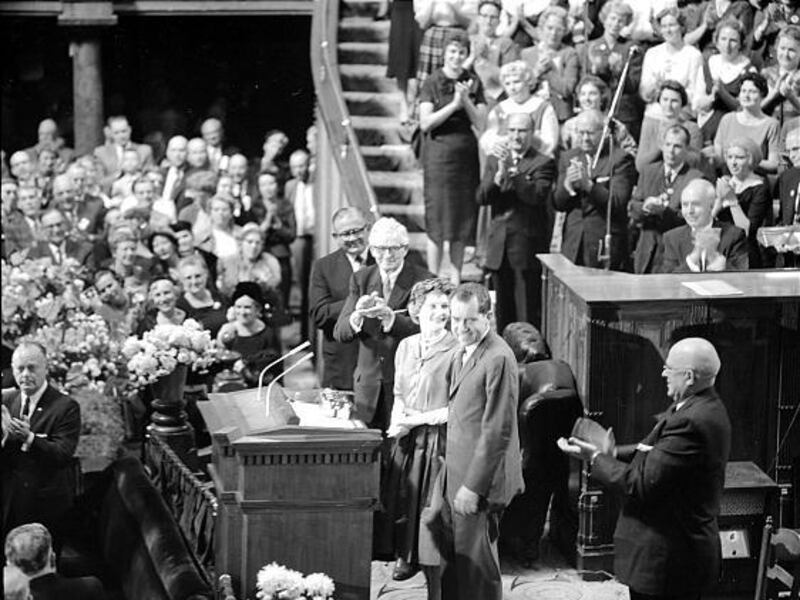
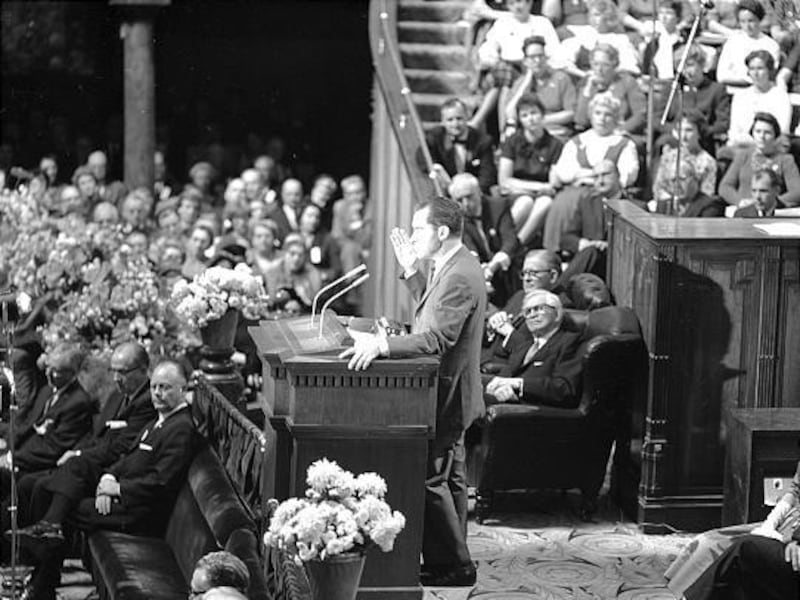
Nixon's appearance in the Salt Lake Tabernacle on Temple Square began with a prayer by former Salt Lake City Police Chief W. Cleon Skousen, the Salt Lake Tribune reported. A 300-person "Voices for Nixon" choir provided the patriotic music. A capacity crowd recited the Pledge of Allegiance.
President McKay, President Henry D. Moyle and several other LDS general authorities were present, as were U.S. Secretary of the Interior Fred A. Seaton, Sen. Wallace F. Bennett, R-Utah, and Utah Gov. George D. Clyde.
Nixon spoke without a prepared text, according to Provo's Daily Herald. He called for "moral and spiritual leadership from the people upward rather than from the government down."
The Deseret News said Nixon took an "oblique swat" at Kennedy by saying, "men who would apologize or express regrets over this or that international incident ... may sincerely want peace, but they do not understand the nature of (Soviet Union leader Nikita) Khrushchev or (China leader) Mao Tse-Tung."
The red scare was in full swing in 1960. Khrushchev was visiting the United States and would, in only three days, stun people at the United Nations by banging his shoe on a table while making a point.
Nixon spoke about maintaining military strength "no matter what the cost." He said he refused to trade away the freedom of America in negotiating diplomacy. He said a strong economy is "based on the principle that programs start with the people and work up to the federal government" rather than "the approach that we take our problem to the government and it takes over both the problem and control of our money."
The Deseret News reported that the largest applause of the evening came when Nixon referred to President Benson, who was also in the Tabernacle: "There are honest differences of opinion about how best to handle the nation's farm program, but there is no more dedicated man of integrity in the Cabinet than Ezra Taft Benson."
Nixon said moral and spiritual leadership was "based on faith in God, belief in the dignity of man, belief in the right of men to be free," and that those rights come to man from God and "cannot be taken from him by man."
The next morning, Nixon headed to his home state of California to campaign. His third television debate would be a few days later.
The election on Nov. 8 was close — including in Utah. Nixon won Utah with 205,361 votes to Kennedy's 169,248 votes — but Utah's four electoral votes were not enough. Kennedy became the 35th president of the United States and made an indelible impact on history.
Nixon's time would come years later, after other visits to Utah, and he would leave a different impact on history than he might have expected in 1960.
Deseret News archivist Ron Fox is currently working with West Valley City Mayor Michael Winder on a photo-essay book about presidential visits to Utah from 1875 to today to be published next year.
e-mail: mdegroote@desnews.com