

Around 1200, a tribe in Peru known as the Incas began to build the city of Cuzco. By the end of the 15th century the Incas had become one of the largest and richest empires in the Americas. They numbered more than 10 million and covered a land mass including most of Peru and parts of Chile, Ecuador, Bolivia and northwest Argentina.
Incas constructed a paved road system, irrigation canals, and massive stone buildings. They had a strong central government headed by a ruler, known as the Sapa Inca, whom they believed was a direct descendant of the sun god, Inti.
Their great empire lasted less than a century before being destroyed by a small Spanish army.
INCA ORIGINS
Like many ancient cultures, the Incas believed in multiple gods and myths. They called themselves "the Children of the Sun" and believed their origin began with the arrival of the first Inca king, Manco Capac. According to one myth, Manco Capac was born from the sun god, Inti, who sent Manco and his sister on a journey to find the perfect place for his people to settle.
At every stop, they stuck one of their father's golden rods in the earth. When the rod sunk into the earth they would know they had found the place to build their city.
When they reached the valley of Huanacauri, the golden rod sank into the ground and disappeared. They named their city Cuzco.
THE RISE OF THE EMPIRE
Around 1430, the Inca ruler Pachacuti initiated a series of military campaigns that transformed the small city/state of Cuzco into the great Incan empire.
Pachacuti sent spies to the neighboring regions he wanted to aquire. He then sent messages to the leaders extolling the benefits of joining his empire. He offered gifts and promised that they would be richer as subjects under him. Most accepted his terms. Other had to be subdued with military force.
To help rule their empire, the Incas created an efficient network of roads and rope suspension bridges.
THE FALL OF THE EMPIRE
The decline in the Incan Empire began before the Spanish Conquistadors arrived. Europeans brought diseases unknown to the Incas with them when they arived in South America. Smallpox began to spread among the Incas. They had no resistance to the disease and many died.
Civil war also weakened the empire when Huayna Capac died in 1527. He had not named his successor and two of his sons, Huascar and Atahualpa fought to gain control. Atahualpa eventually won and sought revenge on his enemies.
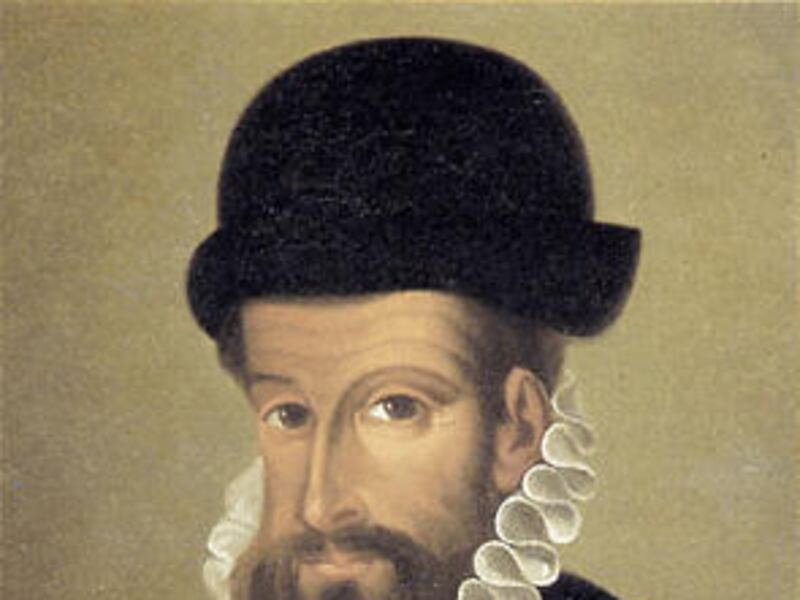
Spanish conquistadors led by Francisco Pizarro explored south from Panama, reaching Inca territory by 1526. It was clear that they reached a very wealthy land. After another expedition in 1529, Pizarro returned to Spain and received royal approval to conquer the Inca region.
In 1532 Pizarro returned with 180 men, 27 horses and one cannon.
He rapidly overcame the indigenous warriors in their first engagement at Battle of Puná (near present-day Guayaquil, Ecuador).
Pizarro sent out an invitation to meet with the Inca ruler Atahualpa. Atahualpa did not fear Pizarro's small army. But Pizarro planned to kidnap the Incan ruler. Atahualpa arrived to meet Pizarro with a small unarmed group numbering around 2,000. He was carried in on a golden litter in all his glory. The Spanish fired cannons and their cavalry charged. Thousands of the Inca were slaughtered and Atahualpa was taken prisoner.
Atahualpa offered the Spaniards enough silver and gold to fill the room he was imprisoned in if they would let him go. The ransom was collected, but Pizarro refused to release Atahualpa.He claimed that Atahualpa was plotting against him and the Sapa Inca was tried for treason and sentenced to death.
At first he was sentenced to be burned. Atahualpa was horrified because he believed his spirit would be destroyed if his body was burned and he could not enter the afterlife. Instead he agreed to be baptized a Christian and he was strangled with a rope in 1533.
The Spanish ruled through Atahualpa's brother, Manco, whom they made their puppet Sapa Inca. Manco fled and retreated to the mountains of Vilcabamba, Peru. He and his successors ruled for another 36 years. In 1572 the last Inca stronghold was discovered, the ruler captured and executed.
13 KINGS OF INCA CIVILIZATION
1. Manco Capac - Sun God
2. Sinchi Roca
3. Lloque Yupanqui
4. Maita Capac
5. Capac Yupanqui
6. Inca Roca
7. Yahuar Huacac
8. Inca Viracocha
9. Pachacuti-Inca-Yupanqui
10. Topa Inca Yupanqui
11. Huayna Capac
12. Huascar
13. Atahuallpa
MACHU PICCHU
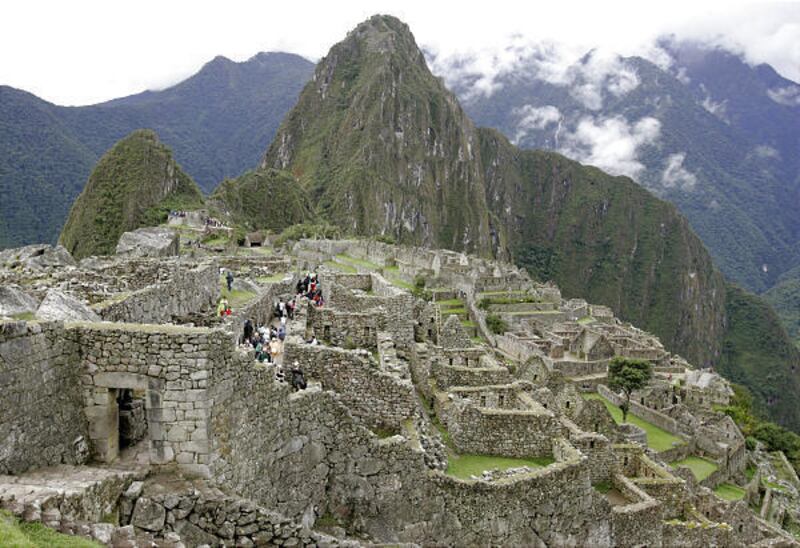
Often referred to as "The Lost City of the Incas," Machu Picchu is one of the most familiar remnants of the Incan Empire. The Incas started building the city in the mid 1400s. Some believe that Machu Picchu was built as an estate for the Inca emperor Pachacuti. Since the city was unknown to the Spanish invaders it was a relatively intact site when it was discovered by American historian Hiram Bingham in 1911 and brought to worldwide attention.
The structures were built in the classic Inca style with polished dry-stone walls. No mortar was used to bind the stones together. The stones were cut with precision and fit together tightly. The Incas designed the structures to protect them from collapsing in an earthquake. Doors and windows are trapezodial and tilt inward from bottom to top. Corners were rounded and L-shaped blocks were often used to tie outside corners together.
FAST FACTS
Machu Picchu is separated into the agricultural zone and the urban zone.
The visible area of Machu Picchu accounts for less than half of the construction. Much of the construction lies underground, providing foundations and drainage for the buildings and walls.
Many of the stones used in the site construction weigh in excess of 50 tons.
There are hundreds of agricultural terraces helped to feed the 750-1,000 inhabitants of Machu Picchu.
More than 100 stone stairways connect the upper and lower levels of the site.
Water canals channel water from springs on Machu Picchu Mountain into the city's residential and agricultural areas.
National Geographic devoted their entire April 1913 issue to Machu Picchu.
In July 7, 2007, Machu Picchu was named one of the New Seven Wonders of the World.
Information compiled and designed by Heather L. Tuttle
SOURCES: www.suite101.com/content/interesting-machu-picchu-facts-a244879