

When we look at perennial vegetables that grow in northern Utah, we see a very short list: rhubarb, asparagus and sometimes Jerusalem artichokes are strong enough to survive our cold winters.
For me, my first memories of rhubarb were the row of plants that grew in the neighbor's yard. The plants were there when we moved into our house in 1955 and remained there for the entire time I was growing up.
We would stop by on occasion and pick a stalk and chew on it. Sometimes they tasted reasonably sweet, and sometimes they were downright bitter.
In our ignorance, we had no idea that rhubarb leaves were poisonous, but we knew they were bitter.
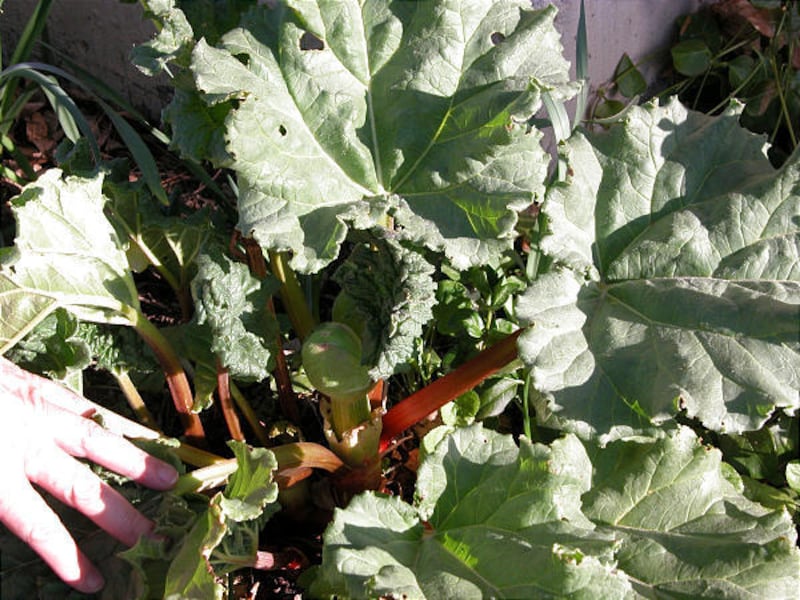
About the only difference I saw with the neighbor's plants were some had red stems and some had green stems. I certainly never made a comparison of the two colors and the flavors.
Fast forward a few years, and I started working for Utah State University Extension in Millard County. I was in the town of Holden and stopped in to see a gardener. He gave me a few rhubarb plants that I threw in the back of my truck, and I planted them a few weeks later.
My family and I enjoyed those plants in our garden for many years. They produced prolifically, and we used the rhubarb in pies, custards and many other desserts. The rhubarb also made a great extender for strawberry and raspberry jam.
Rhubarb has been around as a vegetable for more than 2,700 years and was first grown in the Far East. It originally was cultivated for medicinal purposes, and in the 18th century it was finally grown for culinary use in Britain and the Americas.
Northern Utah has a good climate for growing rhubarb. It requires that winter temperatures drop below 40 degrees Fahrenheit to break dormancy and to stimulate spring growth.
One drawback is that rhubarb prefers summer temperatures averaging less that 75 degrees Fahrenheit for the best vegetative growth, so this plant thrives in some of our higher mountain valleys.
The tops die back in the first heavy freeze in the fall. The roots survive and produce new tops the following spring, and of course, that is the part we eat.
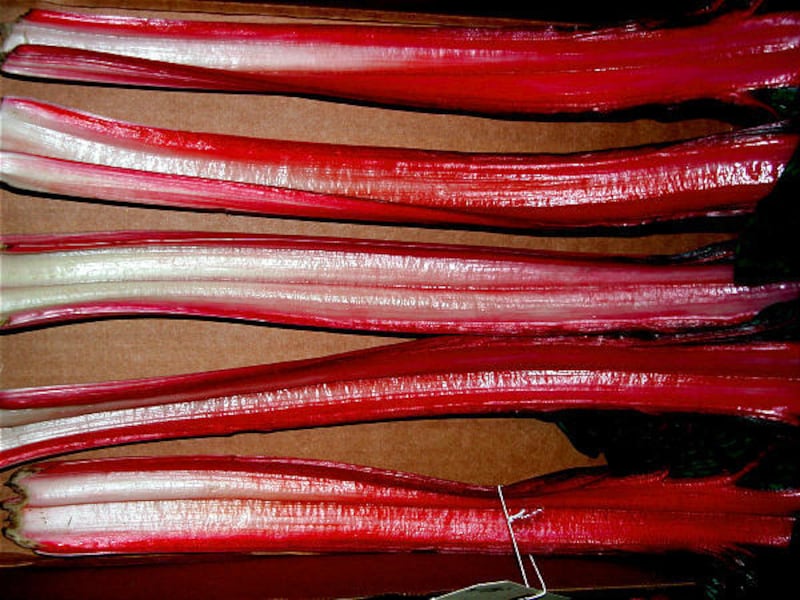
Common cultivars with red leafstalks include Canada Red (extra sweet with long, thick stalks), Cherry Red (very red inside and out), Crimson Red (tall, plump stalks), MacDonald (brilliant red stalks with tender skin), Ruby and Valentine (long stalks with good flavor). Victoria has green leafstalks shaded with red.
Because rhubarb is perennial, choose a good weed-free growing area. Nothing is as discouraging as trying to remove field bindweed or quackgrass from the plants.
Also, plant it where it will not be destroyed by tilling or other operations when growing annual vegetables.
Choose an area with well-drained soil or add enough course organic matter to improve the drainage. The plants produce earlier when grown on a southern exposure where it is not shaded by trees or buildings.
In most cases, rhubarb is grown from dormant crowns or divisions.
Look for these in the spring at local nurseries. Plant them as soon as possible so they do not dry out. Divide existing plants in the spring or fall.
Give the plants plenty of space. They get large, so plant them on 36-inch spacings in the garden. Organic mulch improves the soil and helps keep down the annual weeds. Keep the soil moist but not soggy.
Let new plants get well-established. Do not harvest the stalks for the first season, and cut sparingly the second season. After that, harvest the stalks in May and June, as they are the best quality and the sweetest.
Stop cutting when the stalks start getting smaller in size as that indicates the food reserves of the plants are dropping.
Limit your harvest to one-third to one-half of the stalks. You can cut the stalks at the base or twist them off of the plants.
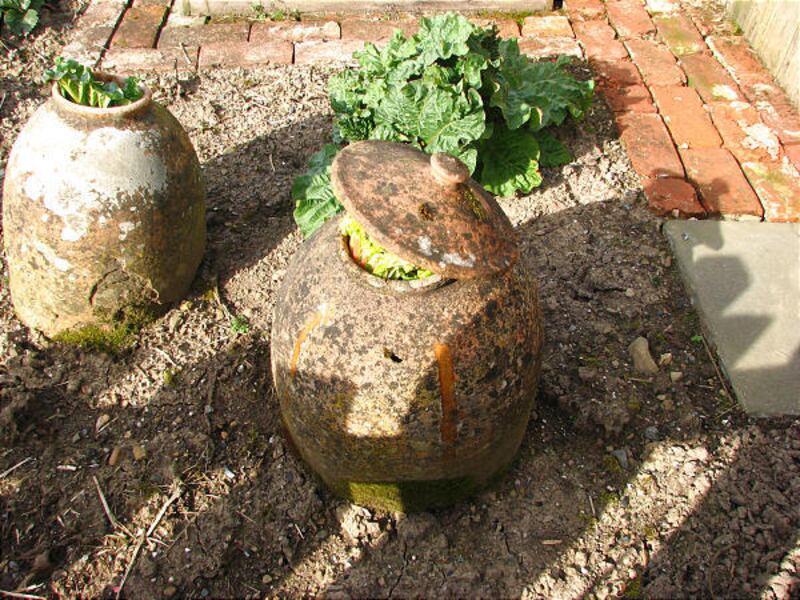
One horticultural curiosity that I saw in many English gardens was forcing rhubarb. They use interesting clay "rhubarb forcers," which cover the plants. These warm up in the sun and start the plants growing ahead of the season.
If you really want to "force" the issue, pile horse manure around the jars. As the manure rots, it gives off heat and makes the rhubarb stalks grow even faster.
Covering plants in the garden with a plastic garbage can will give the same effect.
This will give some tasty fresh stalks early in the season.
Larry A. Sagers is a horticulture specialist for the Utah State University Extension Service at Thanksgiving Point.