

The image of a father and a son outside playing catch on a summer afternoon is about as American as a Norman Rockwell painting.
But a father's role is not so easily defined. Neither a sports fanatic whose pivotal role in a child's life occurs on a sports field nor the bumbling fool portrayed on a TV sitcom, dear old Dad often seems to stand in the shadows as mothers receive the accolades of child-rearing.
But his role is complex, intertwined with his children's in myriad ways, from shaping their intellectual and moral universe to cheering from the sidelines as they perform on life's stage.
It was 100 years ago that a Spokane, Wash., daughter, Sonora Smart Todd, while listening to a Mother's Day sermon, decided that fathers needed their day in the spotlight too. She wanted to pay a special tribute to her father, William Jackson Smart, a Civil War veteran who had sacrificed to raise six children alone after his wife died in childbirth.
The first observance was June 19, 1910, chosen because it was near the birthday of Todd's father. However, the day wasn't officially recognized until 1972 when President Richard Nixon set aside the third Sunday of June as a holiday.
Today, in recognition of the 100th anniversary of Father's Day, well-known Utah artists, musicians, actors and authors pay tribute to their fathers and their influence in their lives.
—Angelyn N. Hutchinson
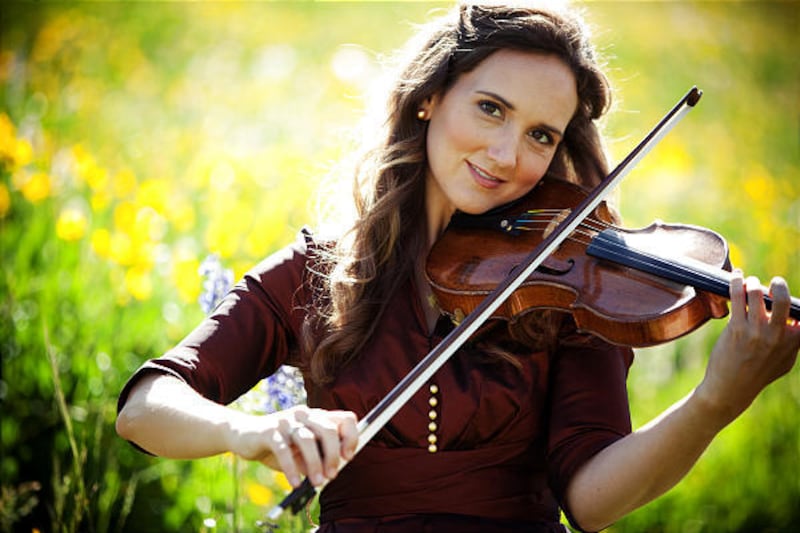
JENNY OAKS BAKER, violinist: "When I recorded my second album, 'Songs My Mother Taught Me,' I paid tribute to my mother who played such a pivotal role in my musical development. I have often wished, however, that I could also publicly pay tribute to my father for the tremendous influence he has been in my life — musical and otherwise. When I was growing up, my father, Elder Dallin H. Oaks, completely supported my music — paying for all my lessons, music, instruments — as well as always making time to attend various performances. He would even keep the door to his home office open so he could listen to my practicing while he worked. My father also has an amazing work ethic, and his motto, 'work first and play later,' inspired me to always practice long and hard. But even more importantly, my father made sure I developed into a well-rounded individual, encouraging me to develop myself not only musically, but mentally, spiritually, emotionally and socially. This has been such a blessing in not only my musical life, as I strive to connect with audiences on every level, but in my everyday life as a wife and mother. My father also taught me that my talent came from the Lord, so I should always be ready to use it in his service. Then, I could always rely on him to bless me.
"My father still influences me. He constantly reminds me of my priorities as I strive to balance my family and my musical life. He continues to attend my performances, and I love to see his proud face looking back at me from the audience. But most importantly, I know that he loves me and this love continues to inspire me to strive to be better at all that I do and all that I am."
— Carma Wadley
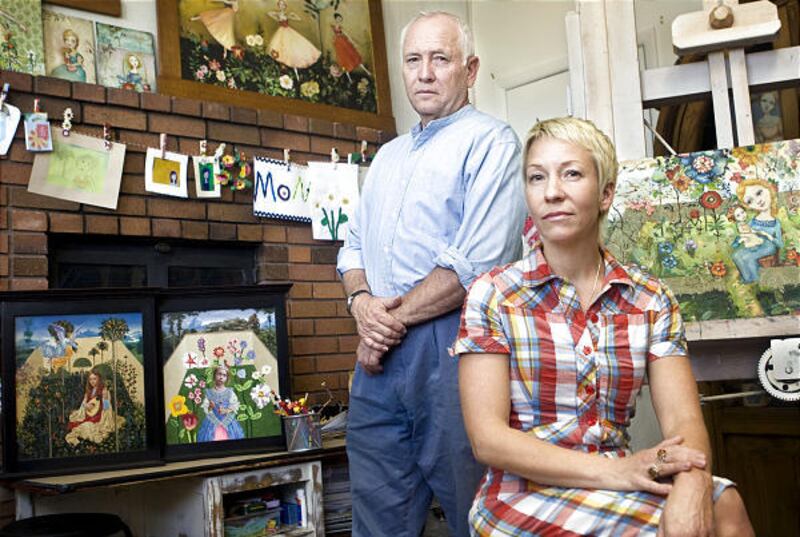
CASSANDRA C. BARNEY, visual artist (and daughter of fantasy artist James C. Christensen): "In my 'I can't see past the end of my nose' years, I didn't fully appreciate the influence my dad has had on me as a person and as an artist. I know he was shocked the day I announced I was changing my major to art; but from that day forward, he had always supported me. Technically, we approach painting very differently, but we use the same language to communicate our ideas. It's a language of symbols and paint and color. He has been there to offer advice, to listen to my complaints and to share in my accomplishments. I've been lucky to have opportunities to travel and do shows with my dad. At those shows I've watched how he interacted with people with kindness and generosity, and I've tried to model my behavior after his.
"I've always felt like my dad understood me when others didn't. He has that same burning in his belly that I have, and when we are together, that fire is refueled. I love my dad, and I feel like I'm the luckiest girl in the whole world to be his daughter."
— C.W.
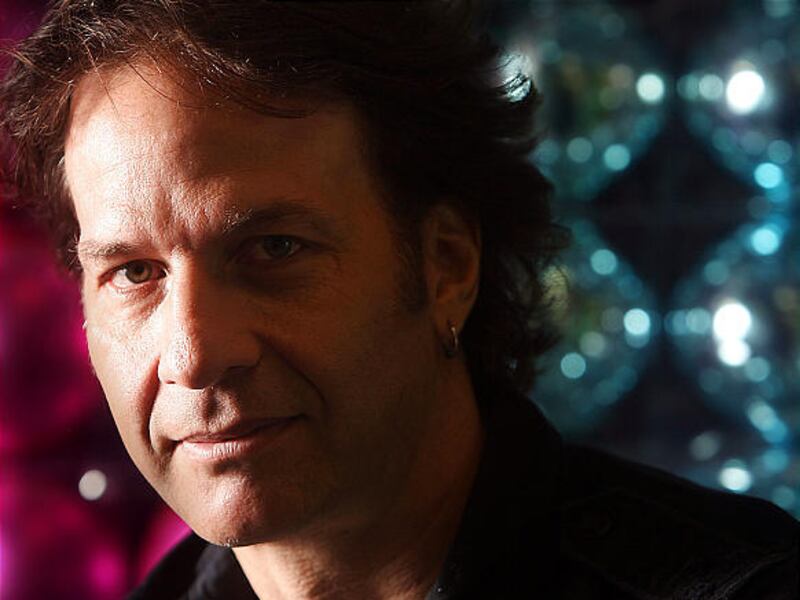
KURT BESTOR, musician, arranger, composer: "Being a father with a toddler who thinks I can do no wrong, but two grown-up daughters who are starting to discover their dad's fallibility, I remember looking at my dad the same way — thinking of him once as Superman, Dr. J. and Einstein all wrapped into one, but later seeing his fragile, imperfect side. It was only upon realizing his humanity that I truly felt a deeper love for him. Here are the lyrics from a song I composed about his "Superman" side. (I think his cape is still in the bedroom drawer!)"
He can Emc-square like Einstein
Toss a ball like DiMaggio
And, according to Mom, he's still turning heads like Valentino — oh yeah.
He's got it all figured out like Edison
Even the clock on the VCR
If they gave out a Nobel prize for Dads — it's his by far!
— C.W.
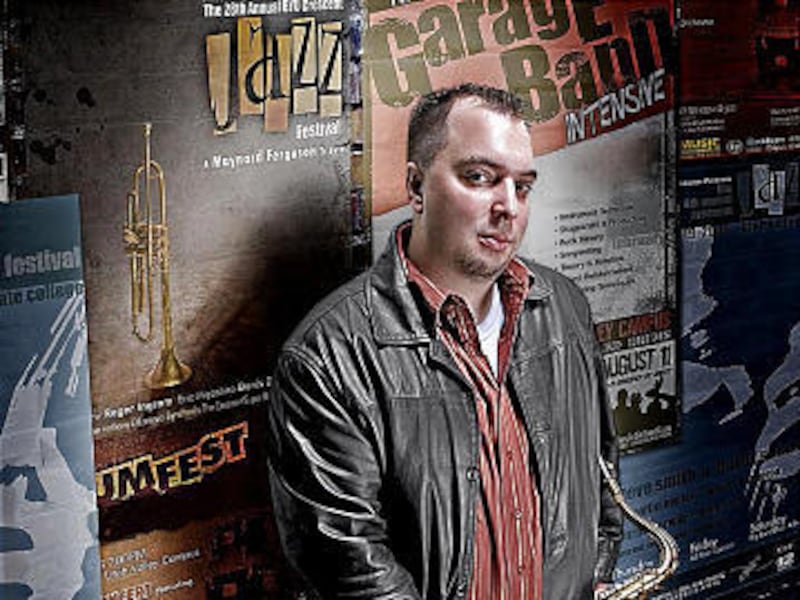
CALEB CHAPMAN, director of Caleb Chapman Music, home of the world-renowned, award-winning Crescent Super Band, which is comprised of Utah high school students: "My dad, Paul Chapman, who lives in Derry, N.H., doesn't have a musical bone in his body, with the exception that he plays a mean harmonica. But the arts were important to him and my mother and they would take us to see Arthur Fiedler & the Boston Pops and other performances like 'The Nutcracker.' And they were huge fans of barbershop singing.
"When I was young, my father lost his job and was unemployed for a few years, but through sacrifices, and I don't mean to get all emotional, but he and my mother made sure that I still could take private music lessons and rent my instruments.
"He was able to attend two performances of the Crescent Super Band, when we were invited to play at the Berklee College of Music in Boston. He's in his 70s now and is half deaf. But he still asks for our newest DVD and CDs, and just cranks it loud so he can hear it. And I do know that he and my mom still watch old VHS tapes of my own high-school music performances."
— Scott Iwasaki
MIGUEL CHUAQUI, composer and member of the Univeristy of Utah music faculty: "My father, Rolando Chuaqui, was a distinguished mathematician whose parents had required him to complete his medical studies and become a fully certified medical doctor (a practical career) before beginning graduate studies at Berkeley in mathematics. So, it was very important to him not to interfere with my career choices, and he really encouraged me to pursue the path I most desired.?Although he loved?classical music up to Mahler, my modernist-influenced music was a?challenge for him, but he did listen to it and try to appreciate it.?It made me smile when he would say 'the more I listen to your music,?the more I like it.' "
— Edward Reichel
JAMES DASHNER, author of "The 13th Reality" series, and "The Maze Runner," named Kirkus Review Best Young Adult Book of 2009: "Father's Day is always a bittersweet thing for me because my dad passed away when I was only 25 years old. He died at the age of 56, way too young. Although his death was devastating to me, I'm glad that I have such good memories of him. He influenced me in so many ways, and I know that so much of what I am today can be directly traced back to him.
"I make my living writing stories, so books have obviously been a vital part of my life. My dad loved to read, and our house was full of books — everything from history to fantasy, thrillers to picture books. Every room had them, and I can still see my dad sitting on the couch in our den with a giant book in his lap, reading until late at night.
"My dad also stressed education, constantly telling us how important it was that we didn't make the mistakes he made. He had to work and fight tooth and nail to squeak out a living for our family, and he was always determined that his children would do well in school, get a solid education and find rewarding careers. I never would've accomplished what I did without his encouragement and cheerleading.
"And lastly, what stands out in my mind is how my dad pushed us to be good people. He never allowed us to speak disrespectfully to my mom, and he taught us how to treat others with kindness and charity. My dad wasn't perfect by any means, but somehow he was able to help us understand what was right and wrong, and what makes a person a decent human being. I'm so thankful for my dad, and he'll always live on in my memories."
— C.W.
GERALD ELIAS, Utah Symphony associate concertmaster and novelist: "My father, Irving Elias, graduated from the prestigious Townsend Harris High School in New York at the age of 12, but due to family circumstances, rather than going to college he went to work as a salesman in the clothing, then the jewelry business. Then came the Great Depression and World War II, in which he fought. As a result, though the dreams he had for himself were permanently shelved, he lived them through his children.?
"My older brother, Arthur, became an oral surgeon.?My sister, Estelle, was a teacher before marrying an Air Force pilot.
"But my father was also a classical music lover, and one thing was certain in the family. All the kids played an instrument.
"When I was 8 and he asked me whether I wanted to play the violin, there was no question mark at the end of the sentence.?Though it was never an expectation that I would become a professional musician — the not-so-secret-hope was that I become a partner in my brother's practice — neither money nor logistical nor moral support was spared to provide the best teachers and tools available to pursue my own path.
"(My father), who died in 1997, also loved to write, and he compiled a closetful of letters and poems to his local newspapers, to politicians of all stripes and to family members.
"I mention the year of his passing because only weeks before he died I began writing my first novel, so in a way I'm simply continuing the unfinished work."
— E.R.
KEVIN FAGAN, creator of "Drabble" comic strip: "The first (memory) that comes to mind is when I was about 8 or 9 years old. My dad took me to work with him one day and I was drawing pictures at his desk. I told him that I wanted to be a cartoonist. He told me that was a great idea, and he suggested characters. I drew what each one might look like. He died shortly after I signed my first syndicate contract, and never saw 'Drabble' make its debut in the newspapers. But in our last conversation he remembered that day in his office and expressed confidence that I would have a great career ahead of me."
— Amanda Mears
KURT HALE, screenwriter/director ("Church Ball," "The Singles Ward"); president, and creative director, HaleStorm Entertainment: "My dad (Third District Court Judge Pat B. Brian) has been very supportive — worried at times but supportive. He's conservative and has always had a way of seeing around corners. I'm beginning to realize it's called wisdom. With regard to my career, there's only one bit of advice he offered early on that I wish I would have taken (and maybe it's because he's been a judge for 25 years). He recommended I study law before graduating college; I didn't have to practice but a (law degree) never hurt anyone in business. Probably good advice. But in my defense, that's like telling an art student to take statistics."
— Jeff Vice
KIRBY HEYBORNE, actor ("Saints and Soldiers," "Sons of Provo") and musician: "As a kid I was always performing and doing things slightly different than my siblings. I think my dad (Bruce Heyborne) subconsciously expected that I would pursue this entertainment career. When I started with 'Singles Ward,' he was very supportive. He thought it was like doing a play: you focus on it for a little while and when you're done, you go back to your day job. (At the time, I was working for my dad.) A few months later I told him that I was going to quit my day job. I didn't think it was fair to him for me to continually miss work for acting jobs. As any father would be, he was concerned: Would I be able to make enough to support my wife and kids?
The advice that he gave (and continues to give) is that I shouldn't let other people's negativity get me down. As long as I am always doing my best, he's proud of me.
Through it all, my dad has been extremely supportive. He knows that this career makes me happy. That's all a father really wants for his kids: For them to be happy … and to have food on the table … and to check in if they're going to be late ... and to 'Do what your mother says.' "
— J.V.
KORY KATSEANES, director of the Brigham Young University School of Music: "It's not easy to summarize my father's influence in my life and career. It's shaped me in so many ways, and still is one of the most powerful forces in my life. It's also not easy to separate father from mother when I look back on home life.
"Perhaps the greatest impact my father, George Katseanes, had on my music career was marrying my mother. He was a great basketball player and a fantastic outdoorsman — just a terrific fisherman and hunter, but he married a violinist. So, his own life was a blend of the things he did well and the things he learned to love and support. He passed those blends on, and he operated with his children in the same way he operated in his marriage.
"Music wasn't an either/or proposition in the family, nor were sports or other pursuits. Life was just so much more interesting and fun when so many things were accessible, and a combination of many good things was the best. Life was like a good meal. More than one thing on a plate was more appetizing. But, there was a mantra attached — he always said, 'If it's worth doing, it's worth doing well.'
"If I worked hard, and did well, it was as worthy as any other thing. I never had the sensation that I was going in a direction that was uncomfortable for him. And when he gave me the choice to join him and farm for a living or continue to pursue music, the only push I felt from him was that whichever direction I chose he was behind me all the way. It was ideal parenting."
— E.R
LISA MANGUM, author. Her first book, "The HourGlass Door," recently won the Book of the Year award for Young Adult Fiction from ForeWord Reviews: "Every good story needs a hero, and one of my heroes is my dad. He had supported me in every way possible as I pursued my dreams of being a writer. He is a technological wizard and always keeps me up-to-date with my laptop and computer skills. He is also a photographer and inspired my love of that art form. So when a crucial plot point in one of my books required my characters to visit a darkroom, I immediately knew where that inspiration came from — my dad."
— C.W.
GREG OLSEN, artist: "My father, Gordon Olsen, taught me about patience and taking pride in a job or project well done. Apparently some of these family traits have been passed on — with art being a defective family gene.
When I was younger, I was hired to paint a large sign for a local grocery store. I set it up in my bedroom because it was too cold to work in the garage. While painting, I spilled two quarts of black and orange paint on the carpet. Even with this huge mess, my dad encouraged me to continue pursuing my passion for art. I will always be grateful that my dad could see past life's little spills and the orange and black stained carpet, understanding that what is most important in our lives is the relationships we build with our children, family and friends."
—Michelle Lizon
DEL PARSON, artist and professor of art at Dixie State College: "My dad, Oliver Parson, was an art professor at Rick's College (now BYU-Idaho), and when he took his students out to paint landscapes, I would come along, too. He also took all nine of us kids out on painting campouts as well.
He always told me to never be bored. He looked at life so positively, and his love of life was part of his art — even our family vacations focused on it. He loved beauty and nature. He'd become ecstatic when he saw something interesting alongside the road, so he would pull over and begin painting it. That was impossible to get away from. It was part of my life.
However, I wasn't that interested in becoming an artist while I was in college. I was actually into bull riding at that time, but with encouragement from my dad, I enrolled in a couple of art classes.
He always encouraged me. He was never critical about my artwork. Even when it wasn't that great, he would say, 'Well, it looks like you're making good time on that painting, Del.'
— Michelle Lizon
PAUL POLLEI, founder and director of the Gina Bachauer Foundation: "If it wasn't the Utah Symphony at the Tabernacle, followed by banana splits at South Temple's famous Snelgrove's Ice Cream Store, it was at home. My parents being very social, with many friends, who also loved to entertain at home.
Oftentimes, they asked me to play the piano impromptu-style or without much warning for their friends and guests.
The most memorable occasion of one of these performances was my father (Eric C. Pollei) awakening me from a sound sleep near midnight and insisting I come from my bedroom (pajamas and all) and play for their guests.
As you can imagine, that wasn't my first choice, but play I did!
"Believe it or not, some of those longtime associates of my parents still remember the sleeping version of Manuel de Falla's 'Ritual Fire Dance!'? "He always introduced me as 'My son, Paul!'
"The day after his funeral, I was walking on Main Street near my father's office, and I heard a voice from a gentleman who greeted me with this salutation, 'Hello, my son Paul!'
"Yes, my father had succeeded in christening me with his supportive paternal pride, knowing I could entertain my parents' friends and guests.
"Through this intensive pride and joyful support, I was never without encouragement and familial care.
"Hurrah for fathers!"
— E.R.
DAVID GRAY PORTER, Utah Symphony 1st Violin and director of the Intermezzo Concert Series: "When I was 14, my mother passed away after a valiant but painful yearlong battle with cancer.?My father (David H. Porter) had just taken on a new job as president of Carlton College (in Minnesota), yet, despite all of his responsibilities and obligations, he found time every Saturday to drive me one hour to Minneapolis for violin lessons.?Usually, we would stay in the city for the day, eating at one of our favorite restaurants and catching a Minnesota Orchestra concert.?My father has always been supportive of my musical efforts, shelling out lots and lots of money for violins, bows, music festivals, lessons, etc.? However, it's that difficult year in Minnesota that I find particularly representative of his love and support."
— E.R.
ADAM SKLUTE, artistic director of Ballet West: "My father and mother took me to see ballet and opera and theater and concerts and museums from a very early age. I was exposed to the arts for as long as I can remember.
I was almost 17 when I started dancing, and I decided after about six months of training that I was going to become a professional ballet dancer, a decision I made very quickly and very determinedly.
It was not a decision my father, John Sklute, supported in the least. It wasn't because he had problem with me dancing. He supported me taking ballet, playing piano or playing sports, or anything I did. He loved the arts, but he did not really think that this was a practical career move. He wanted me to be an academic like the rest of my family.
Reasonably, from his perspective, I had only been dancing for six months.
However, he's been hugely supportive and is very proud of me. He comes to a number of shows a year to see what Ballet West is doing.
We speak every week on the phone. He lives in San Francisco, Calif., but is often traveling.
We have a friendship that's more than just a father/son relationship. He and I are very close and we talk about things. He airs his issues and problems and asks advice from me."
— S.I.
DAVID VAN ALSTYNE, composer and director of the New American Philharmonic: "My dad, Arvo Van Alstyne, was a devoted law professor, vice president/executive assistant to President David Gardner at the University of Utah, and the third Utah state commissioner of higher education. I honor him less for his standing in the world than for the man he was. He supported everything I wanted to do — except go to sleep to the sound of rock and roll music as a young boy. He insisted I listen to good classical music. He brought a great many fine recordings into the house, and I increasingly immersed myself in them. Those countless hours of concentrated listening have remained the foundation of my musical life to this day. My father lost his own father at the age of 11, and he tried especially hard to be a good father to his own six children. For all his many efforts, it was the way he loved our mother, and his way of loving and caring for us, that mattered the most.
— S.I.
e-mail: features@desnews.com