

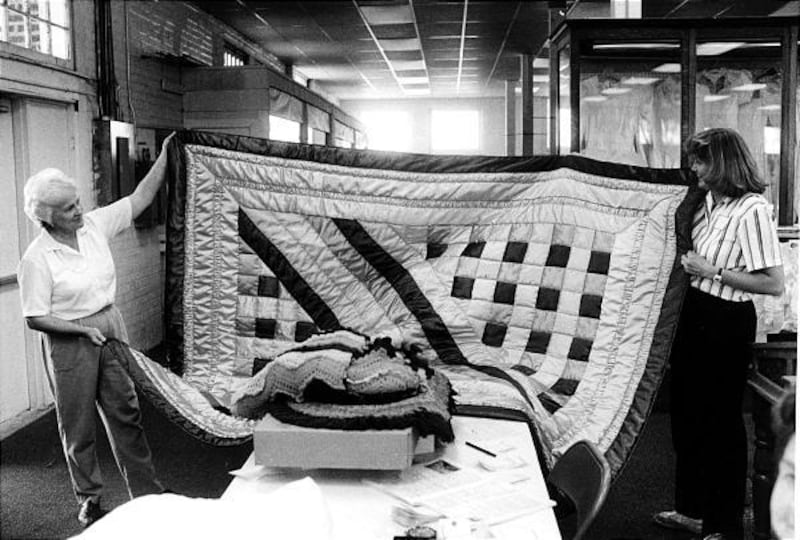


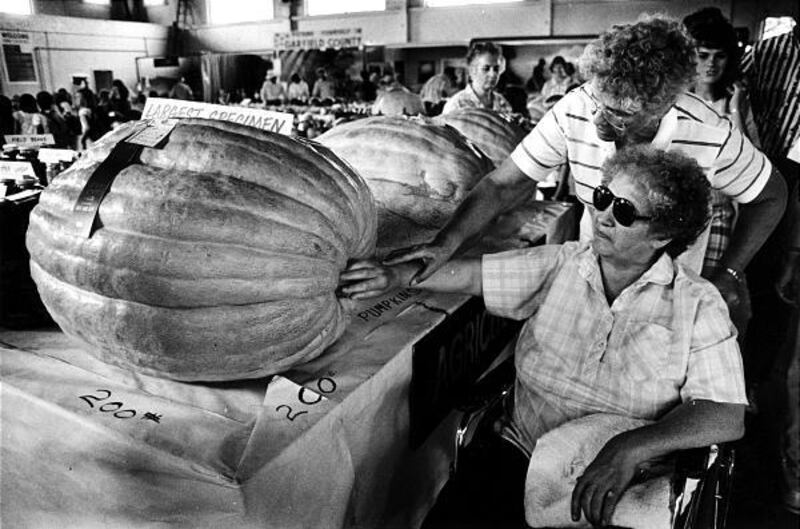


SALT LAKE CITY — The Utah State Fair was one of Utah's biggest annual events in its early decades. Many Salt Lake businesses used to close during parts of the fair, so that their employees could attend.
Nine years after the Mormon pioneers arrived in the Salt Lake Valley, the first fair, then called "Deseret State Fair," was held Oct. 2-4, 1856, on the site where the Joseph Smith Memorial Building now stands.
Although the exhibits then were meager, the public showed keen interest and eagerly sought space to display some of the finest products from their own homes, shops and fields. One of many award recipients that first year was Brigham Young, then governor of the Utah Territory and president of The Church of Jesus Christ of Latter-day Saints. He received $25 for "Best Stallion" and first prize for "Best Celery Exhibit."
A "spirited plowing match" was the first fair's feature competition, It was held in one of the governor's fields, according to an Oct. 8, 1856, story in the Deseret News.
Since there were so many soldiers in Salt Lake City in 1856, a special "Gentiles" afternoon was set aside just to cater to them. Special invitations were issued and LDS Church leaders served as guides.
"The fair will operate as a great incentive to the development of home resources," the newspaper article stated.
To help finance the early fairs, lifetime memberships were sold.
However, the first fairs lacked a permanent home and were held in several locations, including a site on State Street at 200 South, known as "Market Row"; 100 South and West Temple; and the "Tenth Ward Square," where Trolley Square now stands.
In 1902, the Utah Legislature purchased the 65 acres at the Fairpark, originally called the "Agriculture Park."
Early fairs also were held in early October, more than three weeks later than today's fairs, which meant cooler weather for fair attendees, but also a greater chance for storms.
In fact, most early fairs coincided with LDS general conference, meaning many out-of-towners came into town each fall for two purposes.
A half-mile race course was the first facility constructed at the park.
Afterward, livestock barns and the Horticulture Building (later renamed Promontory Hall) were also built.
Walter E. Ware and Alberto Treganza, local architects (who also designed the First Presbyterian Church, University Club Building and Westminster College's gymnasium) designed the original Horticulture Building.
The park's old Coliseum had a 50-year career, which started with Utah centennial athletic events.
A May 10, 1947, Deseret News article by Les Goates stated the Coliseum was "something terrific, colossal, stupendous and otherwise pretty good."
Costing more than $250,000 and capable of seating 6,500 people, the Coliseum hosted a wrestling match that June, followed by the ice follies.
In 1997, the Coliseum was demolished because of safety hazards and was eventually replaced by the grandstand stage.
By the 1980s many of the Fairpark's buildings had fallen into a state of disrepair. In 1988, many of the buildings, including the Horticulture Building, were renovated.
The Legislature privatized the Utah State Fair Organization in 1995, giving the gubernatorial appointed board of directors a mandate to make the fair profitable. The desire was to allow the fair to no longer be subsidized by taxpayers, thanks to more year-round events at the site.
Photo researcher Ron Fox has assembled many photos of the Utah State Fair over the years from past issues of the newspaper, which can be seen by clicking on the photo with this story.
The 154th annual Utah State Fair is Sept. 9-19 and will be the 107th held at the State Fair Park location.
e-mail: lynn@desnews.com