

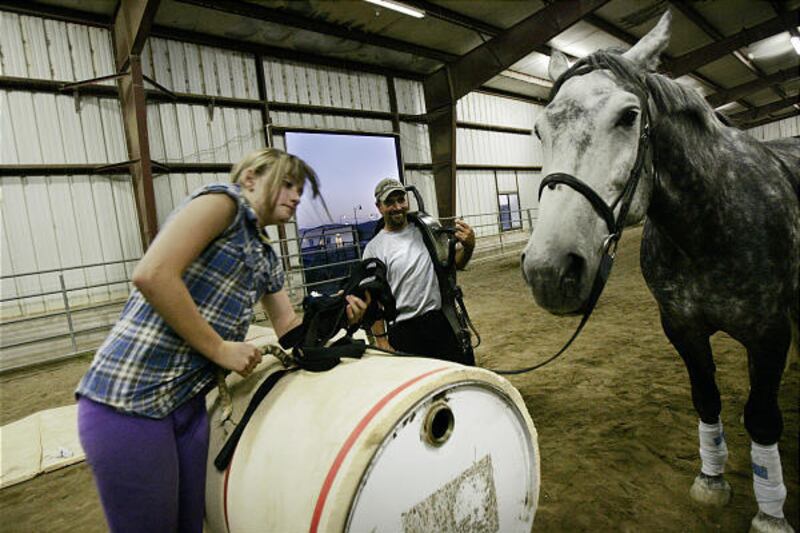
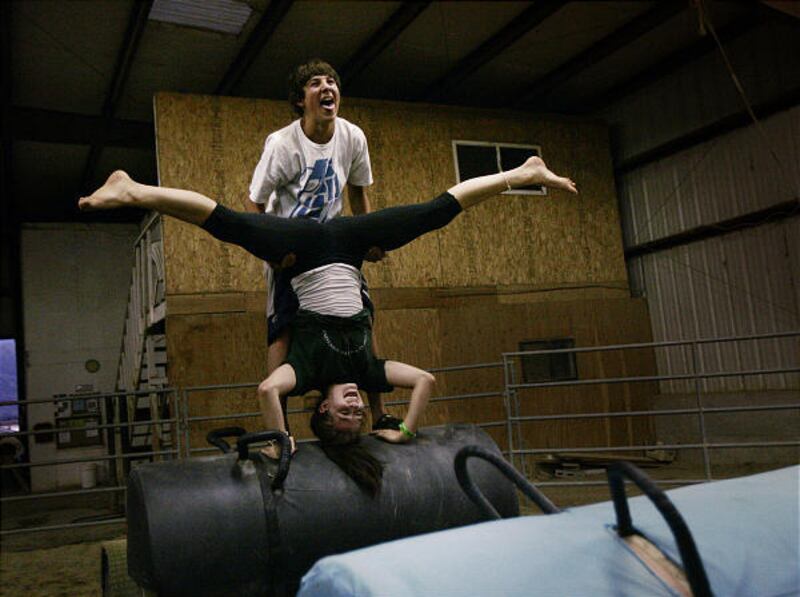
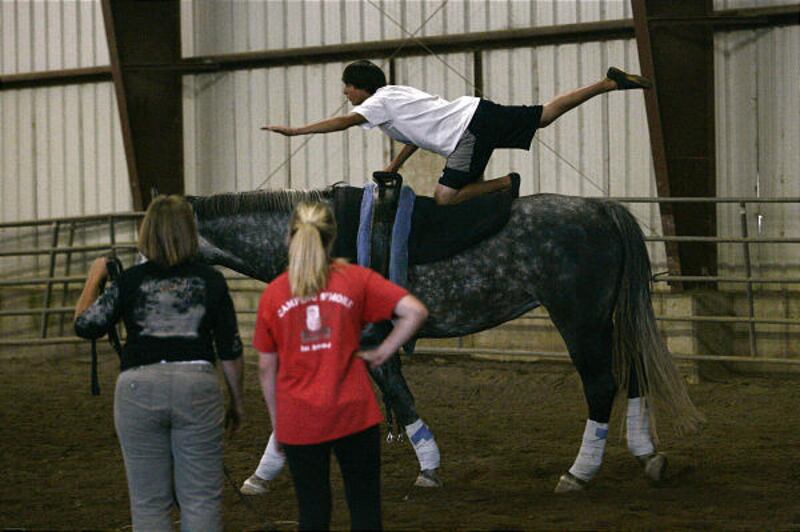
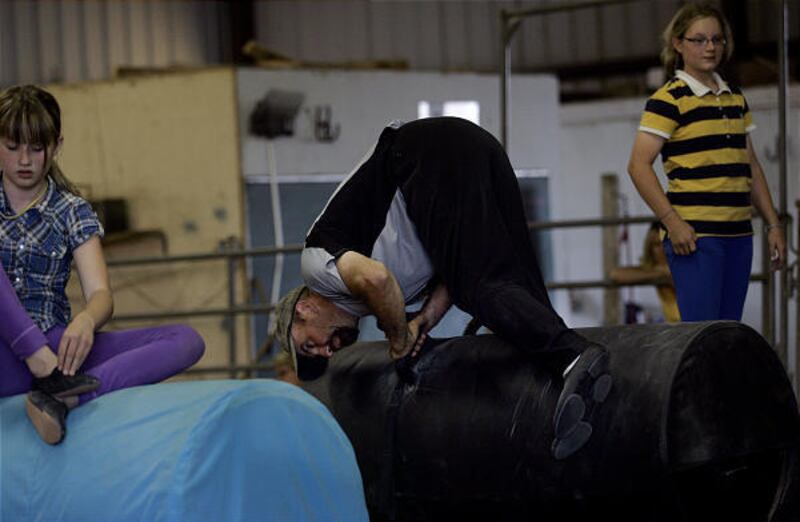
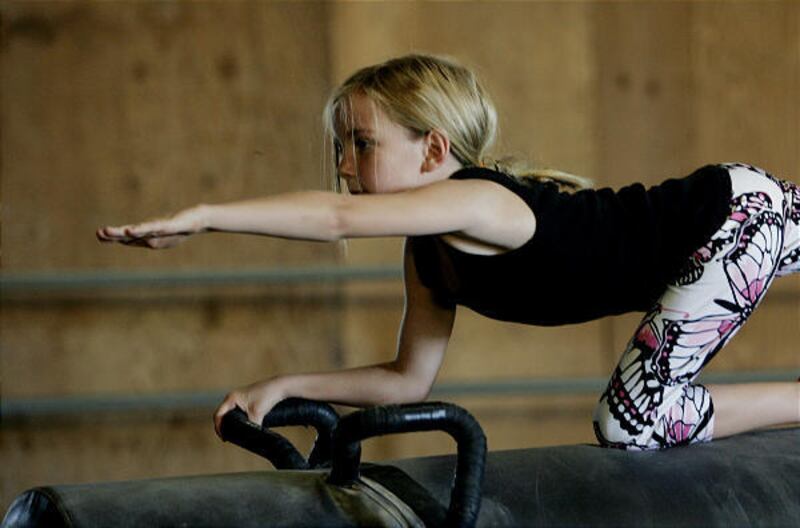
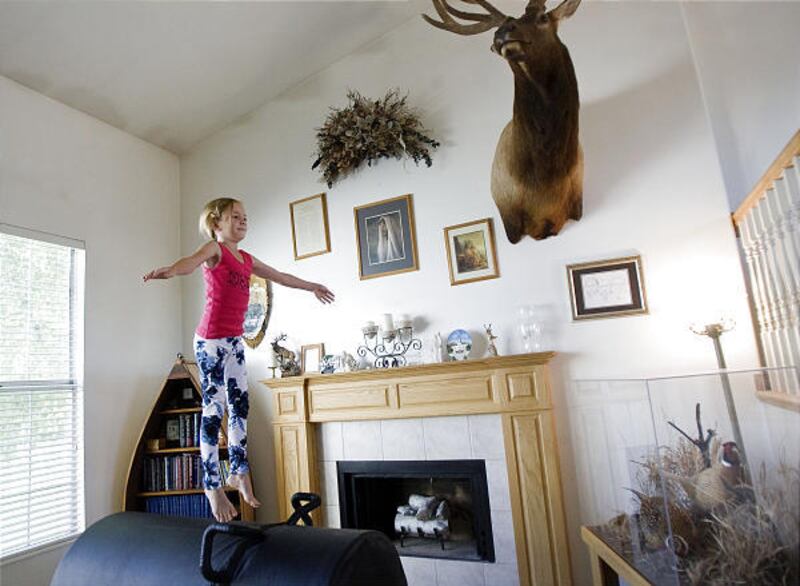
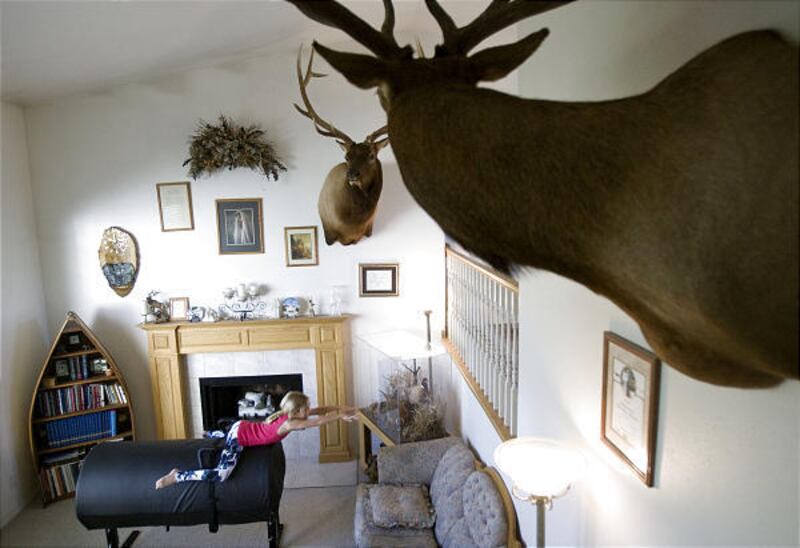
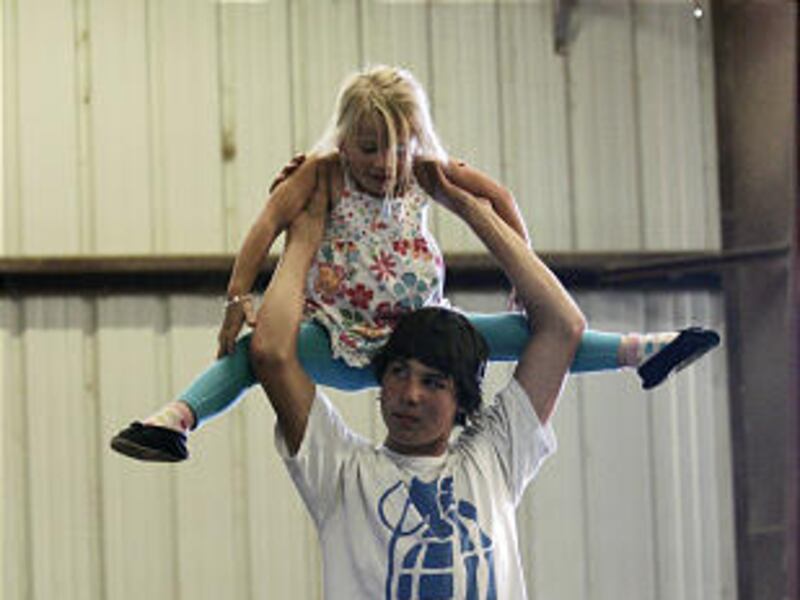
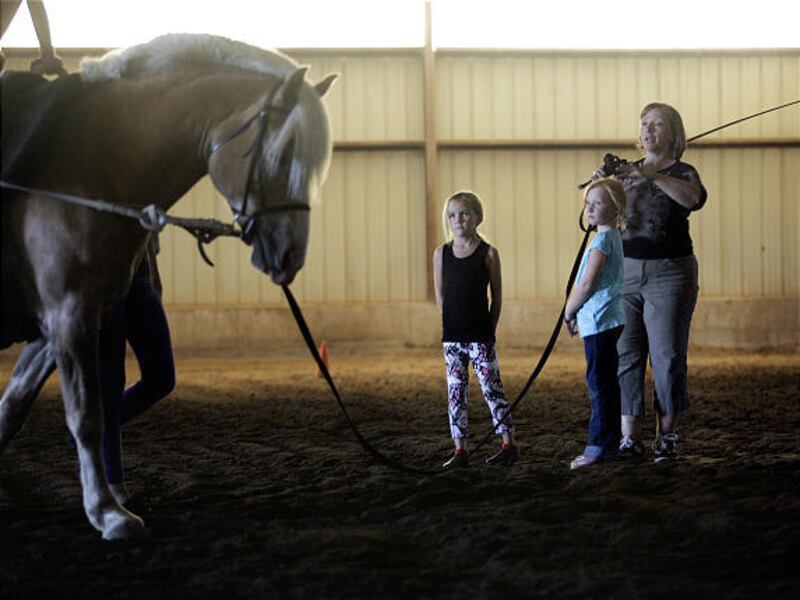
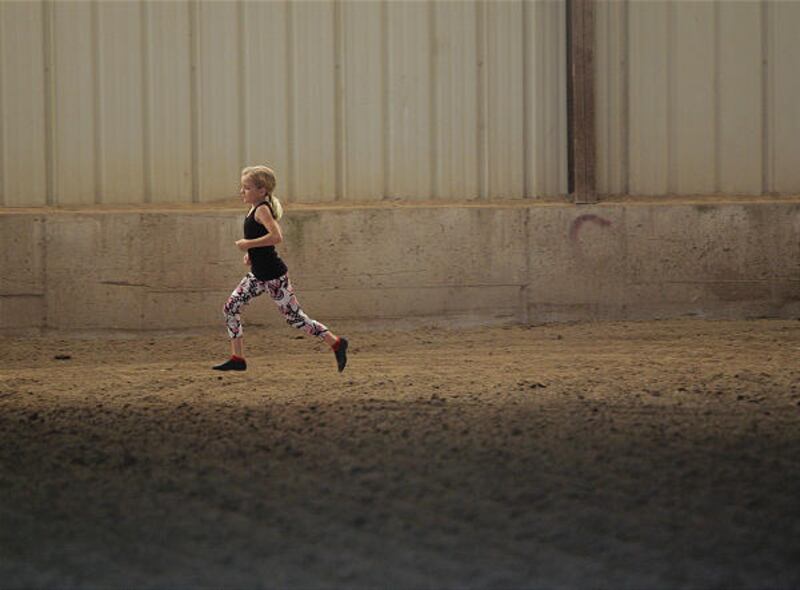
SARATOGA SPRINGS — Lance Brown is upside down on a homemade practice barrel, and two of his children are taking turns doing gymnastics on the back of a moving horse.
It's a weekly occurrence for the Highland family, as they train and practice for their sport.
Brown, and his son Jonathan Baird, 15, and daughter Malia Brown, 8, are members of Technique Vaulting, one of two equestrian vaulting clubs in the state.
"It was weird at first. I didn't think my dad could vault, but he's getting better," Baird said.
Equestrian vaulting is one of 10 disciplines recognized by the International Federation for Equestrian Sports and is best described as gymnastics and dance on the back of a moving horse. Vaulters can choose to compete or perform demonstrations and can perform solo or in doubles or triples.
At age 40, Brown is by far the oldest member on the team and likely one of the oldest vaulters in the nation. He joined the club in March and has not competed yet but is hoping to compete in the Region I Championships this November.
"One of my goals is to do a double or a triple with the kids," he said.
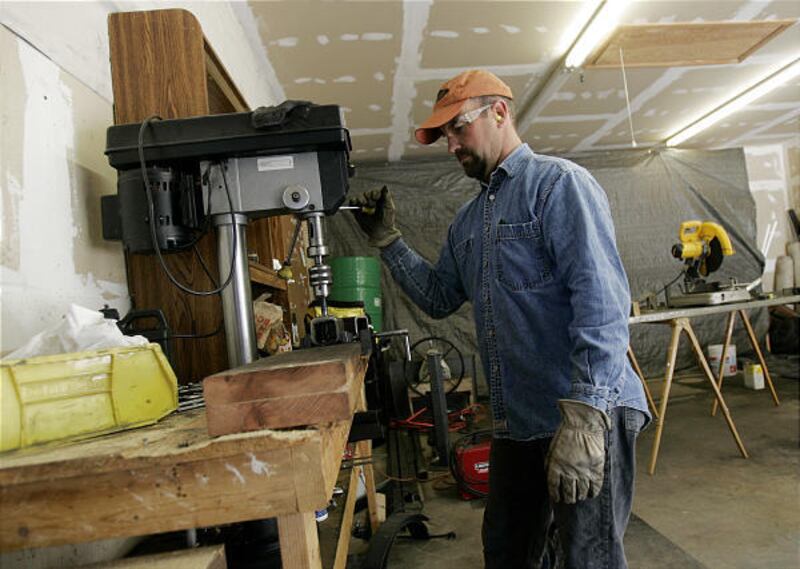
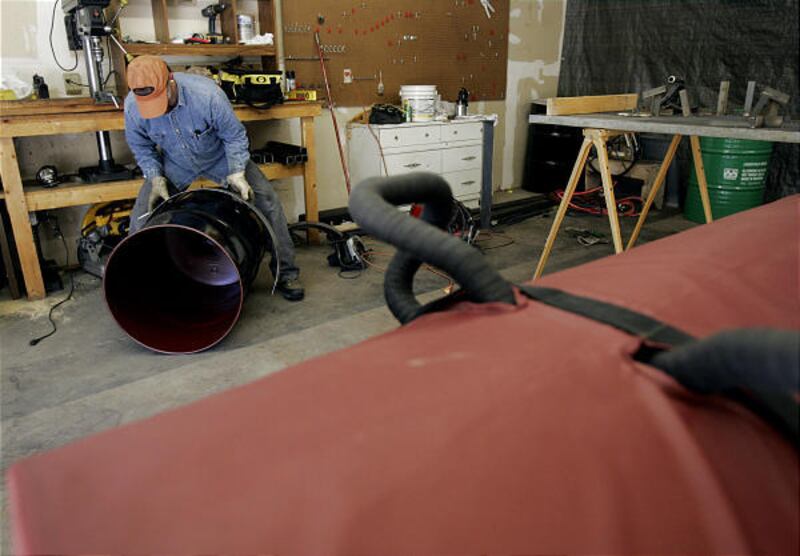
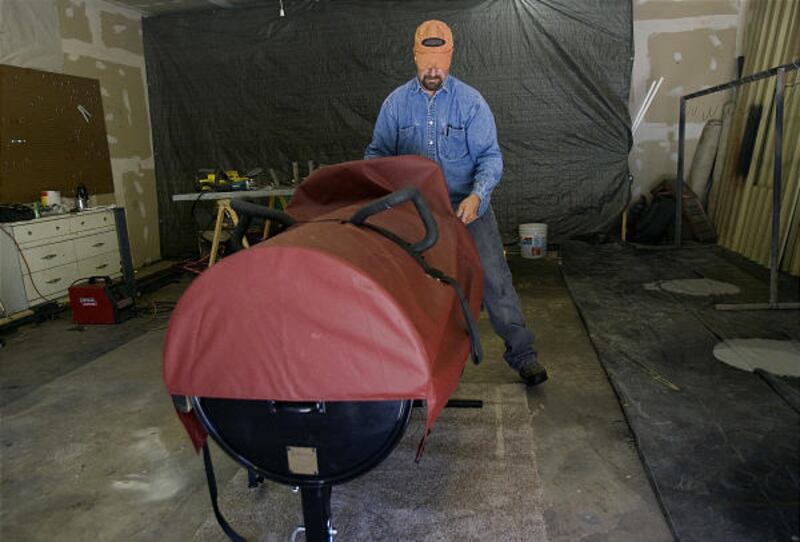
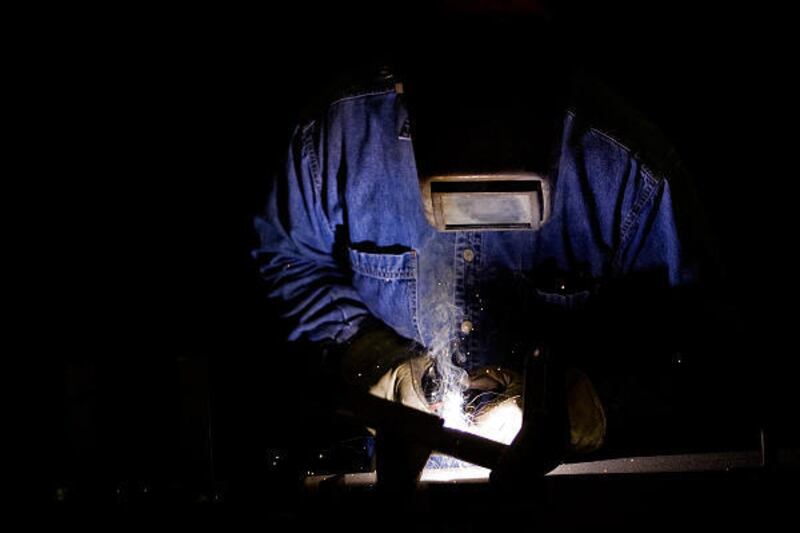
Brown is not only part of the team; he is also a supplier. An experienced welder, when Brown found out that advanced vaulters were using round handled barrels to perfect their skills, then moving to the horse, which is often equipped with square handles, he came up with an idea.
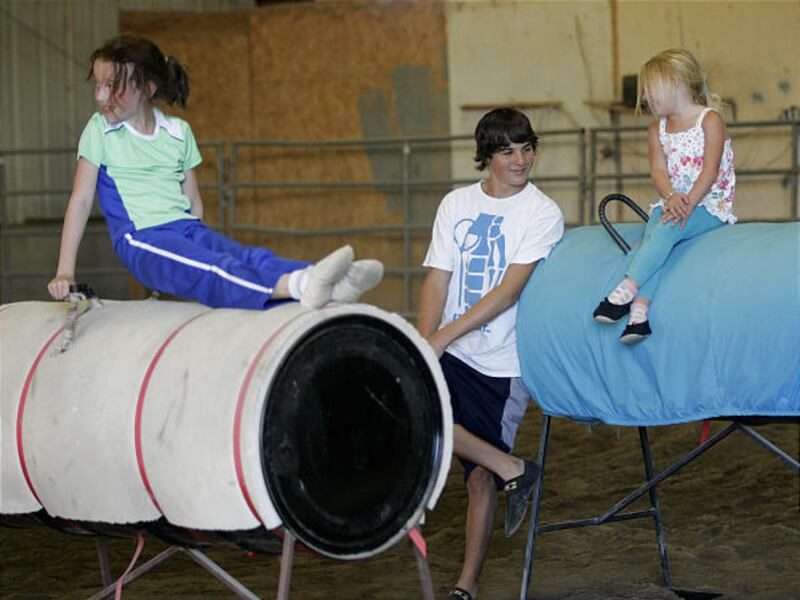
Brown now makes and sells completed barrels, parts and kits online and has donated two barrels to Technique Vaulting. He even keeps one in the living room of the family's home so the kids can practice their routines whenever they have time.
"They said no one makes square handles, and I realized that's something I could do. It is what I can do for the sport," he said.
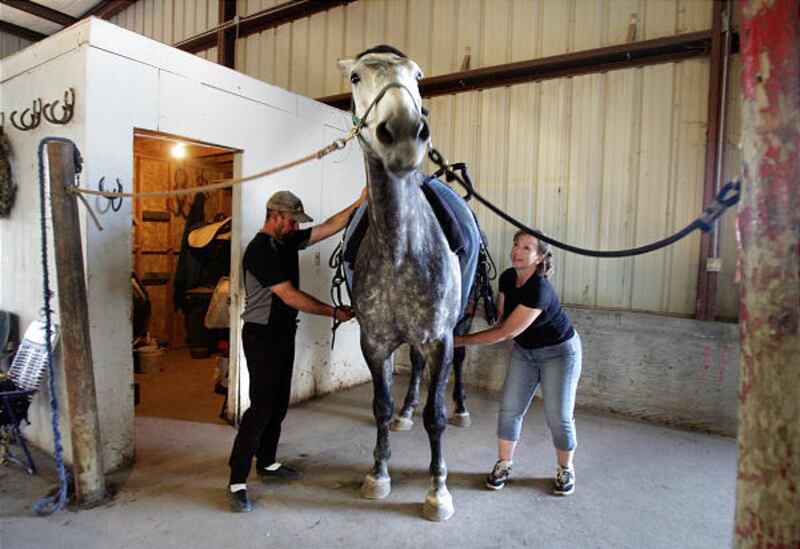
Equestrian vaulting is a relatively unknown sport in the United States, but it's growing in popularity. Technique Vaulting has 60 members, ages 5 to 40. Although it might appear to be quite dangerous, coach Cambry Kaylor says that it is generally the safest equestrian sport because the horse is controlled by someone on the ground, not the vaulter, and the vaulter first learns his or her skills on the barrel and is then spotted while riding the horse. Vaulters also compete on several different levels, depending on their skills.
"Vaulting has many levels that you can be at, so it seems that you are more competing with yourself than other people. You're just moving up from level to level and getting better and better. That's one aspect that I like of it," Brown said.
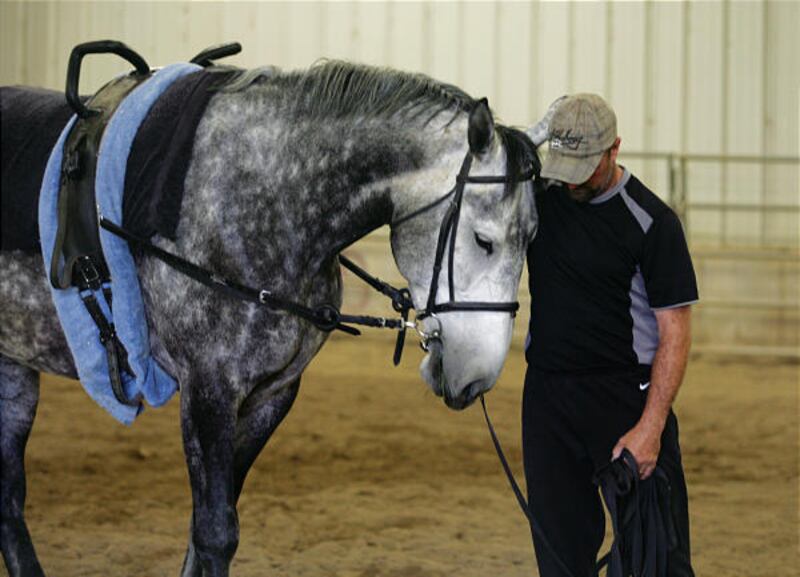
Although it may look difficult, many vaulters find it easier than they thought, and some come into the program to learn as they go, with no background in gymnastics or in dance. Vaulters don't need their own horse at home, either. Brown rode horses as a child but hadn't ridden consistently since he was about 13.
"I've had a couple of parents who've wanted to do it because it looks fun, and they try it for one or two lessons, but Lance is the only one who has stuck with it and has been dedicated," Kaylor said.
Brown's kids Jonathan and Malia are also finding that having their dad on the team isn't necessarily a bad thing.
"He's getting better," Baird said.
Brown likes his new perspective, too. "Instead of sitting on the sideline and telling them what they should be going, you're actually out there doing it," Brown said.