

UTAH TEST AND TRAINING RANGE — By Thursday, there will be nothing: No tents, no trucks, no guns, no radar.
Just the tire tracks and footprints in the white dust would give a clue that someone was there at all.
Not that anyone knew they were there anyway.
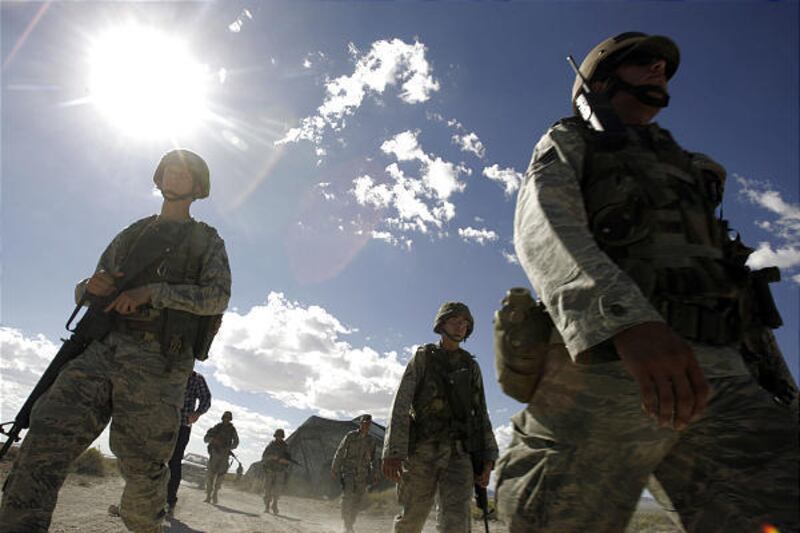
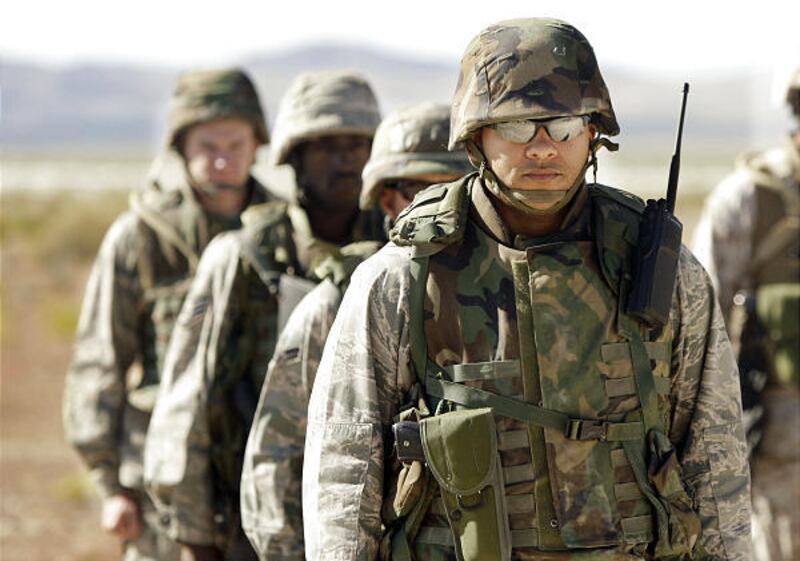
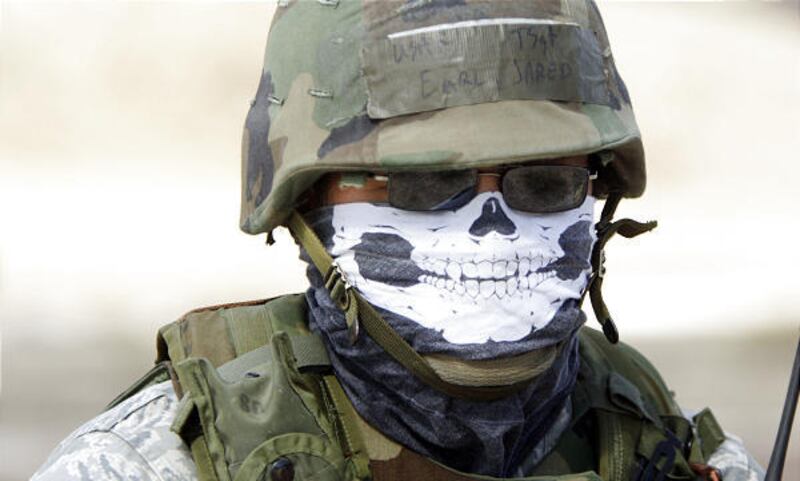
For the past week, 400 airmen from Hill Air Force Base's 729th Air Control Squadron have been camping in the desert just south of West Wendover, Nev., to prepare for deployment to Afghanistan in January.
Tucked into a small valley on four acres, the bulk of the group lived, worked and trained in various scenarios.
They talked fighter aircraft through combat operations, providing air support to troops on the ground.
"When the Army needs air support, I orchestrate that support," said Lt. Col. Patrich Skendizel, who assumed command of the squadron in April. For the preceding two years, he served as the squadron's director of operations.
They were "attacked" by insurgents — fellow squadron members in T-shirts — who simulated mortar attacks and penetrated the camp's perimeter.
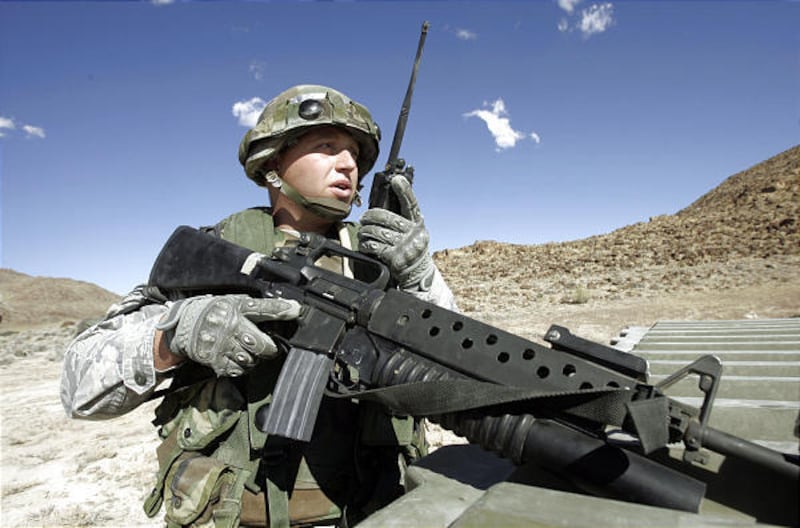
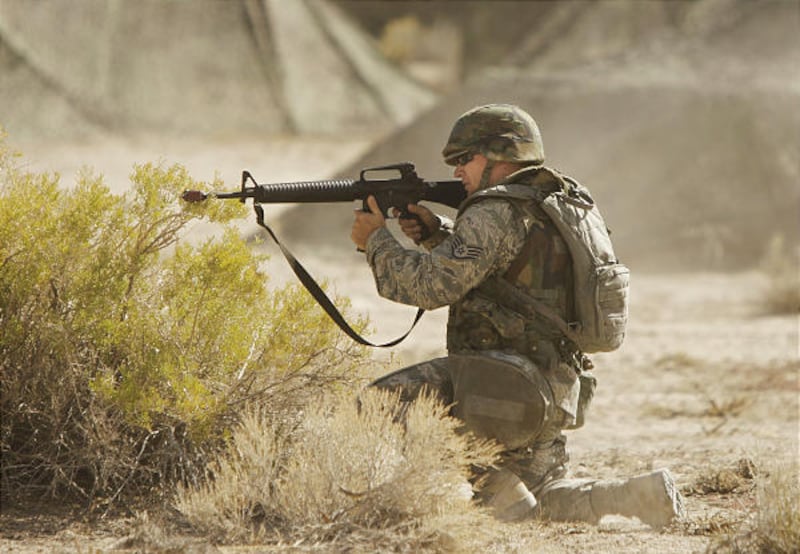
Insurgents attacked in assault-style laser tag. Each assault rife was capable of triggering laser sensors on each airman's torso.
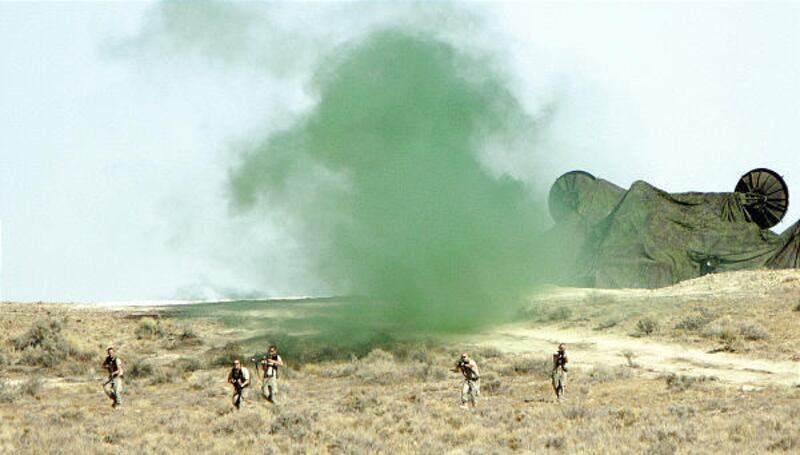
During one such ambush Tuesday, the airmen went into combat mode, crawling through the dust and blending in with the sparse cover, while green smoke bombs inside the camp simulated shelling by insurgents.
Within minutes, the airmen had taken out the five insurgents, who also wore laser sensors.
Skendizel said everything his airmen have done over the past week — living self-sufficiently, working security, establishing radar monitoring and radio transmissions, and setting up camouflage tents — is geared toward surviving six months in Afghanistan as wartime air traffic controllers.
"You can make a squadron disappear in the desert if you need to," Skendizel said.
It helps that the Utah Test and Training Range, located in Utah and Nevada, looks like parts of Afghanistan. The range has the mountains, terrain, wind and dust that mimic conditions and provide similar challenges to what the squadron will face.
"They are warriors at heart," Skendizel said.
For some, it takes about two days to get used to the dust.
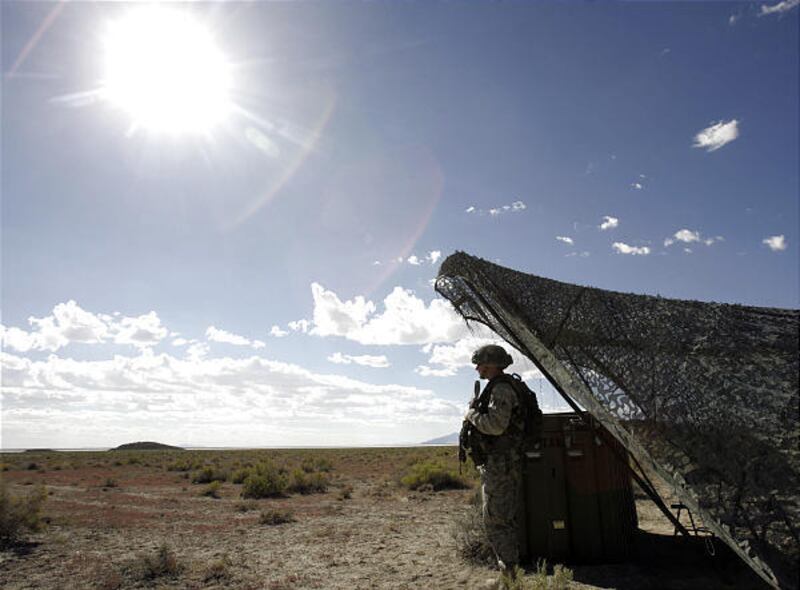
And then there's the group that set up radar operations on the salt flats a couple of miles away.
"I love the dirt," said 1st Lt. Christopher Oppenlander. "(And) to see us roll on a site that has nothing and in two days to have all of this."
Surrounding Oppenlander were the tent-covered radar and communications equipment, vehicles and armed guards set up on two acres.
It's possible that during a deployment, Oppenlander's team would set up a remote radar station to track fighter and refueling aircraft.
And they do it while living on cots 120 miles from home.
"You practice like you play," said Senior Airman Patrick Timmerman, who returned from Iraq in March.
e-mail: jdougherty@desnews.com