

Not only that, but it isn't just the animation style that's been updated; the plot and characters have undergone changes as well. Darker and with a stronger continuity, one can't help but notice the literary heritage going on here. In fact, even kids will recognize the age-old archetypes, though they won't be as likely to trace them to the Trojan War or "Moby Dick." These might strike some as clichÉ, but "time-tested" means they endure for a reason.
"Friday night belongs to the heroes!" says the Cartoon Network advertisement.
It refers to its run of new episodes in the new or returning superhero series "Batman: The Brave and the Bold," "Young Justice," "Star Wars: The Clone Wars" and "Thundercats." And while other well-liked kids' shows belong to this lineup ("Ben Ten" and "Generator Rex"), those first four franchises are more likely to catch parents' attention.
Why? Because there's a good chance they grew up watching their predecessors.
The original "Thundercats" ran from 1985 to 1990 with a total of 130 episodes — as many as the original "He-Man and the Master's of the Universe," but spaced over a longer period of time (arguably to its advantage). Likewise, the "He-Man" remakes came and went quickly (1990 and 2002), but the new incarnation of "Thundercats" has taken its time coming back.
Not only that, but it isn't just the animation style that's been updated; the plot and characters have undergone changes as well. Darker and with a stronger continuity, one can't help but notice the literary heritage going on here. In fact, even kids will recognize the age-old archetypes, though they won't be as likely to trace them to the Trojan War or "Moby Dick." These might strike some as clich, but "time-tested" means they endure for a reason.
This might explain why certain shows come back at all. Sure, there's the likelihood that new money is to be made from old fans; but considering why some of these return more successfully than others, it seems likely that neither new audiences, nor their parents, are the only fans involved here. The writers should demonstrate a true love and respect for the franchise as well.
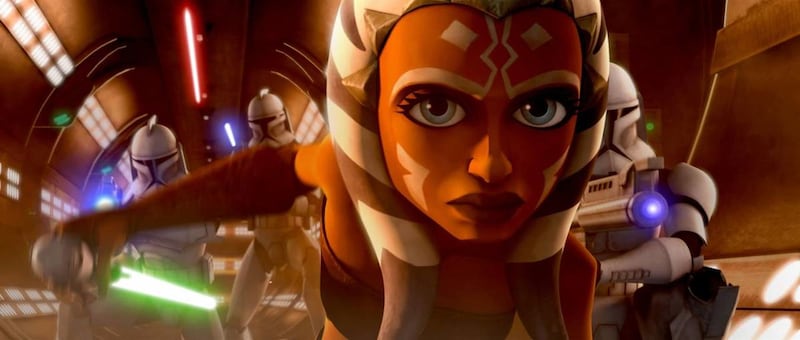
Take "Star Wars: The Clone Wars" for instance, which just entered its fourth season. Keying off the films more than anything else, parents and their children might wish, despite the shows' lavish CG animation, that Genndy Tartakovsky were more involved.
Responsible for Emmy-winning shows like "Dexter's Laboratory" and "Samurai Jack," he also directed the Annie Award-winning miniseries "Star Wars: Clone Wars," which many fans appreciate more than the live-action prequel trilogy. Though the newer adapation pays homage to Tartakovsky's animation style, it plays such repetitive scenes of laser battles and occasional light saber duels so as to run out of drama, with the only tension relying on an adult's appreciation for the larger continuity.
We know how most everything will turn out after all, so the largest question looming— probably on a parent's mind more so than their son's or daughter's — is what's going to happen to Ahsoka? Do kids realize that Anakin's padawan will have to die or disappear by the series' end? Probably not.
Then again, dedicated writing doesn't always equal endurance. Look at "The Spectacular Spider-Man" (2008-09), probably the best TV and film Spider-Man adapation ever. Produced by Greg Weisman, the same guy who brought us the under-appreciated, Shakespeare-inspired "Gargoyles" (1994-97), this show managed to fill its episodes with memorable Spidey villains, interesting action, witty dialogue, real-life problems and a truly likeable Peter Parker … and that was just the first season. Unfortunately, despite fan protests, the series was canceled in anticipation of yet another reboot, "Ultimate Spider-Man," which premieres next year on Disney XD.
Fortunately, Weisman has moved on to yet another successful project: this year's "Young Justice." Granted, there is no pre-existing "Young Justice" show. Though similar, in some respects, to "Teen Titans" (2003-06), both shows are more memorable for their franchise characters: We see Robin, Aqualad and other DC Universe names undergoing yet another animated treatment. But where "Teen Titans" was more comical in its animation and rogues gallery, "Young Justice" is smooth and realistic … some might even say sophisticated.
In fact, co-creator Brandon Vietti directed the animated Batman movie "Under the Red Hood," which definitely isn't for kids.
Therefore, it's more accurate to call "Teen Titans" a forerunner for campy "Batman: The Brave and the Bold," with "Young Justice" evolving from the game-changing "Batman: The Animated Series," which probably defined most parents' expectations of not only Batman, but any superhero cartoon.
Number two in IGN's top 100 animated series, this take on Batman was the primary influence on the popular video game "Lego Batman," which kids can't have loved as much as adult, die-hard fans. Were they as excited about unlocking Hush as those familiar with the comics, who are still geeking out about it? Again, probably not.
Are these subtle nods to older audiences a cause for concern? Actually, the content parents might object to is more the product of the newest generation than the old. Cheetara from "Thundercats" was always considered sexy, but this new version is portrayed as a younger, skimpier-dressed authority figure. Artemis from "Young Justice" shows her midriff and sports an attitude problem, as opposed to the tamer Miss Martian, who nevertheless enjoys an opportunity to admire Superboy without his shirt on.
But then there's Aqualad, the team leader, or Red Arrow, the angry loner, who, in their struggle for approval, represent the show's — and its viewers' — desire to be taken seriously. Some might argue it succeeds by portraying youths that both love and resist adult supervision.
It goes without saying that parents' familiarity with old icons will differ from their kids', even to the point that they may appreciate different aspects of the same shows. This provides appeal for old and new fans alike and applies changing technology and improved storytelling to superheroes with a long, often bumpy past life.
The development of character relationships proves more complex than what one might expect of 20-minute toy commercials — as these types of shows are inevitably, often unfairly labeled. In "Thundercats," Panthro is initially pronounced dead, only to return a prisoner of war, only to be revealed as the villain in disguise … with the actual character's official debut delayed.
These characters, like the team in "Young Justice," have ongoing quests that make each episode a chapter in a longer story. Though not a must for a successful superhero cartoon ("Batman: The Animated Series" treated each episode like a stand-alone movie), it certainly provides the sort of tension that keeps adult viewers coming back.
Yes, the kids may be more interested in adding the action figures to their wish lists than waiting to see what happens to Ahsoka, or whether Lion-O fulfills his destiny, or whether the Joker will return as part of the Light's plot against the Justice League's young sidekicks. But they'll sure be pleased that such staying powers have engrossed their parents, too, and that, when Friday belongs to the heroes, that includes some mom and dad time.
Andrew Bud Adams is a college English instructor residing in Eagle Mountain with his wife and three children. Visit his author profile at Goodreads.com to learn more.